Section
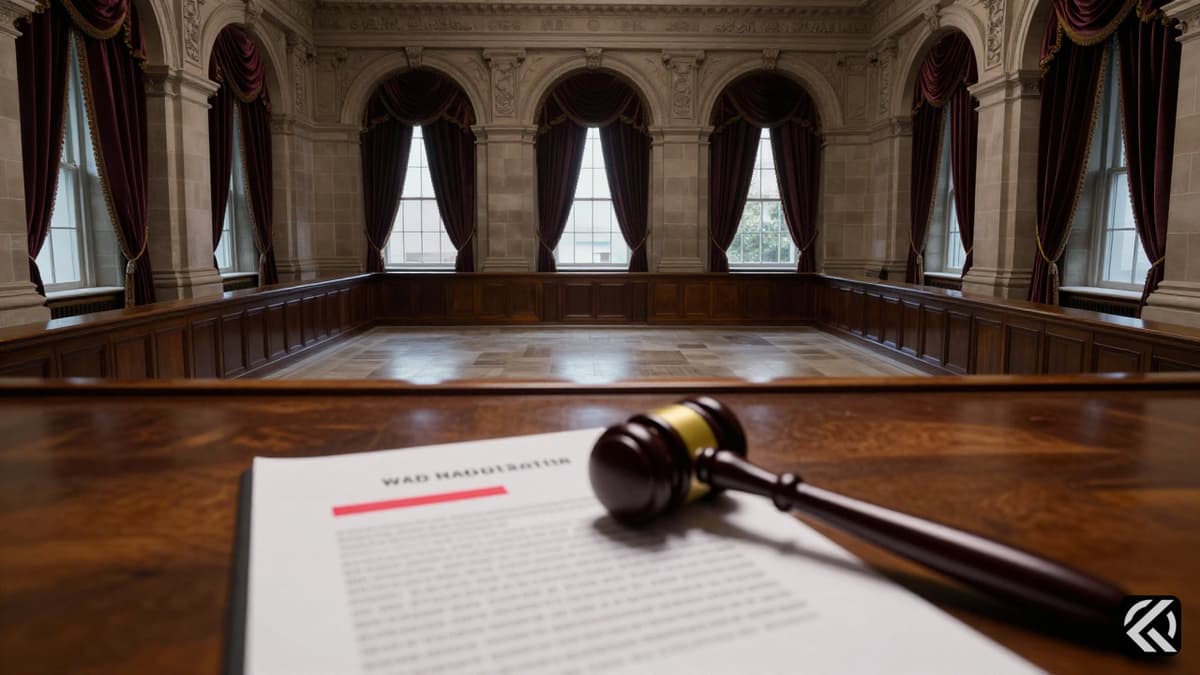
Senate Republicans face a growing internal rift over $1 billion in security upgrades, as moderate senators demand clarity while leadership pushes for approval ahead of immigration votes.
Senate Republicans are grappling with a significant internal disagreement regarding the inclusion of up to $1 billion in security upgrades for President Donald Trump’s ballroom renovation project. This financial dispute has emerged as a critical flashpoint just as the party attempts to pass a broader funding package for federal immigration enforcement. The White House is intensifying its lobbying efforts, with the US Secret Service director scheduled to address Senate GOP lawmakers to explain the necessity of the expenditure. However, the move has placed several moderate senators in a precarious political position, particularly given the president’s previous assertions that the ballroom should be funded through private donations.
The inclusion of this massive sum, which was announced while lawmakers were away on a scheduled recess, caught many Republicans off guard. Multiple sources indicated that some House and Senate Republicans are unhappy with the addition, fearing that allocating taxpayer money to East Wing renovations-even for security purposes-could alienate voters concerned about the cost of living. This concern is exacerbated by the potential impact on competitive GOP races in the upcoming fall elections. Despite these reservations, Senate Majority Leader John Thune remains confident that congressional Republicans will ultimately back the funding. Thune argued that the money is not for the ballroom itself but for securing the entire East Wing, a area tasked with protecting the president when in use.
“The ballroom itself should be paid for by private donations, as the president had indicated,” Maine GOP Sen. Susan Collins stated, highlighting the confusion and dissent within her party. Collins, along with other moderate Republicans, has expressed a desire for clarity on exactly what the money would fund. This sentiment was echoed by Kentucky GOP Sen. Rand Paul, who made it clear that he prefers no taxpayer money for the project. “My preference is always no taxpayer money. And he can do it privately,” Paul said, sticking to the administration’s original proposal of private funding.
The debate over the $1 billion Donald Trump ballroom renovation security component is not merely about architectural upgrades; it is a strategic battle over the passage of essential immigration enforcement funding. Republicans need nearly every member of their conference to support the broader package to survive the complex reconciliation process, which allows the Senate to pass the measure without Democratic votes. Thune has tried to frame the security funding as integral to public safety, noting that it “fits nicely” within a package aimed at securing borders, streets, and communities.
“I think it fits nicely within a package that is built around, you know, basically, public safety... and, in this case, it’s protecting the president,” Thune told reporters. He further justified the expenditure by citing the heightened era of political violence and recent attempts on the president’s life. “I support it. I think makes sense, and I think it’s part of what it costs to protect the president of the United States in a very dangerous time,” he added. This argument was supported by Wyoming Sen. Cynthia Lummis, who pointed to the White House Correspondents’ Dinner as a rationale for needing a secure ballroom. North Dakota Sen. John Hoeven also supported the project, arguing it benefits all future presidents, regardless of party.
However, the opposition from both Democrats and some Republicans is fierce. Senate Minority Leader Chuck Schumer condemned the funding on the Senate floor, calling it a “staggering waste of taxpayer dollars” driven by Trump’s ego rather than security needs. “The American people are calling out for help, but these ballroom Republicans have a constituency of one: Donald Trump’s ego. That is a disgrace,” Schumer declared. Democrats plan to use parliamentary rules to challenge the inclusion of the ballroom money, hoping to exclude it from the overall package. The Democratic strategy is also political, aiming to use this expenditure as a weapon in the upcoming midterms.
A significant portion of the internal GOP dissent stems from the optics of the price tag itself. The proposed $1 billion in Secret Service funding is more than double the $400 million previously proposed by South Carolina Sen. Lindsey Graham and other Republicans for ballroom construction. This sharp increase has raised eyebrows among lawmakers already sensitive to public scrutiny. North Carolina Sen. Thom Tillis, a retiring Republican, warned that Democrats will aggressively use this funding against Republicans in their respective states.
“If I’m in the Democratic marketing department, I’m probably thinking of a lot of ways I would use this on targeted senators that vote for it,” Tillis said. He noted that voters in at-risk states may penalize lawmakers who support such spending, especially amid economic concerns like high gas prices. Tillis himself remains undecided, stating he has “a lot of questions that got to be answered” and that he will be asking basic questions during the week’s briefings.
The legislative process for this funding is equally complex. The money is designated for “security adjustments and upgrades” to the East Wing as part of Trump’s modernization project. While the legislative text mentions support for Secret Service enhancements and potential above- or below-ground security features, it lacks specific details on how the funds will be distributed. This vagueness has contributed to the hesitation among moderate Republicans. The Judiciary Committee, which was set to take an initial step toward approving its portion of the measure, postponed its meeting on Monday evening. Sen. Chuck Grassley, the committee’s chairman, confirmed there were no legislative issues causing the delay, but the postponement signals the difficulty in moving forward.
Senate Republicans are now facing a critical juncture. While leadership pushes for approval, they must contend with the Senate Republicans who are demanding more specifics before agreeing to taxpayer expenditures. The Secret Service director is expected to provide a comprehensive breakdown of the spending tomorrow, which may influence the undecided senators. However, the risk remains that if moderates continue to complain, GOP leaders may be forced to pull the funding altogether to save the broader immigration package.
Sen. Paul has suggested that the Senate’s parliamentarian might strip out the ballroom language during the reconciliation process, known as the Byrd bath. Thune refused to predict whether the funding would survive this legal scrutiny, saying only, “We’ll see.” The situation highlights the fragile unity within the GOP conference as they navigate the intersection of security, aesthetics, and political survival. The outcome of this debate will not only determine the fate of the ballroom’s security upgrades but also test the ability of Republican leadership to maintain cohesion on other major legislative priorities.
The conflict over the ballroom security funding underscores a deeper tension within the Republican party between leadership’s strategic priorities and the fiscal conservatism of its base. If the funding is included, it risks energizing Democratic opposition and providing ammunition for moderate Republican vulnerabilities in the upcoming midterm elections. Conversely, removing the funding could fracture party unity and jeopardize the passage of critical immigration enforcement measures. The Senate will closely watch how leadership balances these competing interests as they navigate the reconciliation process. Ultimately, the resolution of this dispute will serve as a barometer for the GOP’s ability to manage internal dissent while advancing a unified legislative agenda in a highly polarized political environment.
Jun 11, 2026 17:21 UTC
Bangladesh Opposition Mobilizes Against India-Bangladesh Border Push-Ins and BSF Killings
Join 50,000+ readers getting the global briefing every morning.
No spam. Unsubscribe anytime.
Jun 11, 2026 17:40 UTC
Boelter Pleads Guilty in Minnesota Political Assassinations
Jun 11, 2026 17:21 UTC
Bangladesh Opposition Mobilizes Against India-Bangladesh Border Push-Ins and BSF Killings
Jun 11, 2026 17:21 UTC
John Healey Quits as UK Defence Secretary Over Funding Dispute
Jun 11, 2026 16:19 UTC
UK Defence Secretary John Healey Quits Over Funding Dispute