A new US blockade and escalating conflict threaten Asia's economy with billions in losses, while evidence of shrapnel damage appears on a US tanker.
The fallout of the ongoing Iran-US-Israel war is poised to cost the Asia-Pacific economy hundreds of billions of dollars and plunge millions into poverty. According to a United Nations report released Tuesday, military escalation in the Middle East could cause output losses between $97 billion and $299 billion in the region. These economic hits are driven by rising costs for transportation, electricity, and food, with projections indicating the losses could equal 0.3% to 0.8% of the regional GDP.
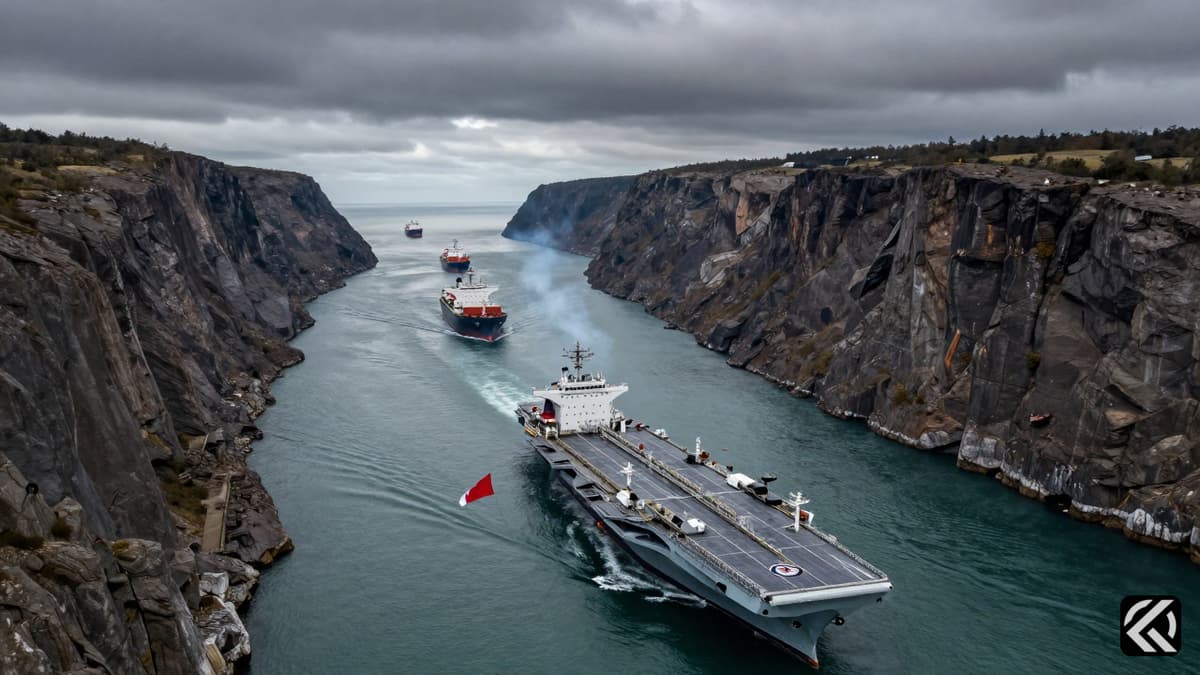
An extended US blockade of waters around Iranian ports has now taken effect, marking a critical escalation in the conflict. The blockade began on Monday after weekend peace talks in Pakistan ended without a breakthrough. At least 15 US warships were initially reported to join the effort, though a South Korean naval expert warns that effective enforcement would require significantly more naval vessels and aircraft. Yu Jihoon, a research fellow at the Korea Institute for Defense Analyses, noted that the strain on the US Navy could be significant, as the blockade must function alongside aerial surveillance, mine responses, and deterrence against Iranian high-speed boats.
Evidence of the conflict's intensity has emerged on the ground and in the air. An Air Force KC-135 aerial refueling jet bearing markings of the Ohio National Guard landed in England with what analysts say appears to be dozens of patched-up shrapnel holes. The aircraft, filmed taxiing at RAF Mildenhall, showed extensive repairs stretching from the cockpit to the tailfin. Arun Dawson, a researcher with the Nuclear Deterrence Network, stated the damage is consistent with shrapnel from an Iranian ballistic missile attack that destroyed a US E-3 AWACS aircraft in Saudi Arabia last month. This incident highlights the physical dangers facing US assets even as they enforce the new restrictions.
Strait of Hormuz blockade measures are already impacting global trade flows. Data from MarineTraffic shows the Malawi-flagged Chinese-owned tanker Rich Starry, linked to Full Star Shipping, managed to pass through the strait on Tuesday after a brief return to Iran's Qeshm Island. The vessel, which has been under US sanctions since 2023, was carrying methanol to China. Additionally, another sanctioned tanker, the Comoros-registered Elpis, passed through the strait on Monday carrying oil, marking the first vessel to transit after the blockade was set to take effect.
The economic stakes are particularly high for Asia, the world's most populous continent and home to more than half of global manufacturing. The region is heavily reliant on Middle Eastern energy, making it susceptible to shortages and price surges. The United Nations Development Programme (UNDP) predicts the war puts 32 million people at risk of falling into poverty globally, with 8.8 million of them in the Asia-Pacific region. Countries like South Korea, Japan, and the Philippines, key US allies, are now scrambling to save their economies as the energy supply they rely on slows to a trickle.
Donald Trump has expressed the belief that economic pain will do what weeks of air strikes could not: break Tehran's will and force concessions. However, experts suggest this might be a misreading of Iran's threshold for pain. Hasan Alhasan, a senior fellow at the International Institute for Strategic Studies, noted that Iran has several options to offset the economic effects, including ramping up oil and gas exports through alternative routes like pipelines to Iraq, Turkey, and Armenia, or via the Caspian Sea. Iran has also vowed to retaliate, with officials warning of ripple effects on the global economy.
Political tensions have also spiked between the US and the Vatican. Pope Leo has stated he will "not back down" from articulating the moral principles of the Catholic Church despite an escalating feud with President Trump. Father John Lydon, a former colleague of the Pope, confirmed that the pontiff has "no fear of the Trump administration" and would continue speaking out against the war. The Pope's recent condemnation of the US-Israeli war on X sparked criticism from Trump, dividing some of the US president's religious voter base.
The strategic landscape of the conflict is shifting toward a prolonged economic siege. As the Strait of Hormuz blockade solidifies, the US is testing Iran's pain threshold through alternative channels. While the US Navy faces the burden of maintaining a large operational group, Iran may pivot to military routes or rely on its shadow fleet to bypass restrictions. If the blockade continues, the global economy faces a protracted crisis where energy conservation becomes a primary strategy for nations lacking alternative sources. The physical damage to US assets, evidenced by the shrapnel damage on the KC-135, suggests that the conflict is extending beyond mere diplomatic posturing into direct, high-stakes military confrontation. The world must now prepare for a scenario where the cost of energy remains volatile, and the stability of key US allies in the Asia-Pacific region is increasingly tested by the disruption of vital supply chains.
Jun 8, 2026 02:17 UTC
Magnitude 7.8 Quake Shakes Philippines, Urging Immediate Evacuations
Jun 8, 2026 00:51 UTC
Trump Claims Iran Nuclear Deal Imminent Despite Diplomatic Fractures
Jun 8, 2026 00:47 UTC
Iran Fires Missiles at Israel After Beirut Strike
Jun 7, 2026 22:00 UTC
US, Iran Peace Hops Fade 100 Days Into War
Jun 8, 2026 04:15 UTC
Trump Urges Netanyahu to Halt Iran Strike for Peace


