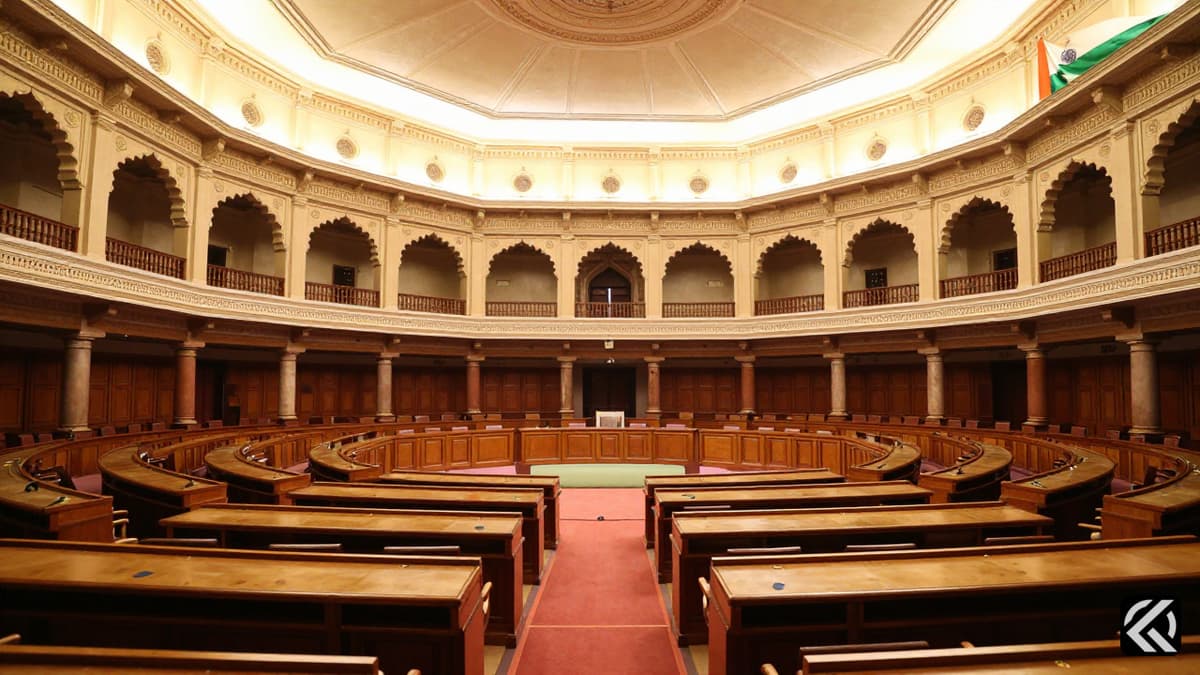
Prime Minister Narendra Modi declares Parliament is on the brink of history ahead of crucial votes to implement women's quotas, aiming for unanimous cross-party support.
Prime Minister Narendra Modi has declared that India's Parliament is on the verge of making history. This historic moment arrives ahead of the Lok Sabha and Rajya Sabha sessions scheduled to take up the government's bills. The primary objective of this legislative push is to implement women's reservation in legislatures starting from the year 2029.
Addressing the chamber ahead of the proceedings, the Prime Minister expressed a strong sense of confidence. He voiced this confidence specifically regarding the expectation that opposition voices, including the Congress party and its allies, will ultimately back the measures. This stance was taken even as several opposition parties have strongly criticized the government for what they term "rushing" the bills during a period of active state elections. Furthermore, questions regarding the delimitation proposal have been raised by the opposition. Despite these challenges, PM Modi refrained from engaging directly with the specific contentious issues of rushing or delimitation during an event. Instead, he chose to highlight the long-standing cross-party support that the proposal has historically enjoyed.
During the Nari Shakti Vandan programme, an event dedicated to recognizing women achievers from various sectors, the Prime Minister spoke extensively about the unity surrounding the bill. Former Lok Sabha Speaker Meira Kumar of the Congress party was also present at the gathering. In his address, PM Modi emphasized that the credit for the passage of the women's quota bill will rightfully belong to every political party involved. He recalled that as far back as 2023, when the original law was enacted, there was a collective desire for its quick implementation.
The Prime Minister highlighted that the decades-long wait for reservation for women in one-third of seats in the Lok Sabha and state assemblies will finally come to an end. This milestone is expected to be achieved during Parliament's upcoming three-day sitting beginning on April 16. He described the country's Parliament as being on the brink of creating history, a sentiment underscored by his personal commitment to women's empowerment that dates back to his tenure as Gujarat CM. Throughout his years in office, he has launched numerous schemes targeting different sectors to ensure the welfare of women.
The Prime Minister's remarks evoked smiles and applause from the audience when he noted the tangible impact of his financial empowerment measures. Specifically, he pointed out how getting government-assisted houses registered in women's names has successfully given them a voice in their family's decision-making processes. This focus on practical empowerment serves as the backdrop for the legislative efforts to secure equal representation in the nation's highest law-making bodies.
Regarding the timeline, the Prime Minister noted that when the law was enacted in 2023, the consensus was to push for its swift enforcement. He acknowledged that opposition MPs were especially vocal in demanding that the enforcement happen from 2029. In response to the current situation, the Prime Minister affirmed that the government considers the views of the opposition seriously. He stated that it is the administration's priority that this time, too, the process be carried out through dialogue, cooperation, and the participation of everyone involved.
The passage of the constitutional amendment bill remains the central hurdle. It requires a two-thirds majority to be enacted. While the government acknowledges that it needs support from at least a section of the opposition parties to secure this majority, the political landscape remains complex. As of the current reporting, none of the BJP's main rivals have pledged categorical support. These key rivals include the Congress, TMC, DMK, and SP. Collectively, these four parties hold enough MPs to potentially deny the passage of the bill in the Lok Sabha, creating a high-stakes environment for the upcoming parliamentary session.
The current trajectory suggests a critical test of political unity in India. The Prime Minister's confidence in cross-party backing contrasts with the stated inability of major opposition groups to commit to the amendment yet. If the government secures the necessary votes through dialogue and cooperation as intended, the implementation of the women's reservation bill will mark a definitive shift in the demographic composition of India's legislative bodies. However, the absence of categorical support from the four major opposition parties indicates that the path to a unanimous vote may be arduous. The outcome of the three-day sitting will determine whether the historic vision of equal representation can be realized immediately or if it faces further delays. The political calculus will likely hinge on whether the Prime Minister's appeal for cooperation transcends the current partisan disagreements regarding the timing and the delimitation proposal. The next few days in the Parliament will be watched closely as the country anticipates a decision that could reshape the future of its democratic institutions.
Jun 8, 2026 04:15 UTC
Trump Urges Netanyahu to Halt Iran Strike for Peace
Join 50,000+ readers getting the global briefing every morning.
No spam. Unsubscribe anytime.
Jun 8, 2026 02:28 UTC
Trump Walks Out of Meet the Press After Rejecting Evidence Demands
Jun 8, 2026 02:17 UTC
Magnitude 7.8 Quake Shakes Philippines, Urging Immediate Evacuations
Jun 8, 2026 00:51 UTC
Trump Claims Iran Nuclear Deal Imminent Despite Diplomatic Fractures
Jun 8, 2026 00:47 UTC
Iran Fires Missiles at Israel After Beirut Strike