A devastating 7.8 magnitude quake struck Mindanao on June 8, triggering widespread destruction and urgent tsunami warnings across Southeast Asia.
On Sunday morning, June 8, 2026, a powerful seismic event fundamentally altered the safety of the southern Philippines, striking the region with devastating force. A magnitude 7.8 Philippines earthquake hit off the coast of the island of Mindanao shortly before 7:40am local time, which corresponds to 23:40 GMT on Saturday. The timing of the quake, early in the morning, likely exacerbated the immediate chaos, as it disrupted daily routines and caught many residents by surprise. According to the United States Geological Survey, the intensity of the tremors was sufficient to trigger immediate and widespread emergency responses across multiple sectors of society and government.
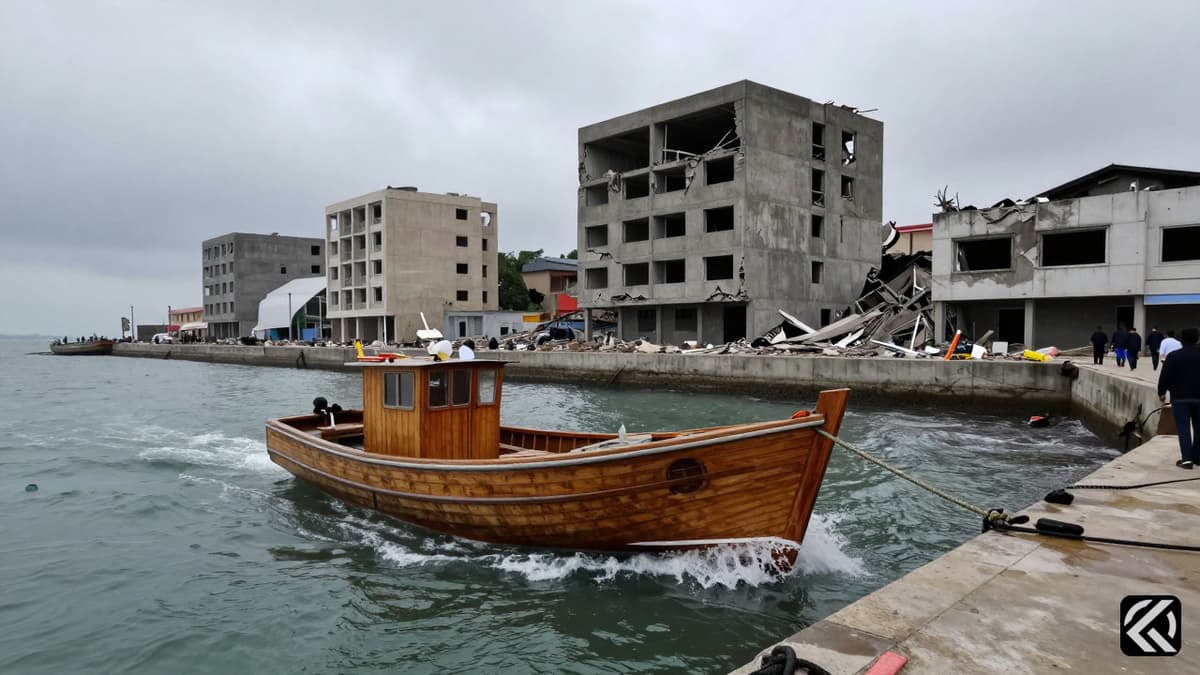
The immediate aftermath was characterized by visible destruction and a rapid mobilization of emergency protocols. Video footage shared on official social media channels captured the sheer power of the event, showing a three-storey building in General Santos City collapsing in a massive cloud of dust and debris. This structure, which housed a Jollibees restaurant, served as a stark visual indicator of the quake's destructive capacity. Other images confirmed extensive damage to various buildings across the region, featuring smashed windows and caved-in roofs, illustrating the indiscriminate nature of the seismic shockwave on infrastructure.
In response to the crisis, Philippine President Ferdinand Marcos took immediate action on Monday morning, declaring that emergency agencies had been fully activated. He specifically highlighted the deployment of the Office of Civil Defence and the National Disaster Risk Reduction and Management Council to coordinate relief efforts. Marcos emphasized the critical importance of public compliance with government advisories regarding the secondary danger of hazardous tsunami waves. His directive was clear and urgent: citizens in affected provinces were urged to heed the tsunami alert and move to higher ground immediately, emphasizing that personal safety superseded any material possessions left behind.
The threat posed by the earthquake extended beyond the initial ground shaking, with significant concerns regarding subsequent tsunami waves. The US-based Pacific Tsunami Warning Center provided specific projections, stating that tsunami waves as high as 3 metres (9.8 feet) could impact coastal areas of the Philippines. Furthermore, waves of up to 1 metre (3.3ft) were predicted for parts of Indonesia and Malaysia, indicating a regional crisis that required cross-border coordination and vigilance. The US National Tsunami Warning Center also clarified that the quake, which had been initially estimated at magnitude 8.2 before being downgraded, posed no threat to coastal areas of the United States, allowing international attention to remain focused on Southeast Asia.
Within the Philippines, the Philippine Institute of Volcanology and Seismology (PHIVOLCS) issued precise instructions for those in coastal areas of nine provinces, including Sarangani, Davao Occidental, Tawi-tawi, and Sulu. The institute commanded these residents to immediately evacuate to higher ground or move further inland. Special directives were given to maritime personnel, urging owners of boats in harbors, estuaries, or shallow coastal waters to secure their vessels and move away from the waterfront. Those already at sea during this period were advised to stay offshore in deep waters until further notice, a critical safety measure to prevent capsizing in turbulent tsunami conditions.
The government also took precautionary measures regarding education and public safety. President Marcos announced that schools across several provinces in Mindanao had been closed for the day, prioritizing the safety of students and staff over educational continuity. This closure reflects the severity of the situation and the need for authorities to focus entirely on disaster management and rescue operations. The combination of infrastructure damage, potential tsunami impacts, and educational shutdowns highlights the multifaceted challenge facing the region in the days following the initial seismic event.
As authorities continue to monitor the situation, the focus remains on the immediate physical safety of the population. The collapse of major structures in General Santos City and the widespread damage reported elsewhere underscore the vulnerability of coastal and urban infrastructure to such powerful natural events. The coordinated response involving national leadership, geological monitoring agencies, and international warning centers demonstrates the complexity of managing a disaster of this magnitude. The evacuation of nine provinces and the warning of up to 3-meter waves in the Philippines, along with smaller waves in neighboring countries, represent a significant humanitarian challenge.
The immediate effects of this magnitude 7.8 seismic event have necessitated a massive mobilization of resources and strict adherence to evacuation protocols in Mindanao. The structural damage observed, including the complete collapse of multi-story buildings in General Santos City, suggests that future recovery efforts will require extensive rebuilding of critical infrastructure. With schools closed and civil defense agencies activated, the short-term priority is stabilizing the region and ensuring no lives are lost to subsequent tsunami waves, which officials warn could reach significant heights in coastal zones. Looking ahead, the potential for aftershocks and the ongoing tsunami risk mean that the region must remain on high alert. The closure of educational facilities and the activation of national disaster councils indicate a sustained governmental response. Long-term, this event may necessitate stricter building codes in high-risk seismic zones and enhanced early warning systems to mitigate the impact of future earthquakes, ensuring that the lessons learned from this crisis contribute to greater resilience against similar natural disasters in the Mindanao region and beyond.
Jun 8, 2026 02:17 UTC
Magnitude 7.8 Quake Shakes Philippines, Urging Immediate Evacuations
Join 50,000+ readers getting the global briefing every morning.
No spam. Unsubscribe anytime.
Jun 8, 2026 00:51 UTC
Trump Claims Iran Nuclear Deal Imminent Despite Diplomatic Fractures
Jun 8, 2026 00:47 UTC
Iran Fires Missiles at Israel After Beirut Strike
Jun 7, 2026 22:38 UTC
Congress Party Claims Unity for INDIA Bloc Delhi Meeting
Jun 7, 2026 22:00 UTC
US, Iran Peace Hops Fade 100 Days Into War


