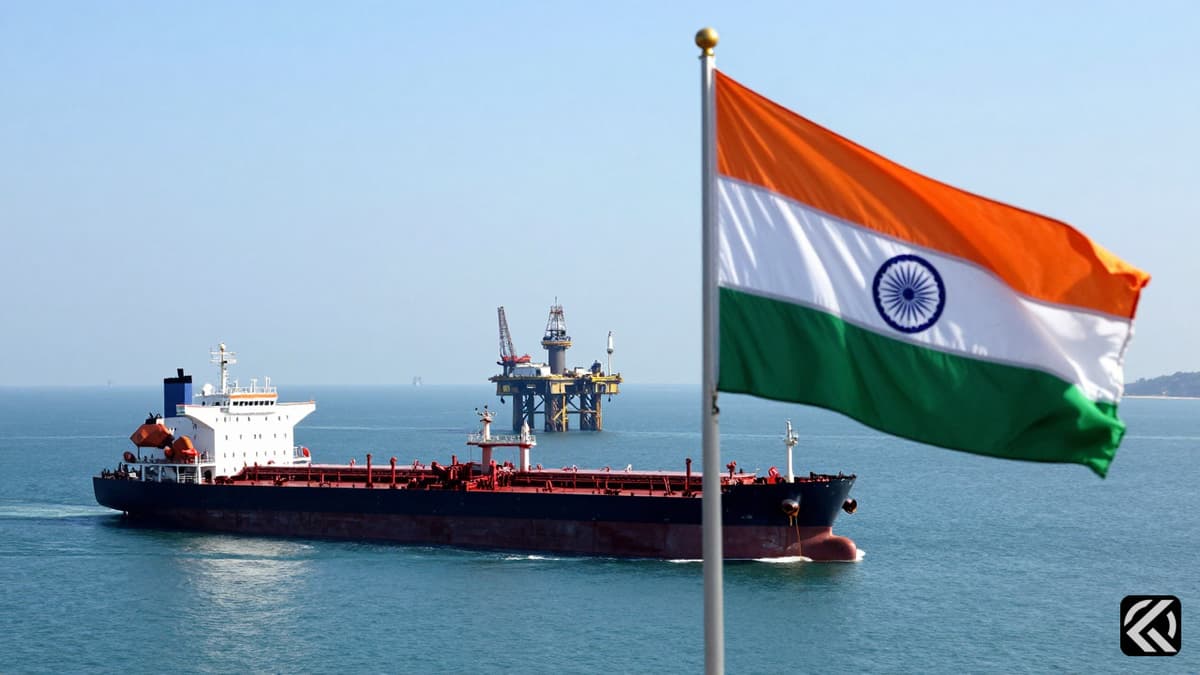
Amidst rising tensions, Iran confirms it offers navigation support to India in the Strait of Hormuz, categorically denying any toll charges on Indian vessels while US blockade threats loom.
Iranian officials stated that they maintain "good contact" with India regarding the safe passage of ships through the Strait of Hormuz. Iranian Ambassador to India, Mohammad Fathali, explicitly confirmed that Tehran is actively willing to assist New Delhi with navigation challenges. Simultaneously, Fathali firmly rejected claims that Iran has levied charges on Indian vessels, clarifying that no tolls have been imposed. This diplomatic engagement comes as the region faces significant geopolitical pressure following a unilateral US announcement.
The context of this exchange involves a severe shift in maritime policy initiated by the United States. US President Donald Trump announced that the United States would begin a blockade of all Iranian Gulf ports on Monday at 1400 GMT, a deadline that has now passed. This action restricts all ships traveling to or from Iranian ports from passing through the critical waterway. The administration issued a stark warning regarding the enforcement of this measure, with Trump stating that any ship found near the blockade would be "immediately eliminated." The President characterized the enforcement method as a "quick and brutal" system similar to that used against drug dealers, posted on Truth Social.
Amidst this tightening of access, Ambassador Fathali emphasized the historical and strategic bond between the two nations. Speaking at a press briefing, Fathali asserted that Iran and India "share the same fate and interests." He noted that despite the challenging times, the two nations maintain strong ties. When addressing the specific concern regarding financial penalties, Fathali challenged Indian officials to verify the record, stating, "You can ask the Indian government if we have charged anything up to now." New Delhi has consistently maintained that it has never paid a toll for the passage of its nine ships through the waterway.
The impact of the conflict on energy supply chains has been significant. Approximately half of India's crude oil and liquefied petroleum gas (LPG) supplies traditionally pass through the Strait of Hormuz. Despite the US President's threat to block vessels making payments to Iran, New Delhi secured its first India Iranian oil import in seven years. Ship tracking data reported by Reuters indicates that two very large crude carriers loaded with Iranian oil have already reached Indian ports. This shipment occurred despite a temporary waiver from the United States on oil purchases, which was in place before the new blockade measures took effect.
However, the blockade has created immediate logistical hurdles. While India secured nine liquefied petroleum gas tankers, 15 India-flagged ships currently remain stuck in the Persian Gulf due to the restrictions. Fathali reiterated that Iran is ready to facilitate the movement of these vessels. "In this difficult time, we have good relations. We believe Iran and India share common interests and a common fate," Fathali said, adding that Iran wants to help India navigate the passage of tankers through the strait.
The Ambassador also clarified Iran's commercial stance regarding its energy resources. He stated that Iran is ready to sell its oil to any country that wants to purchase it, highlighting the nation's willingness to trade despite external pressures. This statement underscores the economic stakes involved, as the US blockade threatens to disrupt the flow of energy resources globally. The President's announcement included a warning that the blockade would restrict all ships going to or coming from Iranian ports, effectively creating a choke point that could alter global shipping routes.
Notably, the US President's declaration included a specific instruction on the consequences of violating the blockade. He wrote, "Warning: If any of these ships come anywhere close to our BLOCKADE, they will be immediately ELIMINATED, using the same system of kill that we use against the drug dealers on boats at Sea." He emphasized that other ships not involved in the restricted trade would not face these specific restrictions, though the scope of the blockade remains broad regarding Iranian ports. The tension was further highlighted by the fact that Trump had vowed to block passage for vessels making payments to Iran, directly contradicting the ongoing trade between New Delhi and Tehran.
The current situation presents a complex interplay of diplomatic assurances and military threats. While Iran insists on maintaining Iran-India Strait of Hormuz toll free passage and offers navigation assistance, the US Trump Hormuz blockade introduces a volatile element that overrides diplomatic channels. The arrival of oil shipments suggests that India has successfully navigated the immediate waiver window, but the future remains uncertain as the deadline for the blockade has passed. If the US enforcement measures intensify as described, the 15 stuck ships face potential entrapment, and the flow of energy resources through the strait could be severely disrupted. The reliance of half of India's energy supplies on this single waterway makes the resolution of this standoff critical for global economic stability. The willingness of India to receive Iranian oil despite the blockade indicates a continued commitment to maintaining energy security, even as it navigates the threat of immediate military action against its vessels by the US.
Jun 8, 2026 00:51 UTC
Trump Claims Iran Nuclear Deal Imminent Despite Diplomatic Fractures
Jun 8, 2026 00:47 UTC
Iran Fires Missiles at Israel After Beirut Strike
Jun 7, 2026 22:00 UTC
US, Iran Peace Hops Fade 100 Days Into War
Jun 7, 2026 20:57 UTC
Iran Strikes Israel: IRGC Promises Week of Continuous Offensive
Jun 8, 2026 02:28 UTC
Trump Walks Out of Meet the Press After Rejecting Evidence Demands


