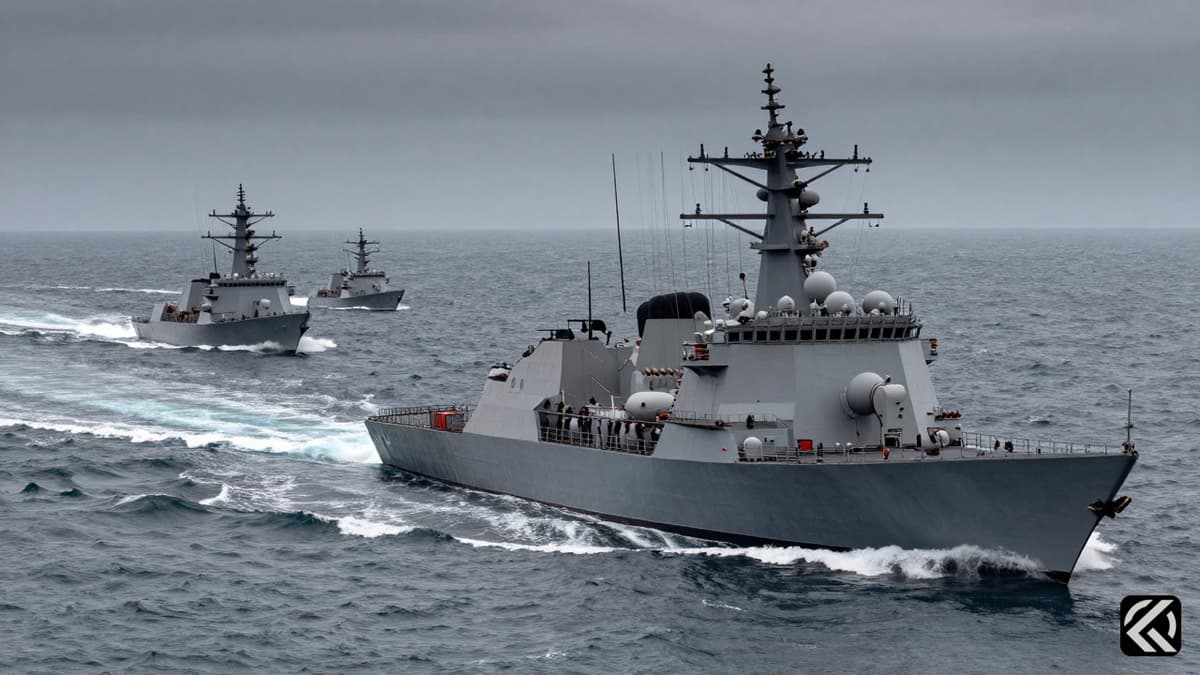
Tensions surge in the Middle East as U.S. forces threaten to eliminate Iranian vessels breaching a new naval blockade, while diplomatic rows intensify with the Vatican.
The escalating conflict known as the U.S.-Iran war reached a critical flashpoint on Monday, April 13, 2026, as President Donald Trump issued a stern military ultimatum regarding the Strait of Hormuz. With a naval blockade of Iranian ports now in effect, the President warned that any Iranian "fast attack ships" approaching the American blockade will be immediately eliminated. This aggressive stance coincides with a growing diplomatic rift involving the Vatican, as the U.S. administration clashed with Pope Leo XIV over the role of the Church in Middle East peace efforts.
The administration's hardline approach was further articulated by Vice President J.D. Vance, who told Fox News that Washington has made its red lines clear, placing the ball in Iran's court to act. Vance emphasized that there is no flexibility regarding U.S. control of enriched uranium or verification mechanisms to prevent nuclear weapons development. Simultaneously, the Vice President addressed the Vatican, stating that the Holy See should stick to matters of morality and allow the President to dictate American public policy. This exchange has fueled a row between President Trump and Pope Leo, with Italian Prime Minister Giorgia Meloni condemning the President's criticism of the Pontiff as "unacceptable."
While diplomatic tensions rose in Rome, the military situation off the coast of Iran deteriorated rapidly. President Trump announced that 34 ships had managed to pass through the Strait of Hormuz on Sunday, the highest number since the waterway was choked off at the start of the conflict. However, he warned that the U.S. military would apply the same "system of kill" used against drug dealers at sea to any vessels violating the blockade. The UN Secretary-General called for respect of freedom of navigation, noting that disruptions have already caused increased global economic fragility.
In the political arena, the outlook for Lebanon remains grim. Hezbollah leader Naim Qassem urged the cancellation of a planned meeting between Lebanese and Israeli ambassadors in Washington, reaffirming the group's rejection of negotiations with Israel. Wafiq Safa, a senior Hezbollah official, stated that the group is not bound by any agreements resulting from these talks. Meanwhile, China's top diplomat Wang Yi and Pakistan's Prime Minister Shehbaz Sharif both emphasized that maintaining a ceasefire is an immediate priority, though efforts to finalize an agreement remain ongoing after weekend talks in Islamabad failed.
The economic ramifications of the conflict are already becoming starkly apparent. The head of the International Energy Agency, Fatih Birol, warned that April could prove tougher than March for energy markets, as no cargo has been loaded from the region since the crisis began, unlike the pre-emptive shipments seen in March. The International Monetary Fund, World Bank, and IEA jointly urged nations to stop hoarding energy supplies and imposing export controls to stabilize the worst global energy disruption in history. Despite these warnings, Wall Street stocks pushed higher on Monday as oil prices moderated, driven by optimism regarding a potential U.S.-Iran peace deal.
Oil prices, which had surged above $100 a barrel following the imposition of the U.S. blockade, later eased but ended higher below the $100 mark. Analysts noted President Trump's claim that Iranian representatives had called him expressing a desire for a deal following the failed talks in Pakistan. However, the broader regional picture remains volatile, with the U.K. and Pakistan exchanging views on the recent U.S.-Iran negotiations and the Indian government discussing the well-being of its citizens in the Gulf with Kuwait.
The immediate future of the Hezbollah Israel talks remains uncertain as the militant group firmly opposes the direct negotiations between the two nations. With the Lebanese and Israeli ambassadors scheduled to meet in Washington on April 14, 2026, Hezbollah has declared it will not abide by any resulting agreements, signaling that the path to a comprehensive ceasefire may still be obstructed by regional proxies. As the U.S. blockade of Iranian ports takes effect, the international community faces a delicate balance between enforcing security measures and preventing a total escalation of the U.S.-Iran war.
Looking ahead, the prolonged disruption of the Strait of Hormuz poses a severe threat to global energy security and economic stability. With the UN warning of increased global fragility and the IEA predicting worsening conditions in April, the window for a diplomatic resolution appears to be narrowing. The continued refusal of Hezbollah to participate in the talks and the deepening rift between the U.S. and the Vatican suggests that while military pressure is intensifying, the political mechanisms required to end the conflict face significant hurdles. If the current blockade holds and no further cargo is loaded from the region, the global economic impact is poised to deepen, potentially forcing a more urgent and comprehensive international intervention to restore stability to West Asia.
Jun 8, 2026 00:51 UTC
Trump Claims Iran Nuclear Deal Imminent Despite Diplomatic Fractures
Jun 8, 2026 00:47 UTC
Iran Fires Missiles at Israel After Beirut Strike
Jun 7, 2026 22:00 UTC
US, Iran Peace Hops Fade 100 Days Into War
Jun 7, 2026 20:57 UTC
Iran Strikes Israel: IRGC Promises Week of Continuous Offensive
Jun 8, 2026 02:28 UTC
Trump Walks Out of Meet the Press After Rejecting Evidence Demands


