Section
A violent attack on the Flydubai Flight FZ1073 cockpit has triggered intense global scrutiny over aviation security protocols and the vetting of flight crew members.
The recent violent incident aboard Flydubai Flight FZ1073 has ignited a fierce debate regarding global aviation security protocols and the rigorous vetting processes for airline staff. Following a terrifying ordeal where the captain was stabbed by his own copilot, authorities and passengers alike are demanding answers about how such a threat was allowed to manifest at 35,000 feet.
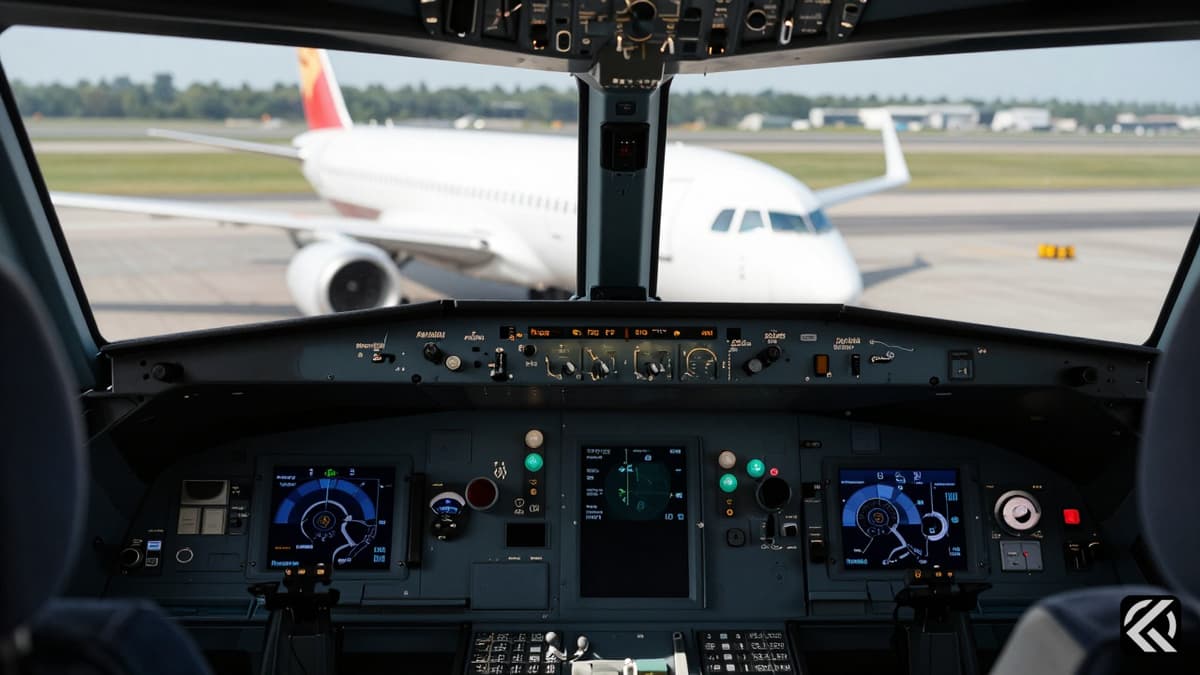
About two and a half hours after departing Dubai International Airport on Wednesday, the flight entered a steep descent, eventually making an emergency landing in Saudi Arabia. During this critical window, the cockpit became the scene of a brutal struggle. Media reports confirm that the copilot, identified as Hamam al-Hammami, launched a physical assault on Captain Smit Machchhar. The situation reached a climax when Machchhar managed to break free and open the cockpit door while covered in blood, allowing passengers to overpower the attacker. The prosecutor general of the United Arab Emirates confirmed that the weapon used was the cockpit’s crash axe, labeling the event a “terrorist act.”
While investigators work to establish a definitive motive, several critical questions have emerged regarding the security background of the suspect. Reports indicate that al-Hammami, an Omani national, had previously faced significant security flags in his home country. On Friday, The Wall Street Journal quoted unnamed sources stating that Omani authorities had blocked him from flying domestically due to concerns over his ideological views.
Further details emerged on Saturday from CNN, which cited a regional diplomatic source claiming that al-Hammami was also removed from flight training for similar reasons and later reassigned. Additionally, two sources familiar with the matter noted that the pilot was removed from a position at Oman’s national airline last year due to these same ideological concerns. It remains unclear how al-Hammami managed to secure a route with Flydubai despite these prior red flags, raising serious questions about the effectiveness of cross-border checks.
The situation adds complexity to international relations, as Israel does not have official diplomatic ties with Oman. Prime Minister Benjamin Netanyahu has stated that such countries are generally not allowed to operate flights to Israel, yet the Omani national was on board. Netanyahu warned that anyone involved in the attack would pay a “heavy price” and confirmed that Israel is investigating whether the copilot acted under direction. Haaretz reported that Israeli government officials had received the crew and passenger lists in advance, including the Omani copilot’s details. Security sources noted that the Ministry of Transport and Road Safety’s Security Department and Mossad are responsible for monitoring foreign flight crews.
A significant portion of the public discourse has focused on the extraordinary actions of the passengers who helped subdue the attacker. Among them was Yaniv Hayoun, described by Israeli Prime Minister Netanyahu as a plumber. In a meeting at the airport, Netanyahu asked Hayoun how he managed to assist with the aircraft’s controls.
Hayoun, 50, explained that he relied on knowledge gained from watching the Canadian investigation show Air Crash Investigation. “I watched Air Crash Investigation, Mr Prime Minister,” he said. “I jumped back, grabbed the controls and started pulling back the handles” just as he had seen experts pull in the show when analyzing plane crashes. His actions allowed another pilot to take control of the aircraft. Social media users have since questioned how a civilian with no professional piloting background could successfully manage an aircraft’s controls during such a high-stress emergency.
The flight’s physical trajectory during the incident was equally alarming. According to flight-tracking website Flightradar24, the Flydubai plane dropped more than 5,180 meters (17,000 feet) in less than two minutes. Despite this midair drop causing mass panic among passengers, no one was reportedly harmed, according to publicly available information. This stands in stark contrast to an August incident involving an Air India flight that experienced turbulence causing a 90-meter drop but resulted in at least 17 injured passengers.
A flight instructor who recreated the Flydubai jet’s near-vertical dive in a simulator noted that the plane would have exceeded its maximum structural speed. He warned that during the recovery’s negative G-forces, anything unsecured would have flown all over the cabin, highlighting the sheer danger of the maneuver.
Details regarding the timing of the violence have also come under scrutiny. According to The Times of Israel, Captain Machchhar spoke to Netanyahu on Saturday, revealing that al-Hammami had asked to pray before the attack. Machchhar stated that four or five minutes after the prayer request, he was struck with “a big blow” to the back of his head.
The flight departed the UAE at 7:05 am (03:05 GMT), and the attack reportedly occurred about two and a half hours later at 05:35 GMT. The predawn prayer time in the Emirates on Wednesday was 04:51 am (12:51 GMT). This discrepancy has led to speculation, as the attack time did not align with standard Islamic prayer times. However, it is possible that al-Hammami was performing a different personal prayer before the assault, rather than a formal religious obligation.
The Flydubai incident exposes critical vulnerabilities in how airline personnel are vetted across international borders. As authorities investigate the copilot's ideological background and previous removals from aviation roles, airlines and governments will likely face immense pressure to standardize security screening. The success of passenger intervention suggests that emergency protocols may need to include more rigorous civilian training, while the failure to catch the suspect's prior red flags indicates an urgent need for improved data sharing between national intelligence agencies and international carriers to prevent future threats.
Oct 6, 2026 02:48 UTC
Yemen Forces Recapture Mocha in Major Counteroffensive
Oct 6, 2026 00:07 UTC
Teen Loses Hand in French School Protest Clashes Amid Escalating Violence
Oct 5, 2026 22:36 UTC
UAE Shares FlyDubai Crew Data After Pilot Seize Control Attempt
Oct 5, 2026 22:00 UTC
US Withdraws Heavy Bombers From UK Base Amidst Rising Tensions With Iran
Oct 5, 2026 22:36 UTC
UAE Shares FlyDubai Crew Data After Pilot Seize Control Attempt