Section
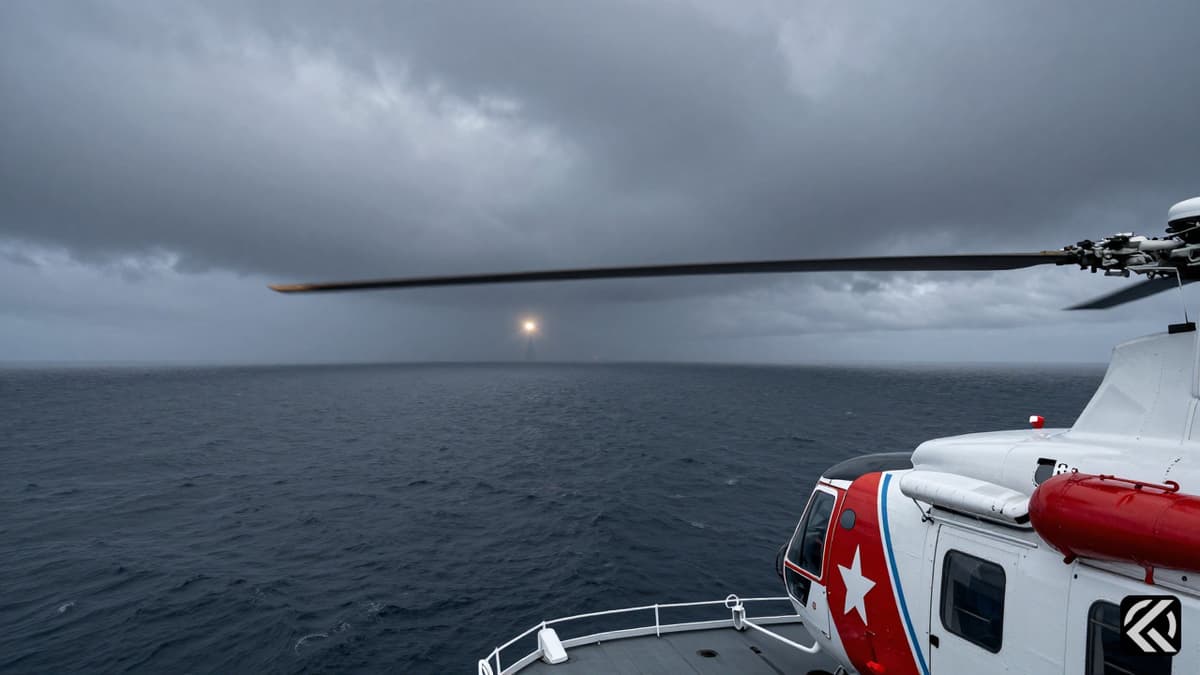
A critical search operation is underway in the North Atlantic after a medical transport aircraft vanished from radar, leaving authorities and families in anxious limbo.
On the early morning of Saturday, October 3, 2026, a massive search and rescue operation was launched by US authorities after a medical plane carrying six people went missing off the coast of Massachusetts. The Federal Aviation Administration (FAA) confirmed that contact was lost with the aircraft just after 1:00 local time, prompting an immediate emergency response. The missing aircraft was identified as a Gulfstream G-100, a jet commonly utilized for high-acuity patient transport, which was en route from Bermuda to Boston Logan International Airport.
The urgency of the situation escalated quickly as flight data revealed disturbing anomalies in the final moments of the flight. According to data from FlightAware, the aircraft did not simply disappear; it experienced a significant and rapid drop in altitude. The tracker shows the aircraft plummeting from an cruising altitude of approximately 7,300 meters (24,000 feet) down to 3,300 meters (11,000 feet) before its communications systems went dark. This sudden descent has become a critical focal point for investigators and rescue coordinators trying to determine the cause of the incident.
Radio transmissions, provided by LiveATC.net and reported by the Boston Globe, offer a chilling glimpse into the final moments of the flight. The recordings capture a tense exchange between the air traffic controller and the pilot. The controller asked, "You're coming in blind? Is that what you said? Are you declaring an emergency, or no?" The pilot's response was difficult to discern due to signal interference. The controller followed up, stating, "You're coming in a little weak so I didn't hear what your response was, if you were declaring an emergency or not," highlighting the deteriorating communication link just before the silence began.
The plane in question belonged to Latitude Air Ambulances, a company specializing in international medical flights for patients returning home. Clarence Togeretz, the director of flight operations at Latitude, confirmed to CBC News that the aircraft was staffed by two pilots and two medical staff members, all of whom are Canadian. The crew had traveled to Bermuda to collect a patient and a relative, neither of whom are Canadian, before beginning their journey back to the United States. The flight was scheduled to land at Boston's Logan International Airport at 1:30 EDT (6:30 GMT), but it never arrived.
As news of the disappearance spread, the US Coast Guard's Northeast District confirmed that a comprehensive air and water search is underway off the coast of Nantucket, a Massachusetts island located in the Atlantic Ocean. The island serves as a primary geographic reference point for the search zone, given the plane's trajectory from Bermuda toward Boston. The presence of the Coast Guard indicates that the search area likely includes both the airspace over the island and the surrounding waters, reflecting the possibility of a water landing or a crash into the sea.
The loss of contact with a medical plane missing in this manner raises serious concerns regarding the safety of the six individuals on board. The combination of the rapid altitude loss and the weak radio signal suggests technical difficulties or severe weather conditions, though no weather reports confirming extreme storms in the immediate area have been released. The uncertainty is compounded by the nature of the mission; medical transport flights often operate under time-sensitive conditions, and the loss of such a specialized aircraft highlights the risks involved in international patient transport.
Clarence Togeretz's statement to CBC News provides the first detailed confirmation of the crew's identity and the mission's purpose. He noted that the crew flew to Bermuda specifically to collect a patient and their relative. This detail underscores the critical nature of the flight, which was likely transporting individuals requiring intensive care. The involvement of Canadian crew members on a flight departing Bermuda adds an international dimension to the incident, potentially involving diplomatic coordination as rescue efforts proceed.
The FAA's role in coordinating the search highlights the systemic response to aviation emergencies. By putting out a search-and-rescue notice just after 1:00 local time, the agency initiated a protocol designed to minimize response time in critical incidents. The coordination between the FAA, the US Coast Guard, and the flight tracking service FlightAware demonstrates the interconnected nature of modern aviation safety systems. However, the gap between the last known position and the current search area remains a critical unknown.
The significance of the Gulfstream G-100 in this context cannot be understated. This specific model is widely regarded as a reliable platform for medical evacuation, equipped with necessary medical infrastructure. The fact that a malfunction or incident occurred with this aircraft model draws attention to maintenance records and operational protocols. Investigators will likely scrutinize the maintenance logs and the flight plan to understand why the aircraft deviated so sharply from its expected path.
As the search continues off Nantucket, the focus remains on locating any debris or survivors. The maritime environment presents unique challenges, including currents that can move debris quickly and weather conditions that can obscure visibility. The Coast Guard's presence indicates that maritime salvage teams are likely on standby, ready to assist in underwater searches if a crash site is identified. The passage of time since the loss of contact adds pressure to the operation, as the window for surviving any potential water landing decreases rapidly.
The incident has sparked immediate concern among aviation experts and the public alike. Medical transport flights are critical components of global healthcare infrastructure, connecting patients with specialized care across borders. A failure of such magnitude disrupts not only the immediate mission but also trust in the reliability of international medical transport services. Families of the passengers and crew are undoubtedly in a state of extreme anxiety, awaiting news from officials who are working diligently to piece together the final moments of the flight.
Looking ahead, the outcome of this search will have broader implications for aviation safety regulations. If the investigation reveals that the altitude drop was due to a mechanical failure, it could lead to a grounding of similar aircraft models or mandatory inspections of specific components. If the cause was related to pilot error or communication failures, it may result in new protocols for how air traffic controllers handle weak signals or unresponsive aircraft in critical zones. The transparency of the data released by FlightAware and the FAA sets a precedent for public access to real-time flight information during crises.
The role of media in reporting this incident also plays a part in the unfolding narrative. The Boston Globe and CBC News have provided crucial updates based on official sources, ensuring that the public receives accurate information. However, the speculative nature of early reporting on aviation accidents requires careful handling to avoid misinformation. The reliance on hard data, such as the FlightAware tracker and radio transcripts, provides a factual basis for reporting that helps mitigate rumors.
In conclusion, the disappearance of the medical jet off the Massachusetts coast is a developing crisis with profound human and operational implications. The search efforts are ongoing, and the focus remains on locating the aircraft and determining the cause of the incident. The involvement of multiple international entities, including Canadian crew members and US authorities, highlights the global nature of aviation emergencies. As the search progresses, the world watches closely, waiting for answers that will explain why six lives and a critical medical transport asset vanished in the span of minutes.
The search for the missing aircraft continues to dominate regional news, with authorities emphasizing the complexity of locating debris in the open Atlantic. As the search persists, the focus will shift toward determining the root cause of the altitude loss and communication failure. Future investigations may lead to stricter regulations on communication protocols during critical flight phases, potentially impacting how international medical flights are coordinated. The incident serves as a stark reminder of the inherent risks in aviation and the vital importance of robust emergency response systems in safeguarding lives across borders.
Oct 6, 2026 02:48 UTC
Yemen Forces Recapture Mocha in Major Counteroffensive
Oct 6, 2026 00:07 UTC
Teen Loses Hand in French School Protest Clashes Amid Escalating Violence
Oct 5, 2026 22:36 UTC
UAE Shares FlyDubai Crew Data After Pilot Seize Control Attempt
Oct 5, 2026 22:00 UTC
US Withdraws Heavy Bombers From UK Base Amidst Rising Tensions With Iran
Nov 5, 2026 20:16 UTC
Pia Dandiya Claims Landmark Florida Win in 2026 Midterms