Section
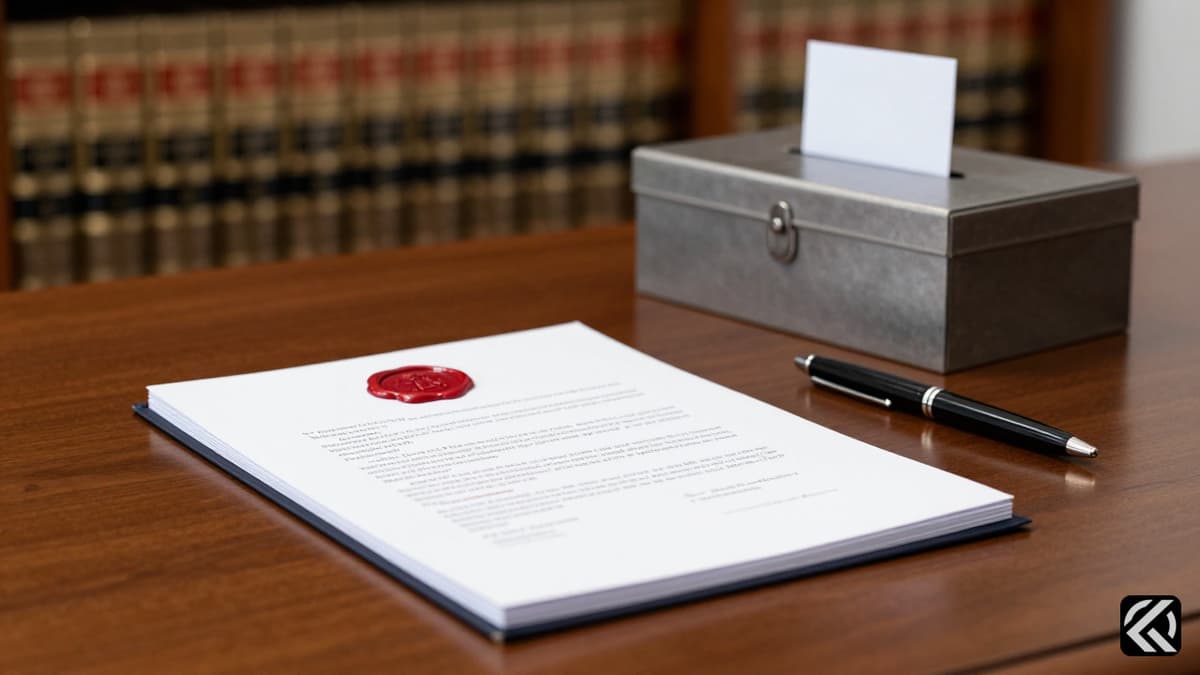
The Election Commission has officially welcomed the Supreme Court’s verdict on the Special Intensive Revision, confirming the legality of deleting voters with logical discrepancies and suspect citizenship status.
The Election Commission of India has officially welcomed the Supreme Court’s recent verdict regarding the Special Intensive Revision (SIR), affirming the legitimacy of its processes. As directed by the highest court, the Commission is mandated to forward the list of electors deleted during the SIR across 13 states to the competent authority under the Citizenship Act of 1955. This directive specifically targets voters who were not categorized under the standard Absent, Shifted, Dead, or Duplicate (ASDD) categories but were instead classified as 'others' or having 'suspect' citizenship. The EC’s move signifies a formal administrative alignment with the judicial endorsement of its rigorous verification standards, closing a chapter on legal challenges regarding the exclusion of voters based on complex mapping discrepancies.
Officials from the Election Commission expressed strong support for the judgment, stating that the SIR and its intricate procedures have been fully validated by the Supreme Court. The ruling addresses earlier challenges from opponents who had labeled the use of logical discrepancies as an attempt to disenfranchise voters. By upholding the deletion of individuals who failed to explain discrepancies such as mismatched father's names, gender errors, or unusual age gaps with mapped parents, the Court has reinforced the integrity of the electoral roll. The Commission emphasized that its primary duty remains with the voters, ensuring that only genuine citizens are part of the democratic framework.
The Supreme Court’s validation extends to the specific criteria used to identify 'suspect' citizenship. The EC highlighted that the process involves seeking clarification from electors when logical discrepancies arise. These discrepancies include a voter being over 45 years old but never previously enrolled, being one of more than six progeny of the same parent, or having an age gap of less than 15 years or over 50 years with a mapped parent. Additionally, a gap of less than 40 years with a mapped grandparent was cited as a reason for scrutiny. Voters who failed to explain these anomalies were deleted from the roll, a process now confirmed as legally sound by the top court.
Data from the second round of the SIR in a dozen states reveals the scale of these deletions. According to EC records, nearly 6.5 crore electors were deleted due to being ASDD-absent, shifted, dead, or duplicate. However, a significant subset of over 12.7 lakh individuals was excluded from the roll and classified as 'others'. Sources within the administration indicate that this group essentially comprises "suspect illegal immigrants." Furthermore, an additional 63.2 lakh voters were deleted through Form 7 and adjudication processes. Notably, over 27 lakh individuals were dropped from the Bengal roll after their appeals were rejected by officers, underscoring the thoroughness of the verification efforts.
The Supreme Court’s direction is not merely punitive but also procedural, requiring the Election Commission to hand over cases of 'suspect' citizens to the competent authority for examination. This authority, identified as the Foreigners Registration Office (FRO) or the Foreigners Regional Registration Office (FRRO), is already tasked with this role under the original SIR order. The electoral registration officer (ERO) and assistant ERO are instructed to forward these specific cases for verification. If the FRO or FRRO verifies the citizenship of an individual, they refer the case back to EC authorities, who will then reinstate the person to the electoral roll.
Conversely, if the citizenship is not verified, the FRO or FRRO has the authority to order the suspect to be sent to a detention or holding centre. This dual mechanism ensures that due process is followed, allowing for the correction of errors while maintaining strict borders against illegal immigration. The Supreme Court has thus balanced the need for accurate voter rolls with the legal provisions for verifying citizenship, providing a clear roadmap for handling these complex cases. This structured approach aims to eliminate ambiguities in voter eligibility and strengthen the foundational integrity of India's electoral democracy.
The implementation of this verdict will likely streamline the handling of citizenship disputes, reducing legal bottlenecks. As the EC proceeds with forwarding these lists, the focus will shift to the adjudication capabilities of the FRO and FRRO. The outcome of these verifications will determine the future of the 12.7 lakh individuals classified as 'others', highlighting the critical intersection of electoral law and immigration control.
The EC’s acceptance of the Supreme Court verdict marks a pivotal moment for electoral administration in India. By validating the use of logical discrepancies to filter out suspect voters, the ruling reinforces the authority of the Election Commission to maintain clean rolls. The subsequent verification by foreign registration offices will determine the final status of thousands of individuals. This process underscores a strict adherence to the Citizenship Act of 1955, ensuring that the electoral roll reflects only verified citizens. The long-term impact will be a more accurate and legally robust voter database, setting a precedent for future revisions and reducing the scope for legal challenges regarding voter eligibility.
Jun 11, 2026 17:21 UTC
Bangladesh Opposition Mobilizes Against India-Bangladesh Border Push-Ins and BSF Killings
Join 50,000+ readers getting the global briefing every morning.
No spam. Unsubscribe anytime.
Jun 11, 2026 17:40 UTC
Boelter Pleads Guilty in Minnesota Political Assassinations
Jun 11, 2026 17:21 UTC
Bangladesh Opposition Mobilizes Against India-Bangladesh Border Push-Ins and BSF Killings
Jun 11, 2026 17:21 UTC
John Healey Quits as UK Defence Secretary Over Funding Dispute
Jun 11, 2026 16:19 UTC
UK Defence Secretary John Healey Quits Over Funding Dispute