Section
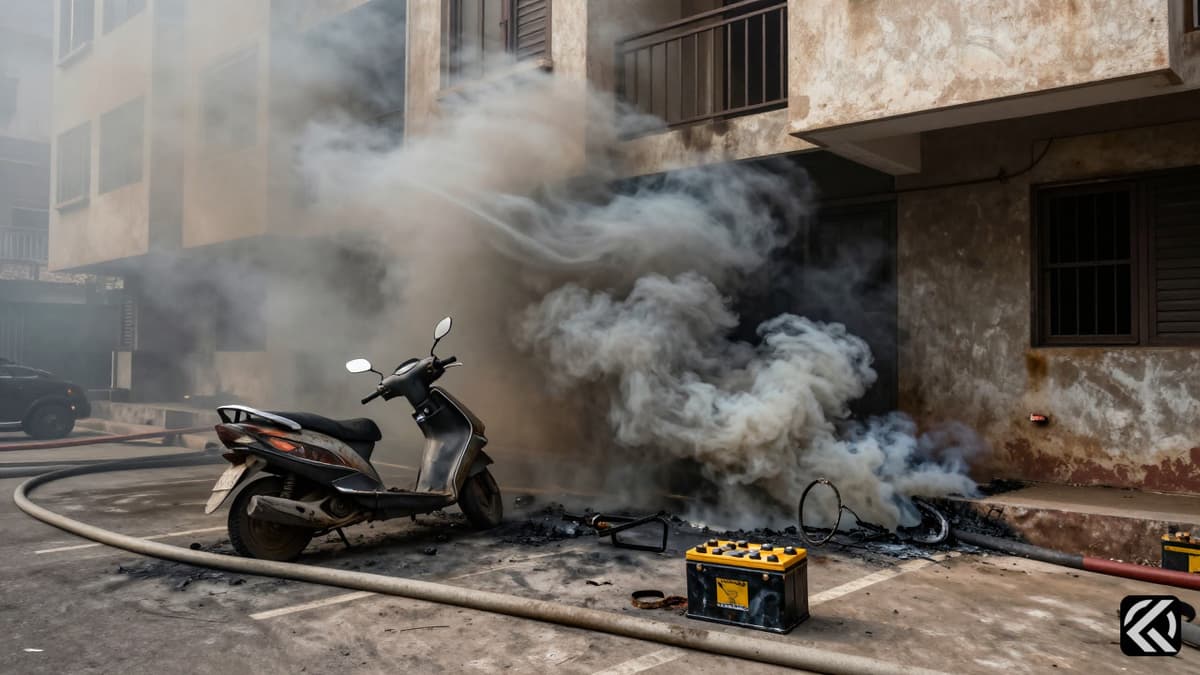
Deadly sparks from a charging electric vehicle ignited a Noida residential block, claiming two lives and triggering a massive emergency response involving fire crews and police.
The tragic loss of two lives in a Noida residential complex underscores the volatile dangers associated with improper electric vehicle energy storage. On Wednesday, July 15, a devastating fire erupted in a G+4 building located in Gali No. 2 of Mamura, within the Phase-3 police station limits, leaving the community in shock and emergency services scrambling to contain a rapidly spreading inferno.
Initial reports from the Noida police indicate that the catastrophe was allegedly triggered by sparks emanating from an electric vehicle battery that was being charged on the ground floor of the structure. This preliminary investigation suggests that the ignition source was not a conventional electrical short, but specifically the thermal runaway or failure of the lithium-ion cell within the EV battery. As the battery caught fire, the intense heat and sparks allegedly ignited nearby petrol-powered vehicles parked in the immediate vicinity. This secondary ignition accelerated the spread of the flames, causing the blaze to engulf the lower portion of the building with alarming speed and generate a thick, suffocating cloud of heavy smoke.
The situation deteriorated quickly as the smoke filled the residential blocks, trapping residents inside their homes. Upon receiving the distress call, the Noida Fire Service mobilized a massive emergency response force, deploying seven fire tenders, a hydraulic platform to reach higher floors, and senior fire officials, including the Chief Fire Officer. Simultaneously, local police units joined the rescue operation, coordinating with firefighters to execute an extensive evacuation drive. The building housed approximately 50 families, all of whom were in immediate danger due to the rapidly accumulating toxic fumes and rising heat. Thanks to the coordinated efforts of the fire crews and police, all residents trapped inside the smoke-filled building were successfully rescued and brought to safety. However, the exposure to the dense smoke had severe health consequences for some occupants. Two individuals became critically ill from smoke inhalation and were immediately transported to the District Hospital via ambulance. Despite immediate medical attention, doctors at the hospital declared both victims dead. The deceased have been identified as one man and one woman, and their bodies have been sent for post-mortem examination to determine the exact physiological impact of the incident.
In the aftermath of the tragedy, the Noida police have taken swift legal action against those responsible for the building's safety protocols. A case has been registered against the building owner and leaseholder under relevant provisions of law, alleging severe negligence. The accused has been taken into custody, and further legal proceedings are currently underway. Authorities are now scrutinizing whether the building complied with mandatory fire safety norms at the time of the incident. A critical component of this investigation involves determining if charging an EV battery in the parking area violated prescribed safety guidelines set by local authorities. The police are examining the specific location of the charger and the methods used to secure the battery, looking for evidence of code violations that may have contributed to the disaster.
The exact cause of the fire will be established definitively only after a comprehensive forensic examination and a detailed inquiry by the fire department. Investigators are focusing on the technical specifications of the battery involved and the electrical setup used for charging. This Noida residential fire has sparked immediate concern among local authorities regarding the adequacy of current regulations for electric vehicle energy storage in mixed-use residential buildings. While the community has largely escaped physical harm due to the successful evacuation, the psychological trauma and the loss of two lives have left a profound impact on the neighborhood.
The incident has reignited the debate surrounding EV charging safety in densely populated urban areas. Experts and officials are likely to review the guidelines for ground-floor parking facilities, particularly regarding the isolation of charging stations from combustible materials and fuel sources. The rapid spread of fire from an electric vehicle battery to petrol vehicles highlights the complex chemical interactions that can occur during a thermal runaway event. Petrol vapors are highly flammable, and the introduction of an intense heat source like a failing EV battery can create a catastrophic feedback loop, as seen in this tragedy.
As the forensic investigation proceeds, the focus will remain on establishing the chain of causality. Was the battery faulty from the start, or did the charging process accelerate its failure? Were there any warning signs that were ignored or unnoticed? The answers to these questions will not only determine the legal liability of the building owner but also influence future regulatory frameworks for electric vehicle infrastructure in residential complexes. The EV battery fire at this Noida location serves as a grim reminder of the need for rigorous safety standards and immediate enforcement of existing codes to prevent similar tragedies.
This incident marks a pivotal moment for urban safety policy in Noida, highlighting the urgent need for updated building codes that address the specific risks of electric vehicle energy storage. The successful evacuation prevented a potentially larger casualty count, but the loss of two lives demonstrates the lethal speed at which such fires can escalate. Future regulations will likely mandate specialized fire suppression systems in ground-floor parking areas and prohibit the charging of high-capacity EV batteries in close proximity to fuel vehicles. The arrest of the building owner signals a zero-tolerance approach to negligence in managing hazardous energy sources within residential zones. As electric vehicle adoption continues to rise, the integration of strict safety protocols and regular inspections for charging infrastructure will become a critical component of public safety planning, ensuring that technological advancement does not come at the cost of human life.
Oct 3, 2026 04:08 UTC
FlyDubai Co-Pilot Banned in Oman Over Extremism Concerns
Oct 3, 2026 00:50 UTC
Israel-Mumbai Campaign Honors Captain Smit After Flydubai Incident
Oct 2, 2026 18:13 UTC
Captain Smit Machchhar’s Courage Saves Flydubai Flight FZ1073 From Disaster
Oct 2, 2026 16:45 UTC
Captain Smit Machchhar Saves Plane Mid-Fall
Oct 3, 2026 10:04 UTC
UAE Official: Flydubai Co-Pilot’s Attack Was Terror Act