Section
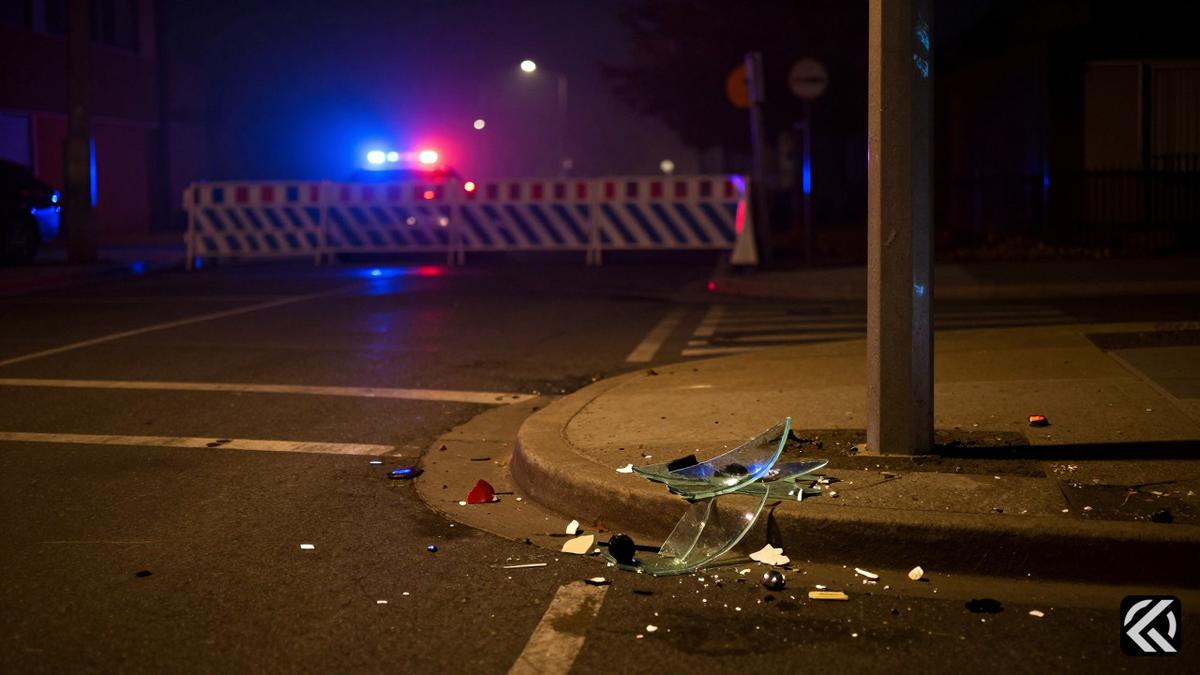
A history-sheeter was killed in a police encounter in West Bengal after opening fire on officers, sparking political debate on law enforcement tactics.
In a significant development regarding law and order in West Bengal, a man accused of shooting a police constable was killed during a police encounter on Sunday. Ratan Sheikh, identified as a history-sheeter who had been absconding from the law, died following a prolonged gunfight with law enforcement officials. This fatal confrontation took place in the Birbhum district, specifically near a brick kiln in Nanoor, on November 15, 2026. The incident underscores the intensifying actions taken by state authorities against alleged criminals in the region.
The sequence of events began on Friday, November 13, 2026, when Sheikh allegedly opened fire at a police constable during an arrest attempt in the Santiniketan police station area. Specifically, the initial incident occurred in Laik Bazar within the Santiniketan locale. Constable Biswajit Das was injured in the leg during this exchange. Sheikh managed to evade immediate arrest at that time, prompting a massive manhunt by local police forces. The search culminated two days later when Sheikh attempted to evade arrest again, this time at a brick kiln in Nanoor. According to a senior officer, Sheikh opened fire at the police team during this second attempt, leading to the lethal gunfight that resulted in his death.
This encounter marks a notable point in the current political and security landscape of the state. It has been reported that this was the fifth police encounter in West Bengal in the last six months since the Bharatiya Janata Party (BJP) came to power in the State. The frequency of such encounters has drawn significant attention from political observers and the public. The circumstances surrounding Sheikh's death have triggered a strong reaction from state leadership, with officials defending the necessity of forceful measures against those who resist arrest and threaten law enforcement personnel.
Chief Minister Suvendu Adhikari reacted strongly to the news, addressing reporters with a rhetorical question that highlighted the government's stance on law and order. "If someone opens fire at the police, should the police offer them sweets," the Chief Minister asked, emphasizing the gravity of attacking state authorities. He further asserted that criminals have no place in the State, signaling a zero-tolerance policy towards those who challenge the rule of law through violence. This statement reflects the administration's broader strategy to combat crime and assert control over areas previously affected by lawlessness.
The identity of Ratan Sheikh as a "history-sheeter" is a critical detail in understanding the context of the encounter. In Indian legal and political terminology, a history-sheeter refers to an individual with a prior record of criminal activities, often involved in serious offenses. Sheikh's absconding status prior to the incident indicates that he was already under police surveillance and had evaded previous apprehension efforts. The fact that he remained at large for two days before being cornered highlights the operational capabilities of the police force in tracking down high-profile suspects. The use of lethal force in this instance was deemed necessary by the officers involved, given that Sheikh had already demonstrated a willingness to use firearms against police personnel.
The location of the incidents adds another layer of complexity to the narrative. Santiniketan is not only a police station area but also a region renowned for its cultural and historical significance as the seat of Visva-Bharati University. Security operations in such culturally sensitive areas require precise coordination to minimize disruption while ensuring public safety. The initial shooting in Laik Bazar and the subsequent encounter in Nanoor, both within the Birbhum district, demonstrate the widespread nature of the security operations in the region. The brick kiln in Nanoor, where the final confrontation took place, serves as a symbol of the rural-urban interface where criminal elements often seek refuge or conduct illicit activities.
The timeline of events also reveals the persistence of the police force. From the initial shooting on Friday to the encounter on Sunday, law enforcement agencies worked diligently to track Sheikh's movements. The ability to locate and confront a known criminal suspect within such a short timeframe suggests effective intelligence gathering and ground-level policing strategies. The outcome of this encounter, Sheikh's death, is a direct result of his decision to resist arrest and engage in a firefight. This aligns with standard operating procedures for police forces when facing armed resistance, although it inevitably raises questions about the use of force and accountability.
The political implications of this encounter are significant, especially given the timing. With the BJP having come to power in the State six months ago, this is the fifth such incident. This frequency suggests a shift in the state's approach to crime, moving towards more aggressive tactical responses. The Chief Minister's public defense of the police action serves to reinforce this new policy direction. By framing the incident as a necessary response to criminal aggression, the administration aims to garner public support for its law-and-order agenda. The phrase "criminals have no place in the State" encapsulates this message, portraying the government as firm and decisive in its fight against lawlessness.
As the investigation into the incident proceeds, questions may arise regarding the conduct of the police and the justification for the use of lethal force. Legal protocols typically require a judicial inquiry into police encounters, particularly when the suspect is unarmed or if there are allegations of extrajudicial killing. However, in this case, the claim that Sheikh opened fire at the police provides a clear justification for the lethal response. The role of the constable injured in the initial incident remains crucial; his testimony will likely be pivotal in establishing the narrative of the events.
The killing of Ratan Sheikh in a police encounter in Santiniketan highlights the current administration's aggressive stance against criminal elements. With this being the fifth such incident in six months under the current government, it signals a potential escalation in the frequency and intensity of police operations. Future implications may include increased surveillance in areas like Birbhum and stricter enforcement of laws against history-sheeters. This trend suggests that law enforcement will likely continue to prioritize swift and decisive action against perceived threats to public safety, potentially leading to further debates on the balance between security and civil liberties in the region.
Nov 17, 2026 16:45 UTC
US Intel Warns of Iran Dirty Bomb Plot in DC
Nov 17, 2026 12:48 UTC
Quad Summit Manila: Modi, Trump Focus on Indo-Pacific Security
Nov 17, 2026 10:43 UTC
Ukraine Strike Collapses Crimean Bridge Ahead of Diplomatic Talks
Nov 16, 2026 16:25 UTC
Beijing Claims Historic Significance for Trilateral Talks in Shenzhen
Nov 16, 2026 18:41 UTC
Lindsay Clancy Retrial Scheduled for March 2027