
Section
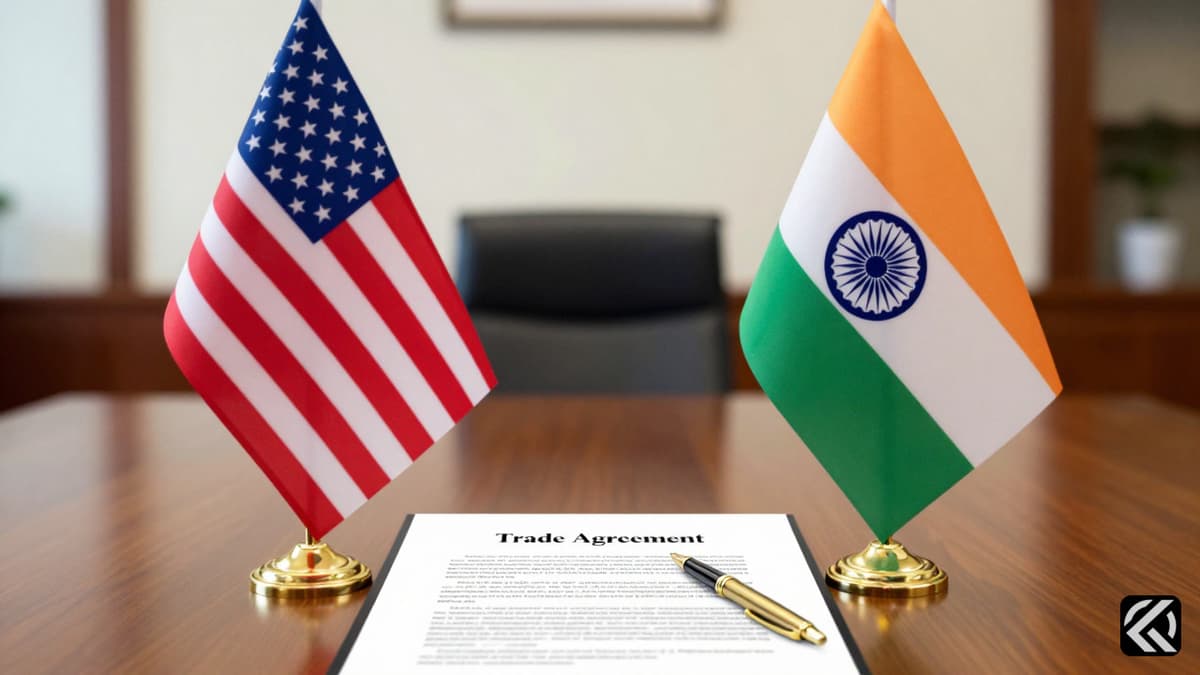
Congress targets PM Modi over Rubio's $500 billion trade claim, questioning sovereignty and economic impact amid rising imports and currency depreciation fears.
In a sharp critique of the current administration’s foreign policy stance, the Indian National Congress targeted Prime Minister Narendra Modi on Sunday, May 24, 2026. The party challenged the Prime Minister’s decision to approve a massive commercial commitment with the United States, citing concerns over national sovereignty and economic stability. This political intervention follows a startling revelation by US Secretary of State Marco Rubio, who claimed that India had officially committed to purchasing $500 billion worth of American goods over the next five years. The Congress party characterized this as an excessive effort to appease Washington, sparking a broader debate on India’s diplomatic autonomy.
Jairam Ramesh, the Congress general secretary for communications, took to the social media platform X to articulate the party’s grievances. He posted a series of five direct questions aimed squarely at the Prime Minister, questioning the rationale behind accepting such a staggering import target. Ramesh highlighted the logistical impossibility of this commitment, noting that India’s current yearly imports from the US stand at approximately $52.9 billion. To meet Rubio’s claim, these figures would need to be effectively doubled and sustained over half a decade, a move Ramesh argued threatens the livelihoods of farmers and the integrity of domestic industry.
The Congress leader drew a parallel to recent legal developments in the United States, pointing out that similar trade frameworks have been invalidated elsewhere. He cited a US Supreme Court ruling that struck down tariffs imposed by the Trump administration, which led countries like Malaysia to declare their respective agreements "null and void." Ramesh asked why the Modi government lacked the "courage" to scrap what he termed an "anti-people" agreement, especially when other nations were actively resisting such unequal terms. He suggested that the government’s willingness to proceed indicates a lack of regard for domestic economic health in favor of political appeasement.
Beyond the immediate trade figures, Ramesh raised significant concerns about the macroeconomic implications of this deal. He pointed out the volatility of the Indian currency, noting that the rupee has already lost 12% of its value against the US dollar in the past twelve months. He questioned whether this surge in imports from the US would further depress the rupee, exacerbating inflation and economic instability for ordinary citizens. The inquiry was not merely about trade deficits but about the tangible impact on the national economy and the financial security of the populace.
The critique also touched upon the timing and source of diplomatic announcements, raising serious questions about the transparency of India’s foreign policy. Ramesh observed that key announcements regarding bilateral engagements are increasingly emanating from Washington rather than New Delhi. He referenced a specific instance on May 10, 2025, where Rubio announced the ceasefire that brought Operation Sindoor to a halt, as well as a subsequent announcement regarding a proposed visit by the Venezuelan President. In both cases, the Congress leader argued that these developments were first communicated by American officials, implying that India was merely reacting to US initiatives rather than leading its own diplomatic narrative.
This perceived loss of narrative control has led to accusations that the Prime Minister and Foreign Affairs Minister have "renounced their responsibility" to communicate India’s foreign policy to its own citizens and the world. Ramesh explicitly stated that it appears the "compromised Prime Minister is keen on going the extra mile to appease and please his good friend," a phrase used to describe the US leadership. The language used by the Congress party suggests a deep distrust of the current administration’s independence and its alignment with American interests.
Furthermore, the Congress leader sought clarification on the potential link between these trade decisions and recent legal events involving prominent Indian industrialists. Ramesh asked whether the government’s willingness to agree to record imports was connected to the dropping of criminal fraud charges against Gautam Adani in the United States. This question introduces a layer of political controversy, suggesting that high-level trade deals might be influenced by legal outcomes affecting specific corporate entities, rather than being driven solely by national economic strategy.
The Prime Minister’s administration has also been criticized for the inconsistency in its messaging regarding foreign exchange conservation. Ramesh pointed to public records where Modi had asked citizens to reduce domestic fuel consumption and overseas travel to save foreign exchange. He juxtaposed this call for austerity with the government’s simultaneous agreement to record imports from the US, asking how these two positions can coexist. This contradiction highlights a perceived disconnect between the government’s public appeals for financial prudence and its private diplomatic commitments that could deplete foreign reserves.
The controversy underscores a growing tension between national sovereignty and international diplomatic pressures. By framing the issue as one of sovereignty, the Congress party is attempting to position itself as the defender of India’s independent foreign policy. The reference to Malaysia’s reaction to US tariffs serves as a cautionary tale, suggesting that India risks overextension and economic vulnerability by entering into such an expansive trade agreement. The party’s focus on the depreciation of the rupee further emphasizes the potential long-term damage to the country’s economic standing.
As the debate continues, the focus remains on the validity of Rubio’s claim and the implications of the alleged $500 billion commitment. The Congress party’s demand for answers reflects a broader skepticism about the transparency and motivation behind the current government’s foreign policy decisions. The intersection of trade, legal cases involving major industrialists, and diplomatic narrative control creates a complex political landscape that will likely influence future electoral and policy discussions.
The controversy surrounding the alleged $500 billion trade commitment and the role of Marco Rubio in announcing it marks a critical juncture for India-US relations. If the claims are accurate, the sheer scale of the India-US trade agreement could permanently alter India’s import dependencies, potentially stifling domestic manufacturing and increasing vulnerability to currency fluctuations. The Congress party’s emphasis on sovereignty suggests that future administrations will face intense scrutiny regarding diplomatic announcements, forcing a more assertive foreign policy stance. Additionally, the perceived link between trade deals and legal resolutions for industrialists may lead to stricter regulatory oversight on foreign investments. Ultimately, the depreciation of the rupee remains the most immediate risk, potentially driving inflation and forcing a reevaluation of economic strategies in the coming years.
Jun 11, 2026 17:21 UTC
Bangladesh Opposition Mobilizes Against India-Bangladesh Border Push-Ins and BSF Killings
Join 50,000+ readers getting the global briefing every morning.
No spam. Unsubscribe anytime.
Jun 11, 2026 17:40 UTC
Boelter Pleads Guilty in Minnesota Political Assassinations
Jun 11, 2026 17:21 UTC
Bangladesh Opposition Mobilizes Against India-Bangladesh Border Push-Ins and BSF Killings
Jun 11, 2026 17:21 UTC
John Healey Quits as UK Defence Secretary Over Funding Dispute
Jun 11, 2026 16:19 UTC
UK Defence Secretary John Healey Quits Over Funding Dispute


