
Section
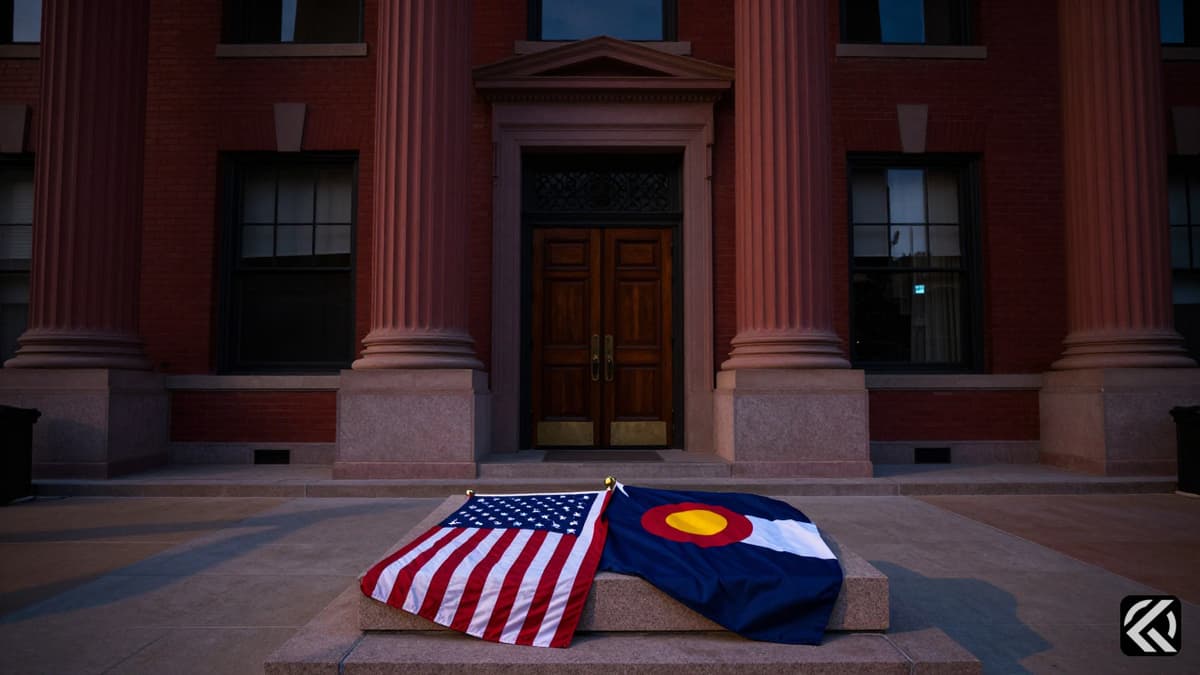
The Colorado Democratic Party has formally censured Governor Jared Polis for granting clemency to Tina Peters, a decision that has ignited fierce internal party debate and bipartisan condemnation regarding election integrity.
The Colorado Democratic Party voted Wednesday night to formally censure Governor Jared Polis for his decision to grant clemency to Tina Peters. This rebuke follows the governor’s move to cut Peters’ sentence in half, a controversial move that has sparked immediate backlash from within his own political ranks. The censure addresses the governor's judgment in light of Peters' conviction for election-related crimes, marking a significant internal conflict for the state party.
The Colorado Democratic Party released a stern statement condemning the clemency, arguing that reducing Peters' sentence under pressure from former President Donald Trump undermines justice. The party emphasized that the decision sends a dangerous message to future bad actors, suggesting that election tampering has no consequences if one is connected to the president. This stance reflects the party’s commitment to maintaining the integrity of democratic institutions and public accountability.
Tina Peters, the former Mesa County clerk, is scheduled to be released from state prison on June 1. Her conviction stemmed from a jury's finding that she conspired with allies of President Trump to breach voting systems in 2021. The goal was to prove false claims of 2020 election fraud. The Colorado Democratic Party stated that Polis’s conduct was inconsistent with their core values, leading to the formal rebuke.
In response to the censure, the state party declared that Polis shall not participate as an honored guest, featured speaker, or officially recognized representative at any party-sponsored events. This restriction includes major functions such as the Obama Gala and DemFest. The party indicated that this ban remains in effect until further action is taken by the State Central Committee or Executive Committee, signaling a prolonged period of tension between the governor and the party apparatus.
Polis defended his decision through a spokesperson, stating that he acted based on the facts of the case, even if the choice was not popular. The governor’s office highlighted that democracy is strongest when disagreement is met with dialogue rather than censorship. This argument attempts to frame the clemency as a principle of free speech and judicial fairness, rather than a political concession to Trump.
Peters’ impending release is viewed as a victory for Trump and the right-wing election denier movement. She is hailed by these groups as a hero who was unjustly prosecuted. Trump has long waged a pressure campaign against Colorado regarding Peters’ incarceration, making the governor’s decision a focal point of national political pressure. Peters is the last Trump ally still in prison for 2020 election-related crimes, heightening the stakes of her release.
The decision has drawn bipartisan condemnation from Colorado officials. Notably, it followed Peters’ first acknowledgment since her 2024 conviction that she “made a mistake” and “misled” Colorado election officials. This admission complicates the narrative of her innocence but did not deter the governor from intervening.
Witnesses at Peters’ trial testified that she gave pro-Trump conspiracy theorist Mike Lindell’s affiliates unauthorized access to Mesa County election offices. These allies copied sensitive election data to conduct an audit of the 2020 results. The trial highlighted the severity of the breach and the intent to manipulate public perception of election integrity.
A state appeals court recently upheld Peters’ criminal convictions but ordered re-sentencing. The court found that the trial judge improperly based part of her punishment on her protected speech about elections, violating her First Amendment rights. This legal nuance provided the framework for the governor’s clemency decision, focusing on constitutional protections rather than the guilt of the underlying crimes.
Polis previously told CNN that he agreed with the appeals court ruling. He warned against sacrificing free speech beliefs due to political expediency. The governor argued that unpopular or inaccurate speech should not influence sentencing or criminal proceedings. This perspective underscores his commitment to free expression, even when it pertains to disputed election facts.
Democratic Rep. Jason Crow of Colorado voiced support for the state party’s censure. He stated that the Democratic Party must fight for democracy and the rule of law consistently. Crow emphasized the need to call out party members who fall short of these principles, reinforcing the seriousness of the internal disciplinary action.
This censure highlights a deepening rift within the Colorado Democratic Party regarding how to handle election denialism and political pressure from the federal executive. The formal rebuke of Governor Colorado Democratic Party suggests that internal disciplinary measures may become more frequent as tensions over election integrity rise. The release of Peters, coupled with the governor's defense of free speech, may embolden similar political actors to seek clemency, potentially testing the limits of state judicial independence. The party’s ban on Polis from official events indicates a lasting structural consequence, altering the dynamics of party loyalty and executive power in the state.
Jun 11, 2026 17:21 UTC
Bangladesh Opposition Mobilizes Against India-Bangladesh Border Push-Ins and BSF Killings
Join 50,000+ readers getting the global briefing every morning.
No spam. Unsubscribe anytime.
Jun 11, 2026 17:40 UTC
Boelter Pleads Guilty in Minnesota Political Assassinations
Jun 11, 2026 17:21 UTC
Bangladesh Opposition Mobilizes Against India-Bangladesh Border Push-Ins and BSF Killings
Jun 11, 2026 17:21 UTC
John Healey Quits as UK Defence Secretary Over Funding Dispute
Jun 11, 2026 16:19 UTC
UK Defence Secretary John Healey Quits Over Funding Dispute


