
Section
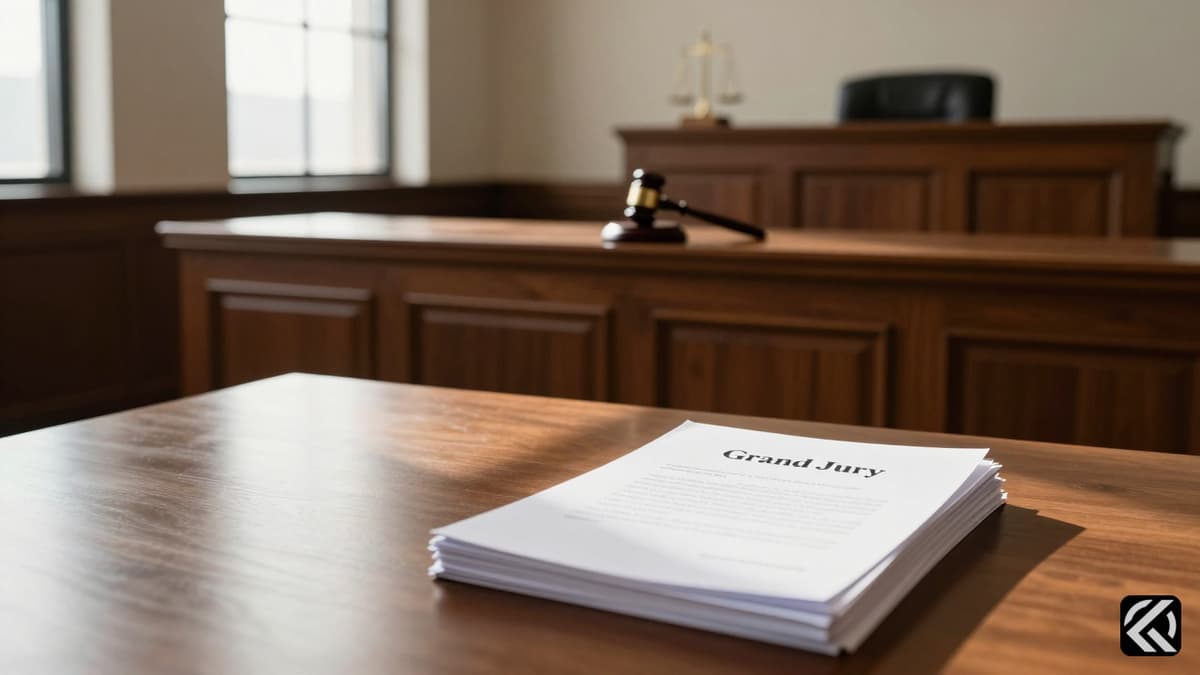
U.S. Attorney Andrew Boutros abruptly dismissed charges against Chicago activists, citing undisclosed grand jury misconduct that undermines the integrity of the prosecution.
The dismissal of criminal charges against four activists in Chicago marks a significant turn in the federal government’s ongoing efforts to prosecute individuals involved in demonstrations related to the nation’s immigration policies. U.S. Attorney Andrew Boutros announced the decision to drop the remaining charges on Thursday, acknowledging that the integrity of the legal process had been compromised by serious irregularities within the grand jury proceedings. This development concludes a high-profile legal battle that had drawn national attention to the tactics used by federal prosecutors in the region.
The decision follows a closed-door meeting between Boutros and U.S. District Judge April Perry, where the attorney general revealed his recent discovery of alleged misconduct within his own office. Boutros stated that he was unaware until recently of specific actions taken by prosecutors that violated standard procedures, including improper interactions with grand jurors and the exclusion of dissenting jurors from the decision-making process. The abrupt dismissal serves as a stark reminder of the challenges faced by the Justice Department when attempting to secure convictions in politically charged environments.
The core of the controversy lies in the allegations of grand jury misconduct that prompted the sudden withdrawal of the case. During the proceedings, it was revealed that a prosecutor had met with a grand juror outside of official sessions, a breach of the strict confidentiality rules governing grand juries. Furthermore, jurors who expressed disagreement with the case or had reservations about the indictment were prevented from participating in the final vote. These actions effectively manipulated the outcome of the grand jury’s deliberation, undermining the foundational principle that grand juries must operate free from prosecutorial coercion or bias.
Boutros, who was appointed by the Trump administration last year, did not dispute the allegations during the court hearing. Instead, he characterized the conduct as "upsetting" and cited it as the primary reason for dismissing the case. In his statement to Judge Perry, Boutros attempted to mitigate the severity of the prosecutors' actions by noting that no one acted with the intent to mislead the court. "No one acted with the intent to mislead your honor, and I think that they were following your order to give the law," Boutros remarked, suggesting that the legal team believed they were acting within bounds, albeit in a misguided manner. Despite these justifications, the U.S. Attorney declined to offer further comments through his spokesman, leaving the specific details of the internal investigation opaque to the public.
The defense team for the activists welcomed the dismissal but remained firm in their criticism of the initial decision to prosecute. Among the defendants was Kat Abughazaleh, a onetime Democratic congressional candidate, whose case had been at the center of the legal scrutiny. Abughazaleh was initially one of six individuals charged with conspiring to impede an officer, a felony charge stemming from an October incident in Broadview, Illinois. Prosecutors had alleged that she and others surrounded an immigration agent’s van at a federal facility, which was part of a broader aggressive operation linked to the Trump administration’s immigration policies.
Josh Herman, Abughazaleh’s defense attorney, issued a strong statement following the news, framing the dismissal as a vindication of civil liberties. "The revelations of the grand jury misconduct that led to the dismissal of the charges is sadly not surprising," Herman said. He emphasized that the case represented a misuse of federal power against citizens exercising their First Amendment rights. Herman argued that the entire prosecution should never have been brought against Abughazaleh or her co-defendants, highlighting the chilling effect such aggressive tactics have on political activism and public protest. The defense attorneys have now indicated their intent to seek copies of the unredacted transcripts to further investigate the scope of the misconduct and potentially pursue accountability for the prosecutorial errors.
The dismissal of these charges is not an isolated incident but rather part of a larger pattern of difficulties faced by the Justice Department in prosecuting individuals accused of assaulting or hindering federal officers during protests. The case highlights the complexities of balancing national security concerns with the protection of constitutional rights in a politically polarized climate. The other defendants in the case-Andre Martin, who served on Abughazaleh’s campaign staff; Oak Park village trustee Brian Straw; and Michael Rabbitt, a Democratic committeeperson-faced a single misdemeanor count of forcibly impeding a federal agent. These charges were also dismissed with prejudice, a legal term meaning they cannot be refiled, ensuring that the activists will not face trial on these specific grounds.
Judge Perry acknowledged the severity of the situation by floating the idea of a separate hearing to consider sanctions against the U.S. Attorney’s Office. This potential move underscores the judiciary’s role in policing prosecutorial conduct and maintaining the integrity of the legal system. The closure of part of the hearing to the public, despite objections from major news outlets like the Chicago Tribune and Chicago Sun-Times, further fueled concerns about transparency. The secrecy surrounding grand jury proceedings, while legally mandated, has often been exploited to shield improper conduct from public scrutiny, as evidenced by the need for a closed-door meeting to discuss the redacted transcripts.
The issue of grand jury integrity is not new to the Trump administration. In November of a previous year, a federal judge in Virginia accused the Justice Department of a "disturbing pattern of profound investigative missteps" in the case against former FBI Director James Comey. That case involved fundamental misstatements of the law, the use of privileged communications, and unexplained irregularities in transcripts. The parallels between the Chicago case and the Comey investigation suggest a systemic issue within the department’s approach to high-profile or politically sensitive cases, where the pressure to secure indictments may lead to shortcuts that compromise legal standards.
The abrupt dismissal of charges against these activists signals a critical pivot in the federal strategy to enforce immigration-related laws in Illinois. The acknowledgment of Andrew Boutros's office errors forces a reevaluation of how federal prosecutors handle evidence and jury interactions in politically charged environments. As the Justice Department continues to navigate the aftermath of the immigration crackdown, this case serves as a cautionary tale regarding the limits of prosecutorial power. Future prosecutions will likely face heightened scrutiny, with defense attorneys more aggressively challenging the procedural integrity of grand jury selections and interactions. The long-term impact may include stricter judicial oversight of federal grand juries and a potential cooling of federal enthusiasm for prosecuting protest-related offenses unless the evidence is indisputable and the procedures are flawless. This legal setback could embolden activists to challenge federal overreach more vigorously, knowing that procedural missteps can dismantle even high-profile cases.
Jun 11, 2026 17:21 UTC
Bangladesh Opposition Mobilizes Against India-Bangladesh Border Push-Ins and BSF Killings
Join 50,000+ readers getting the global briefing every morning.
No spam. Unsubscribe anytime.
Jun 11, 2026 17:40 UTC
Boelter Pleads Guilty in Minnesota Political Assassinations
Jun 11, 2026 17:21 UTC
Bangladesh Opposition Mobilizes Against India-Bangladesh Border Push-Ins and BSF Killings
Jun 11, 2026 17:21 UTC
John Healey Quits as UK Defence Secretary Over Funding Dispute
Jun 11, 2026 16:19 UTC
UK Defence Secretary John Healey Quits Over Funding Dispute


