
Section
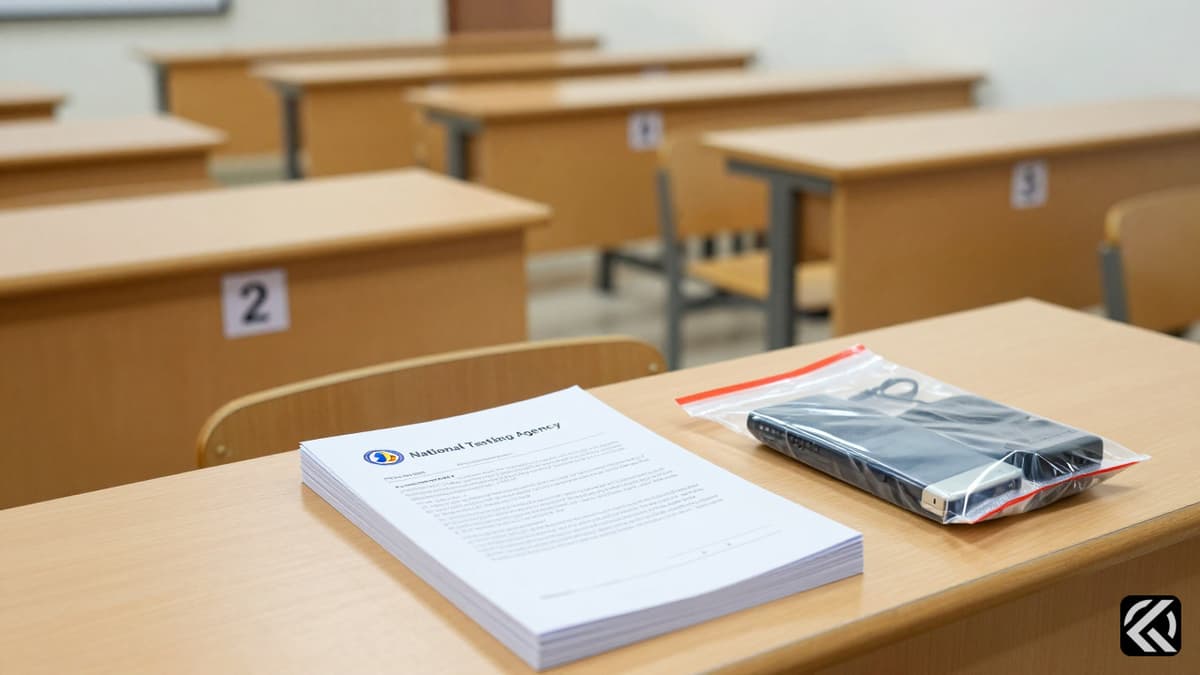
Authorities have identified and apprehended the alleged kingpin behind a major academic scandal, sparking immediate reforms in national testing security protocols across India.
The Central Bureau of Investigation (CBI) has executed a significant breakthrough in the high-profile case of the NEET-UG 2026 paper leak by apprehending Pune-based chemistry lecturer P.V. Kulkarni, who is accused of serving as the central figure or "kingpin" of the operation. The agency confirmed that it has now arrested eight accused persons in total, marking a critical escalation in the probe. Investigations indicate that Mr. Kulkarni exploited his position within the examination process, acting on behalf of the National Testing Agency (NTA) to gain unauthorized access to the question papers during the final week of April 2026.
According to the agency, Mr. Kulkarni utilized a network of accomplices to mobilize students for illicit advantages. This effort was heavily supported by co-accused Manisha Waghmare, a beauty salon owner who was apprehended by the CBI on May 14. The group operated special coaching classes held at Mr. Kulkarni’s residence in Pune. During these sessions, he allegedly dictated specific questions, answer options, and correct responses, which participating students transcribed into their notebooks. These dictated questions reportedly matched the content of the actual NEET-UG 2026 examination held on May 3 with exact precision.
Mr. Kulkarni was taken into custody in Pune following a thorough interrogation process. While he currently resides in Pune, his original hometown is Latur in Maharashtra. The CBI’s rapid action was triggered by a formal written complaint lodged by the Department of Higher Education under the Ministry of Education, which led to the registration of the case on May 12. Following this registration, the agency formed special teams dedicated to pursuing leads and tracking down the suspects involved in the widespread distribution of the "guess paper."
The scale of the operation involved significant financial transactions and sophisticated communication methods. The agency stated that the investigation revealed middlemen were instrumental in mobilizing students who paid several lakhs of rupees to attend these special coaching classes. These sessions were designed to provide candidates with question banks that were dictated and discussed in real-time. The resulting leak was circulated and sold predominantly through encrypted messaging applications, allowing the network to operate with a degree of operational security until the recent arrests.
In addition to Mr. Kulkarni, the CBI has identified and arrested seven other accused persons. These individuals include Dhananjay Lokhande from Ahilyanagar and Shubham Khairnar from Nashik in Maharashtra; Mangilal Biwal, Vikas Biwal, and Dinesh Biwal from Jaipur, Rajasthan; and Yash Yadav from Gurugram, Haryana. The coordination between the CBI and police forces in Rajasthan and Maharashtra was crucial in unearthings this entire network responsible for the distribution of the leaked papers.
On the day of the arrest, the CBI expanded its operational scope beyond simple apprehensions. In the last 24 hours, the agency carried out searches at several locations across the country. During these raids, officials seized incriminating documents, electronic gadgets, and mobile phones, which are essential for proving the chain of communication used by the accused. An official source confirmed that a detailed forensic and technical analysis of these seized items is currently underway to establish concrete evidence linking the accused to the leak.
Currently, the legal status of the arrested individuals varies based on procedural requirements. Five of the accused are currently in CBI custody, undergoing rigorous interrogation to uncover deeper layers of the conspiracy. The remaining two individuals are being produced before a court in Pune with the objective of securing transit remand. This legal step is necessary to facilitate their transfer to Delhi for further proceedings and additional questioning by the central investigative agency.
The repercussions of this leak have been severe for the examination process itself. Following the discovery of serious irregularities and the breach of confidentiality, the National Testing Agency (NTA) made the decisive move to cancel the NEET-UG test entirely. This cancellation was not merely a procedural adjustment but a response to the integrity of the assessment being compromised. The NTA has since announced that the examination will be held again, with the new date set for June 21.
This incident highlights vulnerabilities in the secure handling of national-level competitive examinations. The role of a chemistry lecturer with access to the examination process underscores the need for stricter vetting and monitoring of personnel involved in the logistics of paper setting and distribution. The involvement of a beauty salon owner in student mobilization further illustrates how diverse sectors can be co-opted into academic fraud rings, often driven by the high financial stakes associated with medical entrance exams in India.
The ongoing forensic analysis will likely play a pivotal role in determining the full extent of the leak, including identifying any other potential beneficiaries or higher-level facilitators who may have remained undetected. As the investigation deepens, the focus will remain on tracing the digital footprint of the encrypted communications and verifying the authenticity of the leaked papers against the official question bank.
The cancellation of the NEET-UG 2026 exam and its subsequent rescheduling for June 21 reflects the NTA's commitment to maintaining academic integrity despite the breach. The arrest of P.V. Kulkarni and the dismantling of the network suggest that while the initial leak occurred, the authorities have successfully contained the immediate threat. However, the reliance on encrypted apps for such large-scale fraud indicates a persistent challenge in digital security for educational institutions. Future protocols may need to incorporate more robust, real-time monitoring of access logs for paper setters and a stricter segregation of duties to prevent any single individual from having sole access to critical examination materials.
Jun 11, 2026 17:21 UTC
Bangladesh Opposition Mobilizes Against India-Bangladesh Border Push-Ins and BSF Killings
Join 50,000+ readers getting the global briefing every morning.
No spam. Unsubscribe anytime.
Jun 11, 2026 17:40 UTC
Boelter Pleads Guilty in Minnesota Political Assassinations
Jun 11, 2026 17:21 UTC
Bangladesh Opposition Mobilizes Against India-Bangladesh Border Push-Ins and BSF Killings
Jun 11, 2026 17:21 UTC
John Healey Quits as UK Defence Secretary Over Funding Dispute
Jun 11, 2026 16:19 UTC
UK Defence Secretary John Healey Quits Over Funding Dispute


