Section
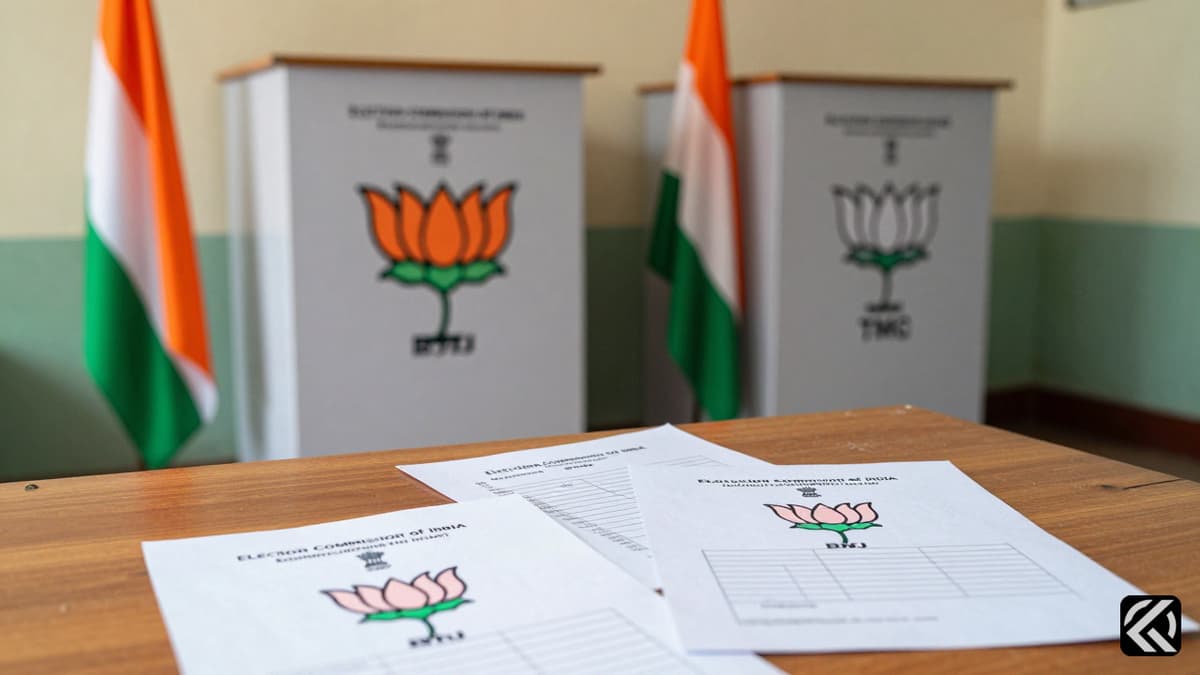
The BJP shatters decades of dominance in West Bengal, claiming a decisive majority as Mamata Banerjee’s 15-year era concludes in a historic political shift.
The political landscape of West Bengal underwent a seismic transformation during the 2026 elections, marking the end of a long-standing era. The Bharatiya Janata Party (BJP) achieved a historic victory, breaking into the stronghold of Mamata Banerjee and securing a decisive majority. This outcome signifies a monumental shift in Indian politics, as the saffron camp crossed the critical 200-seat mark for the first time. The results, declared on May 4, 2026, revealed that the BJP had successfully dented the towering political influence that had defined the state for the previous decade and a half.
The electoral battle was fierce and highly engaged, with the polling exercise recorded at a historic voter turnout of over 90 percent. This high level of participation followed the Election Commission’s special intensive revision process, which added significant intensity to the contest. The voting occurred in two phases, on April 23 and April 29, allowing for a thorough examination of voter sentiment across the diverse constituencies of the state. On the day of counting, the shift in power was visually and numerically apparent, with the saffron wave visibly overtaking the green surge of the Trinamool Congress. The gains reflected not only in seat margins but also in the overall vote share, indicating a broad-based support for the BJP.
In terms of vote share, the BJP secured approximately 46 percent, establishing a clear lead over its primary competitor. The Trinamool Congress, led by Mamata Banerjee, stood at approximately 40.8 percent. While this figure remains substantial, the distribution of seats indicated a decisive majority for the ruling party. The Trinamool Congress had come to power in 2011, ending decades of Left Front rule, and had maintained a firm grip on the state for 15 years. However, this election cycle marked a clear turning point, pushing the TMC to the margins as the BJP emerged as the dominant political force.
The breadth of the BJP’s victory was evident in its success across numerous constituencies, spanning from the northern districts to the southern regions of the state. In Siliguri, situated in the northern part of the state, the party secured wins in several key areas. SITAI saw Sangita Roy emerge as the winner, while Chopra was represented by Hamidul Rahaman. The victory extended to Islampur, where Agarwal Kanaia Lal won, and Goalpokhar, where Md Ghulam Rabbani claimed the seat. These victories in the north were mirrored in the border regions, with Chakulia won by Azad Minhajul Arfin and Itahar secured by Mosaraf Hussen.
Moving towards the central and southern parts of the state, the BJP consolidated its gains in districts that have historically seen intense political competition. In the Malda and North Dinajpur areas, Prasun Banerjee won in Chanchal, while Malatipur saw Abdur Rahim Boxi claim victory. The saffron camp also performed strongly in South Dinajpur, with Md Najrul Islam winning in Mothabari, Sabina Yasmin in Sujapur, and Mohammed Noor Alam in Samserganj. Emani Biswas secured the Suti constituency, while Akrurzaman won in Raghunathganj. Bayron Biswas took Sagardighi, and Abdul Aziz Doctor won in Lalgola.
The victory extended significantly into the districts surrounding Kolkata, demonstrating the BJP’s ability to penetrate the urban and peri-urban heartlands. In North 24 Parganas, Reyat Hossain Sarkar won Bhagawangola, and Mustafijur Rahaman (Suman) secured Bharatpur. The campaign in the Howrah district yielded multiple wins, with Niamot Sheikh taking Hariharpara, Babar Ali winning Jalangi, and Alifa Ahmed claiming Kaliganj. Jebur Sekh won Chapra, and Burhanul Mukaddim (Liton) secured Baduria. The party also won in Kamarhati, where Madan Mitra was victorious, and Deganga, where Anisur Rahaman Bidesh won.
In the southern and eastern parts of the Kolkata metropolitan area, the BJP made inroads into traditionally strong TMC territories. Abdul Matin Muhammad won in Haroa, while Usha Rani Mandal took Minakhan. Md. Tauseffur Rahman won in Basirhat Uttar, and Nilima Mistry Bishal secured Basanti. Ganesh Chandra Mandal won Kultali, and Barnali Dhar won Kulpi. In the Canning region, Md Baharul Islam won Cannng Purba, and Sarmistha Purkait secured Magrahat Purba. The party also won in Bishnupur, with Dilip Mondal claiming the seat.
The victory was not limited to rural and suburban belts but extended into the core of Kolkata itself. Ahmed Javed Khan won in Kasba, Abdul Khaleque Molla in Metiaburuz, and Sobhandeb Chattopadhyay in Ballygunge. Bandyopadhyay Nayna won Chowrangi, while Sandipan Saha took Entally. These wins in the city’s central and southern wards signaled a significant erosion of the TMC’s urban base. In the Howrah constituency, the party secured Howrah Dakshin with NANDITA CHOWDHURY and Howrah Madhya with Arup Roy. The party also won in Sankrail, with Priya Paul taking the seat, and Panchla, where Gulsan Mullick won.
In the southern districts, the BJP continued its sweep. Ritabrata Banerjee won Uluberia Purba, Tapas Maity took Domjur, and Swati Khandoker won Chanditala. Asima Patra secured Dhanekhali, while Dinen Roy won in Kharagpur. Seuli Saha took Keshpur, and Nabin Chandra Bag won in Khandaghosh. In the Purulia and Bankura regions, Toraf Hossain Mandal won in Kumarganj, Biplab Mitra in Harirampur, and Md. Matibur Rahaman in Harischandrapur. Samar Mukherjee won Ratua, Rukbanur Rahaman took Palashipara, and Bina Mondal secured Swarupnagar.
The final stretch of the constituency list highlights the party’s success in the Purba Medinipur and Bardhaman regions. Mohammad Kasem Siddique won in Amta, Tapash Chatterjee in Rajarhat New Town, and Surajit Mitra (Badal) in Basirhat Dakshin. Samir Kumar Jana won in Patharpratima, Tapas Mondal in Raidighi, and Joydeb Halder in Mandirbazar. Biswanath Das won in Jaynagar, Bivas Sardar in Baruipur Purba, and Paresh Ram Das in Canning Paschim. Biman Banerjee won in Baruipur Paschim, Md. Samim Ahamed Molla in Magrahat Paschim, and Panna Lal Halder in Diamond Harbour.
The victory continued with Subhasis Das winning in Maheshtala, Ashok Kumar Deb in Budge Budge, and Firhad Hakim in Kolkata Port. Kunal Kumar Ghosh won in Belghata, Pulak Roy in Uluberia Dakshin, and Arunava Sen in Bagnan. Samir Kumar Panja took Udaynarayanpur, while Nisith Kumar Malik won in Bardhaman Uttar. In Birbhum, Chandranath Sinha won in Bolpur, Fayezul Haque (Kajal Sk) in Hansan, Rajendra Prasad Singh (Raju Singh) in Nalhati, and Dr. Mosarraf Hossain in Murarai. This comprehensive list of winners illustrates the scale of the political realignment that has taken place in the state.
The conclusion of Mamata Banerjee’s 15-year rule marks a definitive end to the Trinamool Congress’s dominance in West Bengal. The BJP’s ability to secure a record number of seats and a significant vote share suggests a lasting change in voter preference. The high voter turnout indicates that the electorate was deeply engaged in this transition. As the new administration takes shape, the state will likely see a shift in policy priorities aligned with the BJP’s national agenda. The historical context of this victory, ending decades of continuous rule by previous parties, underscores its significance in the broader narrative of Indian politics. The long-term impact will depend on how the new government manages governance and addresses the issues that drove this historic shift.
Jun 11, 2026 17:21 UTC
Bangladesh Opposition Mobilizes Against India-Bangladesh Border Push-Ins and BSF Killings
Join 50,000+ readers getting the global briefing every morning.
No spam. Unsubscribe anytime.
Jun 11, 2026 17:40 UTC
Boelter Pleads Guilty in Minnesota Political Assassinations
Jun 11, 2026 17:21 UTC
Bangladesh Opposition Mobilizes Against India-Bangladesh Border Push-Ins and BSF Killings
Jun 11, 2026 17:21 UTC
John Healey Quits as UK Defence Secretary Over Funding Dispute
Jun 11, 2026 16:19 UTC
UK Defence Secretary John Healey Quits Over Funding Dispute