
Section
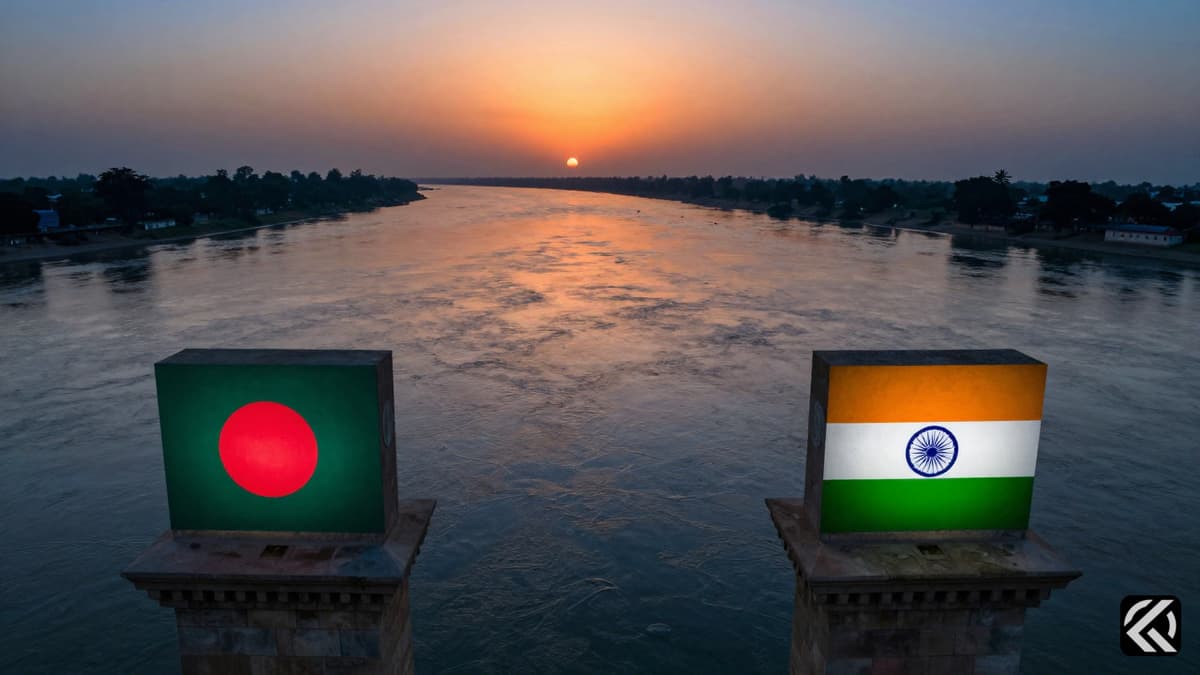
Bangladesh has urged India to reconsider the Teesta water agreement following the BJP's victory in West Bengal, signaling a pivotal shift in diplomatic relations.
In the wake of the BJP’s victory in the West Bengal Assembly election, Bangladesh has issued an urgent call to consider the long-pending Teesta water sharing agreement under the “current circumstances.” This diplomatic move marks a significant shift in the narrative surrounding the border dispute, leveraging the recent political change in India’s eastern state to renew pressure on New Delhi.
Outgoing Chief Minister Mamata Banerjee has long been seen as a hurdle in efforts to resolve the Teesta waters dispute between India and Bangladesh. Her administration’s stance has historically been a primary factor in the stagnation of negotiations. Now, with her departure and the rise of the BJP in the region, Dhaka sees an opening to revisit terms that were previously frozen. The timing of Bangladesh’s appeal suggests a strategic alignment with the new political reality in Kolkata, aiming to bypass the previous resistance that had kept the agreement dormant for years.
In Dhaka’s first high-level response to the poll results in West Bengal, Foreign Minister Khalilur Rahman on Tuesday (May 5, 2026) reiterated Bangladesh’s demand for a greater share of the Teesta’s waters. Rahman’s statement was not merely a passive observation but an active demand for immediate reconsideration. By explicitly linking the diplomatic push to the electoral outcome in West Bengal, Bangladesh is signaling that the previous status quo is no longer tenable. The foreign minister’s remarks indicate that Dhaka is prepared to aggressively pursue its interests in the wake of the political transition, interpreting the BJP’s win as a mandate for change in cross-border water negotiations.
The implications of this development are profound for regional diplomacy. The Teesta River is a critical lifeline for Bangladesh’s northern region, and the failure to secure a fair share has been a longstanding grievance. For decades, the negotiation process has been complicated by the political dynamics of West Bengal, with the state government holding significant influence over the central government’s stance on the issue. Mamata Banerjee’s tenure was characterized by a firm refusal to agree to any water sharing deal that she perceived as detrimental to West Bengal’s interests. Her ouster or loss of majority in the assembly removes the most vocal and politically powerful opponent to a resolution.
Foreign Minister Rahman’s comment in case of any further “push in” from the Indian side is particularly telling. He stated that Bangladesh will take “whatever measures are necessary” to secure its rights. This language suggests a hardening of Bangladesh’s diplomatic posture. It implies that Dhaka is prepared to escalate the issue internationally or employ other diplomatic levers if New Delhi attempts to maintain the previous deadlock or push back against the new political context. The mention of “current circumstances” serves as a subtle but firm reminder to India that the political landscape has changed, and old tactics may no longer yield the same results.
This development places significant pressure on the central government in New Delhi. The BJP’s victory in West Bengal was expected, but the extent to which it can now dictate national policy on sensitive border issues like water sharing is now up for debate. The central government must navigate the balance between supporting its state partners and addressing the growing urgency from Bangladesh. The foreign minister’s public statements indicate that Bangladesh is watching closely and is ready to capitalize on any hesitation or strategic recalibration from New Delhi.
The historical context of the Teesta dispute adds weight to these recent developments. For over a century, the distribution of Teesta waters has been a contentious issue, with Bangladesh arguing that the current allocations are grossly unfair given its geographical position downstream. The failure to reach an agreement in the past was largely attributed to the political will (or lack thereof) in West Bengal. With the political tide turning, the path forward for the Teesta water sharing agreement may finally be clearing. However, the warning from Dhaka suggests that patience is not an option for Bangladesh, which views the current moment as a fleeting window of opportunity to secure a deal that has eluded them for generations.
The international community and regional observers will be watching closely to see how New Delhi responds to this renewed diplomatic pressure. Will the central government honor the previous status quo to appease its state allies, or will it seize the moment to resolve one of South Asia’s most intractable environmental disputes? The answer will define India-Bangladesh relations for years to come. The urgency expressed by the Bangladeshi foreign minister suggests that Dhaka will not let this moment pass, ensuring that the Teesta issue remains high on the bilateral agenda.
The shift in West Bengal’s political leadership fundamentally alters the calculus for both New Delhi and Dhaka. With the primary obstacle to a resolution potentially removed, the likelihood of a breakthrough in the Teesta water negotiations has increased significantly. However, Bangladesh’s threat to take “necessary measures” indicates that any delay or obstruction from India could lead to a more confrontational phase in bilateral ties. The long-term impact will depend on whether New Delhi chooses to leverage its state partner’s loss to maintain leverage or whether it uses this political change as a catalyst for a broader resolution of border water issues. The coming months will be critical in determining whether this diplomatic overture leads to tangible agreements or merely escalates tensions across the border.
Jun 11, 2026 17:21 UTC
Bangladesh Opposition Mobilizes Against India-Bangladesh Border Push-Ins and BSF Killings
Join 50,000+ readers getting the global briefing every morning.
No spam. Unsubscribe anytime.
Jun 11, 2026 17:40 UTC
Boelter Pleads Guilty in Minnesota Political Assassinations
Jun 11, 2026 17:21 UTC
Bangladesh Opposition Mobilizes Against India-Bangladesh Border Push-Ins and BSF Killings
Jun 11, 2026 17:21 UTC
John Healey Quits as UK Defence Secretary Over Funding Dispute
Jun 11, 2026 16:19 UTC
UK Defence Secretary John Healey Quits Over Funding Dispute


