Union Home Minister Amit Shah blames the Congress party for altering Assam's demographics through infiltration, promising a final drive to eject illegal entrants.
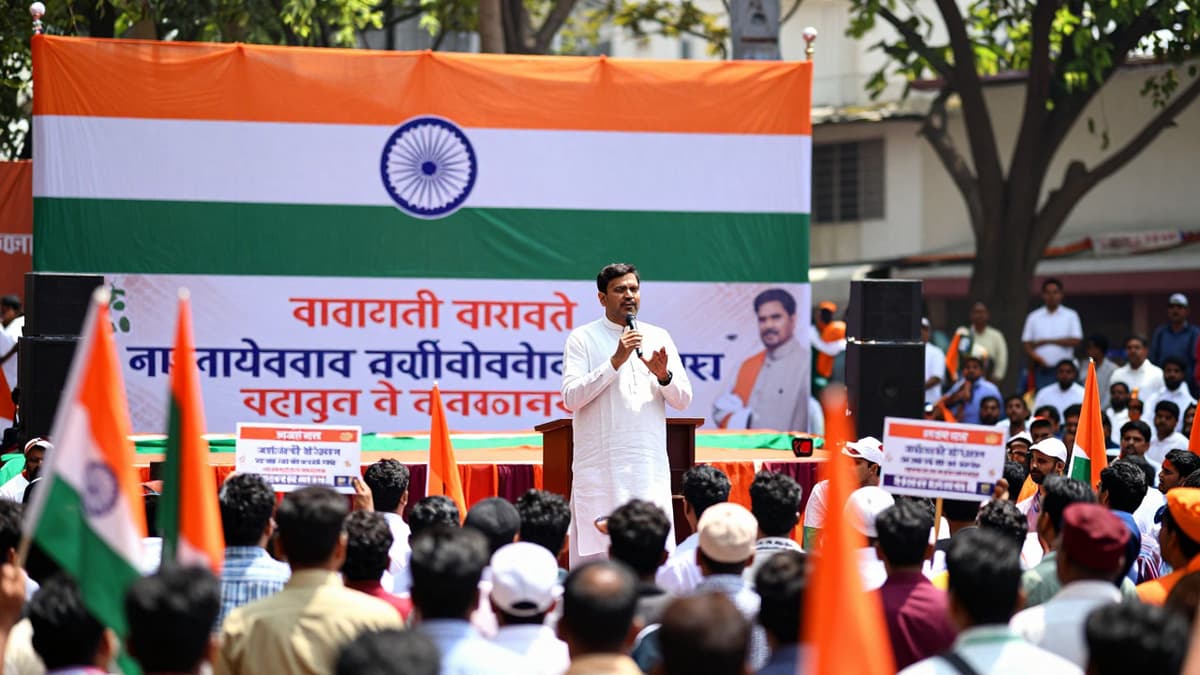
Union Home Minister Amit Shah strongly criticized the Congress party on Sunday, March 29, 2026, alleging that the opposition party facilitated infiltration into Assam, fundamentally altering the region's demographics. Speaking at rallies in northern Assam's Sonitpur district and western Assam's Nalbari district, Shah called for five additional years for the BJP-led government to complete the task of removing "resident" infiltrators.
The Home Minister asserted that while the current administration successfully halted new entries by sealing the border with Bangladesh, the existing population of illegal entrants must still be identified and deported. He specifically targeted nine districts, including Dhubri, where Muslims constitute over 74% of the population, claiming these demographic shifts occurred because Congress utilized infiltrators as a vote bank.
During his address to BJP candidates and supporters, Shah detailed the historical context of the issue, citing the Illegal Migrants (Determination by Tribunals) Act of 1983 as a tool allegedly used by Congress leaders to enable mass immigration. The Supreme Court eventually scrapped this Act in 2005, but Shah argued that the damage had already been done through the political strategy of the Congress party.
Shah emphasized that stopping the flow was insufficient without addressing the presence of those already inside. He stated that infiltrators entered India through Assam and West Bengal to spread across the country, and the BJP government intends to detect them one by one. This involves deleting their names from electoral rolls and deporting them to their countries of origin.
He specifically criticized Congress leaders Rahul Gandhi and Gaurav Gogoi for attempting to protect these individuals. Shah declared that the BJP will drive the infiltrators out regardless of political opposition. The Minister pointed to the BJP's success in reclaiming 1.25 lakh acres of government land previously held by infiltrators as proof of their commitment to the cause.
In addition to the demographic arguments, Shah highlighted the security improvements in the state. He contrasted the current peace with the era when Congress was in power, describing a time of frequent bomb blasts and gunshots. According to Shah, the BJP government established peace over ten years by signing various accords with insurgent groups, resulting in 10,000 youth laying down their weapons.
The Home Minister also took a dig at the opposition for allegedly ignoring the contributions of Assam's cultural icons, former Chief Minister Gopinath Bordoloi and music maestro Bhupen Hazarika. He noted that the BJP government has honored these figures with the Bharat Ratna, a distinction he claimed was not given under previous administrations.
Shah concluded his address by urging voters to support the BJP-led government, specifically Himanta Biswa Sarma, to ensure Assam becomes infiltrator-free, peaceful, and developed. He insisted that only the BJP could guarantee jobs for the state's youth, linking the security issue directly to economic opportunities. The narrative set for the upcoming election is one of a final cleanup operation that requires continued political mandate to succeed.
The focus on the Assam Assembly Elections is clear, with the issue of illegal immigration serving as the central pillar of the campaign. Shah's rhetoric suggests that the completion of the drive against the remaining infiltrators is contingent upon the voters' decision in the upcoming polls. The government argues that without a fresh mandate, the unfinished work of ejecting those who have already entered the state cannot be finalized.
The timeline set by the Home Minister implies a long-term commitment to this policy. By demanding five more years, the administration signals that the process of identification, deletion from electoral rolls, and deportation is complex and requires sustained political will. The claim that the border is now sealed serves as a foundational achievement, but the removal of the existing population is presented as the critical next step.
The historical reference to the 1983 Act and the 2005 Supreme Court ruling provides a legal backdrop to the political accusations. By framing the current demographic changes as a result of specific legislative loopholes exploited by the opposition, the Home Minister constructs a narrative where the current BJP administration is the only one capable of rectifying past mistakes. The reclamation of land and the disarming of insurgents are cited as tangible successes that contrast with the alleged failure of the Congress party to secure the state's integrity.
The cultural dimension of the argument, invoking Bordoloi and Hazarika, attempts to position the BJP as the true guardian of Assam's heritage. This adds a layer of cultural patriotism to the security narrative, suggesting that the protection of the state's demography is also a matter of respecting its history and identity.
The Union Home Minister's declaration sets a definitive trajectory for the state's political future, positioning the expulsion of infiltrators as the primary mandate for the next term. Based on the stated goal of reclaiming the remaining government land and deporting those on electoral rolls, the immediate impact will likely be a contentious but highly mobilized voter base focused on the identity and security of the state. The predictive analysis suggests that the BJP's ability to maintain a majority will depend heavily on voter perception of the "infiltrator-free" narrative. If the government successfully executes the plan to delete names and deport individuals as promised, the demographic profile of the nine districts could shift significantly in favor of the ruling party's vision within the five-year timeframe. However, the process of legal deportation and electoral roll revision is complex, and the success of this strategy will likely define the political landscape of Assam for a decade, turning the upcoming election into a de facto referendum on the state's future identity and security posture.
Jun 8, 2026 04:15 UTC
Trump Urges Netanyahu to Halt Iran Strike for Peace
Join 50,000+ readers getting the global briefing every morning.
No spam. Unsubscribe anytime.
Jun 8, 2026 02:28 UTC
Trump Walks Out of Meet the Press After Rejecting Evidence Demands
Jun 8, 2026 02:17 UTC
Magnitude 7.8 Quake Shakes Philippines, Urging Immediate Evacuations
Jun 8, 2026 00:51 UTC
Trump Claims Iran Nuclear Deal Imminent Despite Diplomatic Fractures
Jun 8, 2026 00:47 UTC
Iran Fires Missiles at Israel After Beirut Strike