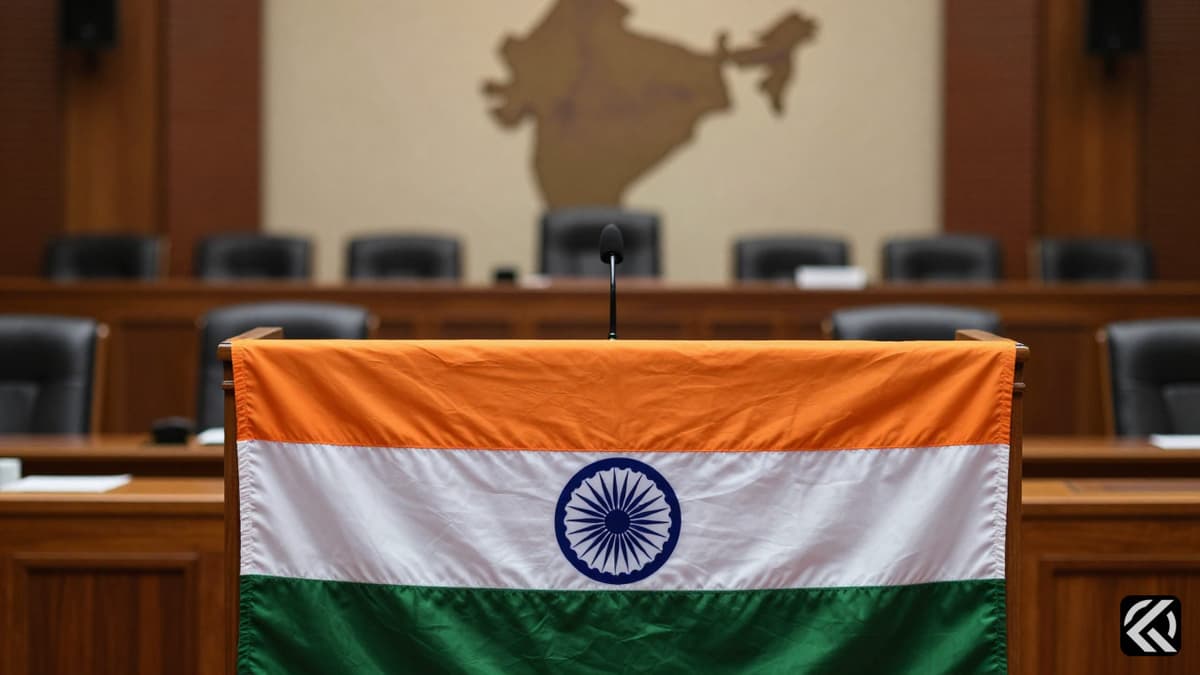
AAP leader Raghav Chadha faces sharp backlash from party stalwarts after being removed from the deputy leader's post, sparking a fierce internal debate.
The fault lines within the Aam Aadmi Party (AAP) have burst into the open, marking a significant escalation in internal conflict following the removal of Rajya Sabha MP Raghav Chadha. Senior party figures, including former Delhi Chief Minister Atishi, Punjab Chief Minister Bhagwant Mann, and MP Sanjay Singh, publicly took aim at Chadha just a day after he was stripped of his position as deputy leader in the Rajya Sabha. This sharp and direct confrontation was triggered when Chadha questioned his own removal, leading to pointed rebuttals that have reignited discussions about loyalty, leadership, and the party's direction under the shadow of Prime Minister Narendra Modi.
The conflict centers on a series of public statements made by Chadha regarding his stance on national issues and his relationship with the Prime Minister. AAP party infighting reached a fever pitch when Atishi challenged Chadha's political nerve, asking directly if he was "scared of Modi Ji." In a sharp post on X, Atishi highlighted what she perceived as a lack of accountability from Chadha regarding the LPG crisis facing the common man. She questioned why he remained silent on the issue while AAP workers were out on the streets of Delhi fighting for citizens. Atishi further argued that while AAP workers faced arrests in Gujarat and election rigging in Delhi, Chadha stayed in London, failing to address the "democracy under attack" in West Bengal or the concerns of ordinary citizens.
The backlash extended beyond Atishi, with other leaders voicing strong concerns about Chadha's commitment to the party's core principles. Punjab Chief Minister Bhagwant Mann defended the decision to remove Chadha, characterizing it as routine party functioning necessary to enforce discipline. Mann stated that any member who goes against the party whip must face action. He explicitly labeled Chadha as "compromised," suggesting that his recent statements raised doubts about his allegiance. Mann argued that if a leader raises trivial issues like "samosas at airports" or "pizza delivery time" instead of substantive issues like valid votes in West Bengal, bookcases of leaders in Gujarat, or the holding back of GST funds by the Centre, it suggests he is speaking from "a different station."
AAP leader Anurag Dhanda also joined the fray, alleging that Chadha has been "scared" for the past few years. Dhanda emphasized that "fearlessness is our first identity" as soldiers of Arvind Kejriwal. He claimed Chadha hesitated to sign a proposal against the Chief Election Commissioner and refused to speak when AAP workers were being arrested in Gujarat. Dhanda noted that while the party walked out of the House in protest, Chadha allegedly stayed back "to mark attendance for Modi Ji." He argued that the party has little time in Parliament and that this time should be used to "save the nation" or call for "making samosas cheap at the airport," a sarcastic reference to focusing on the wrong priorities. Dhanda concluded by reiterating that for the past few years, Chadha has been afraid to speak against the Prime Minister or on the real issues facing the country.
While the internal battle raged within the AAP, the opposition party also seized the opportunity to criticize the AAP's leadership structure. BJP MP Praveen Khandelwal told IANS that the Aam Aadmi Party has ceased to be a party of the common people. Instead, he argued it has transformed into a party of "one individual," Arvind Kejriwal. Khandelwal stated that anyone with a "sense of truth" cannot remain within the party under these conditions, suggesting that members stay only by flattering the convener. This external critique adds another layer to the crisis, implying that the internal rift reflects a broader perception of the party's democratic deficit. The convergence of these external and internal pressures highlights a moment of significant instability for the AAP, with leadership questions centering on whether the party can maintain its identity as a mass movement or if it has become too dependent on a single figurehead.
The removal of Raghav Chadha and the subsequent reactions from party elders signal a tightening of the party's internal discipline. The consensus among the senior leadership, particularly from Punjab CM Bhagwant Mann and Atishi, is that deviating from the party line regarding major national issues like the LPG crisis, election rigging, or the rights of voters in West Bengal is unacceptable. The narrative constructed by these leaders paints a picture of a party where unity and adherence to the whip are paramount, and where questioning the leadership or showing hesitation against the ruling BJP is not tolerated. The situation remains fluid, with the party now facing the challenge of addressing the grievances raised by their own members while simultaneously managing the external narrative created by the BJP. The coming days will likely determine whether this infighting remains a public spectacle or evolves into a deeper structural crisis for the party.
The removal of Raghav Chadha and the subsequent reactions from party elders signal a tightening of the party's internal discipline. The consensus among the senior leadership, particularly from Punjab CM Bhagwant Mann and Atishi, is that deviating from the party line regarding major national issues like the LPG crisis, election rigging, or the rights of voters in West Bengal is unacceptable. The narrative constructed by these leaders paints a picture of a party where unity and adherence to the whip are paramount, and where questioning the leadership or showing hesitation against the ruling BJP is not tolerated. The situation remains fluid, with the party now facing the challenge of addressing the grievances raised by their own members while simultaneously managing the external narrative created by the BJP. The coming days will likely determine whether this infighting remains a public spectacle or evolves into a deeper structural crisis for the party.
The removal of Raghav Chadha and the subsequent reactions from party elders signal a tightening of the party's internal discipline. The consensus among the senior leadership, particularly from Punjab CM Bhagwant Mann and Atishi, is that deviating from the party line regarding major national issues like the LPG crisis, election rigging, or the rights of voters in West Bengal is unacceptable. The narrative constructed by these leaders paints a picture of a party where unity and adherence to the whip are paramount, and where questioning the leadership or showing hesitation against the ruling BJP is not tolerated. The situation remains fluid, with the party now facing the challenge of addressing the grievances raised by their own members while simultaneously managing the external narrative created by the BJP. The coming days will likely determine whether this infighting remains a public spectacle or evolves into a deeper structural crisis for the party.
Jun 8, 2026 02:17 UTC
Magnitude 7.8 Quake Shakes Philippines, Urging Immediate Evacuations
Join 50,000+ readers getting the global briefing every morning.
No spam. Unsubscribe anytime.
Jun 8, 2026 02:17 UTC
Magnitude 7.8 Quake Shakes Philippines, Urging Immediate Evacuations
Jun 8, 2026 00:51 UTC
Trump Claims Iran Nuclear Deal Imminent Despite Diplomatic Fractures
Jun 8, 2026 00:47 UTC
Iran Fires Missiles at Israel After Beirut Strike
Jun 7, 2026 22:38 UTC
Congress Party Claims Unity for INDIA Bloc Delhi Meeting