A suspected attack involving explosive-laden boats has ignited two major oil tankers in the Persian Gulf, raising fears for global energy supplies.
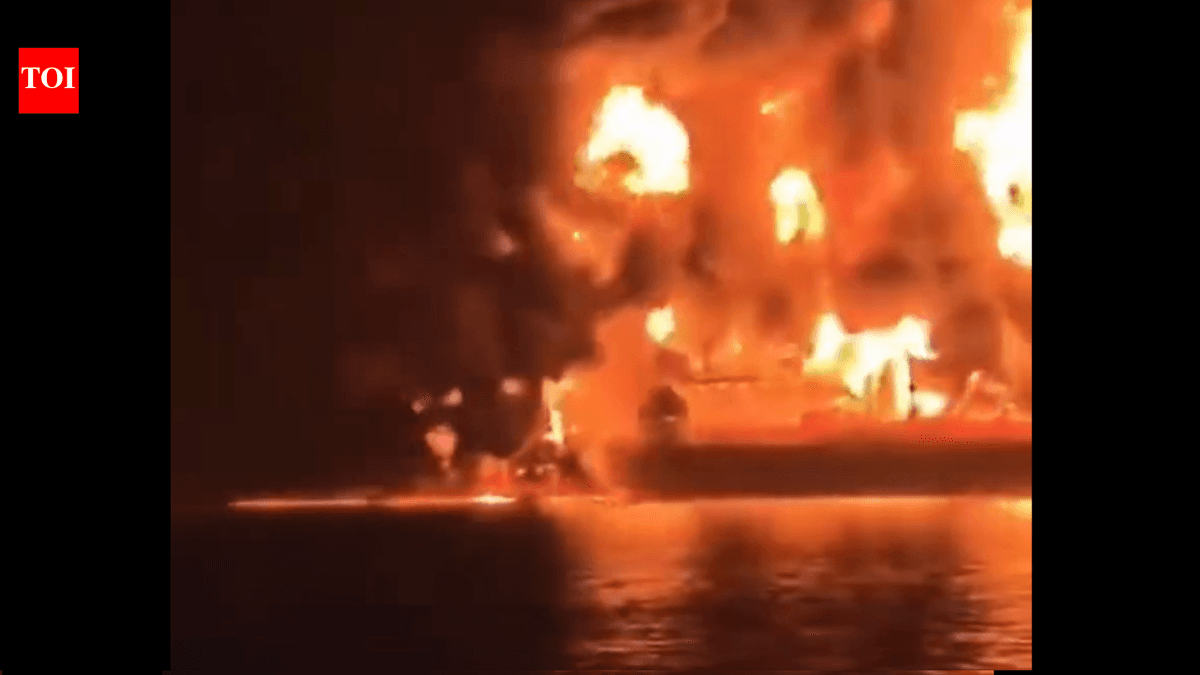
A catastrophic fire has erupted in the Persian Gulf following a series of explosions that engulfed two massive oil tankers. The incident occurred off the coast of Basra, Iraq, creating a dramatic visual of flames spreading across the surrounding waters. While the full extent of the damage remains under investigation, preliminary reports confirm that at least one person has died during the event. The vessels involved were anchored side by side when the blasts occurred, triggering large fires that quickly consumed the area around the ships.
The specific vessels caught in the blaze were identified as the Maltese-flagged Zefyros and the Marshall Islands-flagged Safesea Vishnu. According to reports from CNN, these ships may have been carrying up to 400,000 barrels of Iraqi crude oil at the time of the attack. The incident took place within Iraq’s territorial waters at al Faw port near Basra. Images captured from the scene showed flames spreading across the water, suggesting significant oil was leaking from the damaged vessels.
Following the explosions, safety protocols were enacted immediately. Farhan al Fartousi, director general of the Iraqi Ports Company, confirmed to CNN that all 38 foreign crew members were evacuated from the damaged ships. Ownership details reveal that the Safesea Vishnu is owned by US-based Safesea Transport Inc., while the Zefyros belongs to a Greek company. Despite inquiries, Safesea Transport did not immediately respond to requests for comment regarding the incident.
Investigations are currently underway to determine the cause of the blasts. Reuters reported that explosive-laden Iranian boats may have struck the vessels, citing preliminary findings from an Iraqi-led investigation into the incident. This event marks a significant escalation in rising tensions within the region. The attack occurs alongside disruptions to global oil supply routes and military actions linked to the ongoing Iran conflict.
Earlier this week, the United States responded by targeting several Iranian minelaying vessels. These counteractions have already disrupted traffic in the Strait of Hormuz, a key corridor through which roughly one-fifth of the world’s oil passes daily. Iran has also threatened to block oil tankers from passing through this strategic waterway, heightening concerns about future shipping safety.
The impact of this incident extends beyond the immediate maritime zone. Oil prices have surged this week due to widespread concerns about shipping through the Strait of Hormuz. The disruption has prompted several producers to cut output in response to the instability. In an effort to stabilize prices, President Donald Trump has indicated he may release oil from the US Strategic Petroleum Reserve.
Furthermore, international cooperation is being mobilized to mitigate supply shocks. The International Energy Agency announced that its 31 member countries plan to release a record 400 million barrels of oil from emergency stockpiles to offset supply disruptions. These measures aim to counteract the economic volatility caused by the reported attack on the Zefyros and Safesea Vishnu.
The fire affecting the Zefyros and Safesea Vishnu represents a critical flashpoint in regional security and energy markets. With suspected attacks involving Iranian boats and military counteractions from the United States, the stability of global oil supply routes remains uncertain. As nations coordinate stockpile releases to manage price surges, the situation at al Faw port continues to draw intense scrutiny from international observers and energy sectors alike.
May 1, 2026 03:50 UTC
Trump Administration Declares Iran Conflict Terminated
Join 50,000+ readers getting the global briefing every morning.
No spam. Unsubscribe anytime.
May 1, 2026 03:50 UTC
Trump Administration Declares Iran Conflict Terminated
Apr 25, 2026 01:38 UTC
Iranian FM Araghchi Heads to Islamabad for Critical US-Iran Talks
Apr 25, 2026 01:13 UTC
Calm Suspect in Delhi Rape-Murder Case Faces Mental Evaluation
Apr 24, 2026 23:24 UTC
Raghav Chadha joins BJP, Shaking AAP’s Rajya Sabha Strength