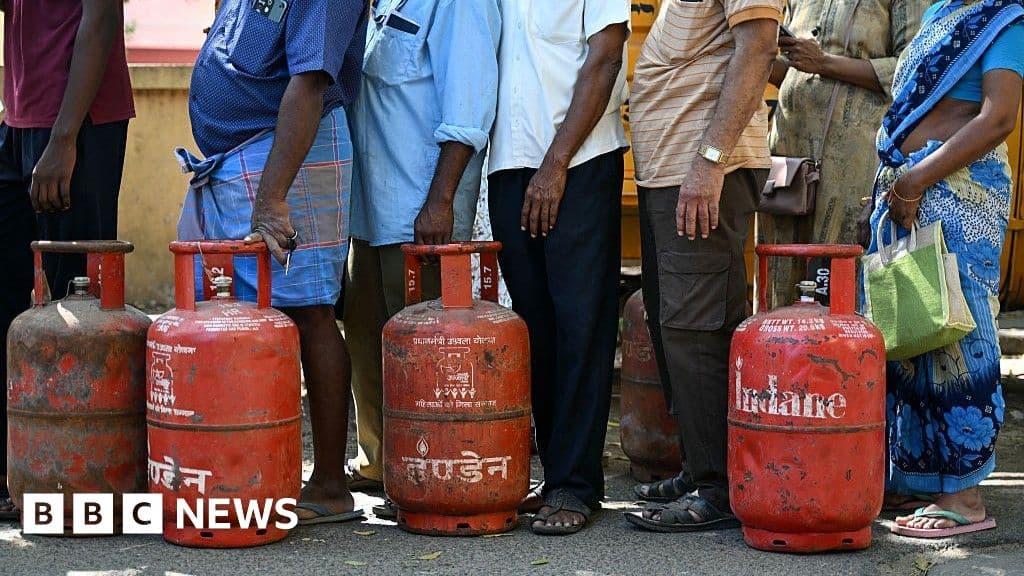
The shockwaves of a war fought 3,000km away are now reaching India's kitchens, forcing restaurants to cut menus and shorten hours due to LPG shortages.
The shockwaves of a conflict fought thousands of kilometers away are finally reaching India's domestic spaces. As US-Israeli strikes disrupt energy shipments through the Strait of Hormuz, the nation faces tightening supplies of liquefied petroleum gas. Social media is awash with video clips showing queues outside dealers as worries spread. This disruption is forcing businesses to adapt quickly while consumers worry about fuel availability across Indian cities and towns.
Manpreet Singh of the National Restaurant Association of India describes the current state as dire. Representing roughly 500,000 restaurants, he notes that most eateries rely on commercial LPG cylinders or piped gas. Consequently, shortages are being felt nationwide. In Mumbai, media reports indicate up to a fifth of hotels and restaurants are fully or partly shut. Haroon Sait, who operates an artisan bakery and restaurant chain in Bengaluru, expressed deep concern over dwindling gas stocks with little backup. He stated that businesses are suffering and noted they can only make coffee now. Operators are scrambling to adapt by curtailing menus or cutting lunch service. In Delhi, closures fluctuate as supplies ebb and flow, with some restaurants reopening after temporary shutdowns. Many are switching to coal and wood and electric cookers to keep kitchens going.
While retailers report a surge in sales of electric cookers, the government insists there is no shortage. Officials state supplies are being redirected to households, which number over 300 million. Roughly 60% of India's LPG is imported, with about 90% passing through the Strait of Hormuz. The oil ministry ordered refineries on 8 March to maximize output for household consumption, lifting domestic production by roughly 25%. Non-domestic supply is prioritized for essential sectors like hospitals. Sujata Sharma, a senior official in the petroleum ministry, attributed some panic booking and hoarding to misinformation, noting the normal delivery cycle remains about two-and-a-half days.
Maritime intelligence firm Kpler suggests concerns about broader fuel supplies may be overstated. India imports 90% of its oil, with half traveling through the strait. However, Sumit Ritolia, an analyst at Kpler, notes that higher imports of discounted Russian crude could offset the gap. He indicates incremental Russian crude imports in March could reach 1-1.2 million barrels a day. Around 25-30 million Russian oil barrels are currently floating on ships in the Indian Ocean. This flexibility has been acknowledged by US Ambassador Sergio Gor, who praised India for maintaining stable oil prices. Despite this, Ritolia highlights that LPG availability remains the real variable. Domestic production covers only 40-45% of demand, and even boosting output would leave the country heavily reliant on imports through the conflict zone.

The conflict in the Gulf has created a complex logistical challenge for India. While crude oil supply risks can be mitigated through diversification, the specific vulnerability lies in cooking gas supplies. As panic booking spreads and deliveries become patchy, the nation watches closely to see if domestic production boosts will suffice against the backdrop of international tension.
May 1, 2026 03:50 UTC
Trump Administration Declares Iran Conflict Terminated
Join 50,000+ readers getting the global briefing every morning.
No spam. Unsubscribe anytime.
May 1, 2026 03:50 UTC
Trump Administration Declares Iran Conflict Terminated
Apr 25, 2026 01:38 UTC
Iranian FM Araghchi Heads to Islamabad for Critical US-Iran Talks
Apr 25, 2026 01:13 UTC
Calm Suspect in Delhi Rape-Murder Case Faces Mental Evaluation
Apr 24, 2026 23:24 UTC
Raghav Chadha joins BJP, Shaking AAP’s Rajya Sabha Strength