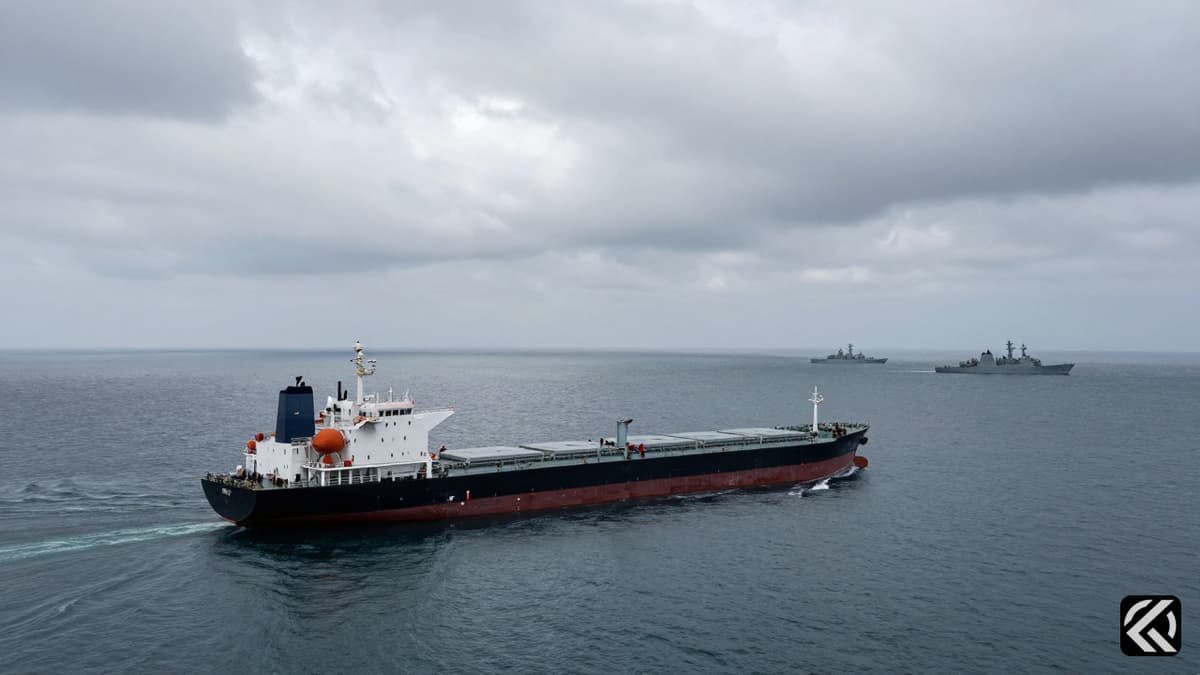
Fears of restricted global fuel supplies drive markets as the U.S. Navy prepares to block the Strait of Hormuz, signaling a critical escalation in the conflict.
The United States has launched a naval Strait of Hormuz blockade today, April 13, 2026, as the U.S. Navy moves to restrict all maritime traffic entering and exiting Iranian ports. This decisive action follows the collapse of critical U.S.-Iran peace talks held in Pakistan, which failed to produce a final agreement to end the ongoing conflict.
President Donald Trump announced the measure last night from Joint Base Andrews after returning from Florida, stating that the U.S. Navy would implement the restrictions at 10 a.m. ET (7:30 p.m. IST). The timing coincides with a reported failure to secure a deal to end the war, which had already jeopardized a fragile two-week ceasefire. Consequently, oil tankers have begun steering clear of the strategic waterway in anticipation of the enforcement, causing immediate volatility in global commodity markets.
The financial repercussions were immediate and severe. Oil prices jumped sharply, with Brent crude futures rising $7.60 to settle at $102.80 a barrel, and U.S. West Texas Intermediate climbing to $104.88 a barrel. This oil price surge is driven by fears that the blockade will severely restrict Iranian oil shipments, threatening global fuel and fertilizer supplies. Chicago wheat futures also rose, supported by the higher energy costs, while corn and soybean futures climbed, with corn futures gaining up to 1.8% to $5.81 a bushel.
Diplomatic reactions have been mixed, with the United States taking a hardline stance while allies express reservations about the unilateral nature of the operation. Australia's Prime Minister Anthony Albanese clarified his nation's position on Monday, stating that the United States had not requested Australian help to blockade the strait. Speaking to the Nine Network, Mr. Albanese emphasized, "We've received no requests, and they've made this announcement overnight and they've done that in a unilateral way. And we haven't been asked to participate."
Mr. Albanese stressed the importance of international law, stating, "What we want to see is negotiations continue and resume. We want to see an end to this conflict. We want to see the Strait of Hormuz opened for all. We want to see freedom of navigation as required by international law as well." His comments highlight the tension between the U.S. executive action and the broader international community's desire for a negotiated solution.
President Trump, addressing reporters on the failed negotiations, displayed a resolve that appears to ignore the possibility of a return to the negotiating table. When asked if he cared if Iran returned to discussions, the President stated, "I don't care if they come back or not. If they don't come back, I'm fine." This sentiment was reiterated on Fox News' 'Sunday Futures' program, where he claimed that his recent statement regarding the potential death of a "civilisation" had successfully forced Iran to the bargaining table initially.
"I don't care if they come back or not. If they don't come back, I'm fine," Mr. Trump told reporters at Joint Base Andrews in Maryland.
Trump argued that his rhetoric regarding the survival of civilization was the catalyst for Iran's initial engagement. "Let me tell you, that statement got them to the bargaining table, and they have it left. They have left the bargaining table," he said. He predicted that Iran would eventually return, stating, "I predict they come back and they give us everything we want." However, the collapse of the talks suggests a temporary breakdown in diplomacy, with the U.S. Central Command now ready to enforce the blockade of all maritime traffic entering and exiting Iranian ports.
The shift from diplomacy to enforcement marks a critical turning point. The U.S. Central Command confirmed that forces would begin implementing the blockade later today, a move that raises the stakes significantly after marathon talks failed to reach a deal to end the war. The failure of the talks in Pakistan means the fragile ceasefire is effectively over, replaced by a direct naval confrontation intended to force a surrender of demands rather than a diplomatic resolution.
Market analysts note that the Strait of Hormuz blockade is likely to have lasting effects on global energy security. With Brent crude and WTI already exceeding the $100 threshold, any prolonged disruption could lead to sustained inflation in fuel and agricultural costs worldwide. The simultaneous rise in wheat, corn, and soybean futures indicates that the market perceives the blockade as a long-term threat to supply chains, not just a temporary maneuver.
The failure of the U.S.-Iran peace talks in Pakistan marks a definitive end to the two-week ceasefire that had temporarily halted hostilities. With the U.S. Navy enforcing the Strait of Hormuz blockade starting at 10 a.m. ET, the likelihood of a quick return to negotiations diminishes significantly. Analysts predict that the oil price surge will continue to climb as the physical reality of restricted shipping routes takes hold. If the blockade persists, global markets could face prolonged instability, forcing nations to re-evaluate energy security strategies. The diplomatic isolation of the U.S. stance, as evidenced by Australia's refusal to participate, may also complicate future coalition efforts to lift the restrictions without a formal resolution to the war. The coming days will likely define whether the blockade succeeds in securing the "everything we want" that President Trump predicts, or if it leads to an even deeper regional conflict.
Jun 8, 2026 00:51 UTC
Trump Claims Iran Nuclear Deal Imminent Despite Diplomatic Fractures
Jun 8, 2026 00:47 UTC
Iran Fires Missiles at Israel After Beirut Strike
Jun 7, 2026 22:00 UTC
US, Iran Peace Hops Fade 100 Days Into War
Jun 7, 2026 20:57 UTC
Iran Strikes Israel: IRGC Promises Week of Continuous Offensive
Jun 8, 2026 02:28 UTC
Trump Walks Out of Meet the Press After Rejecting Evidence Demands


