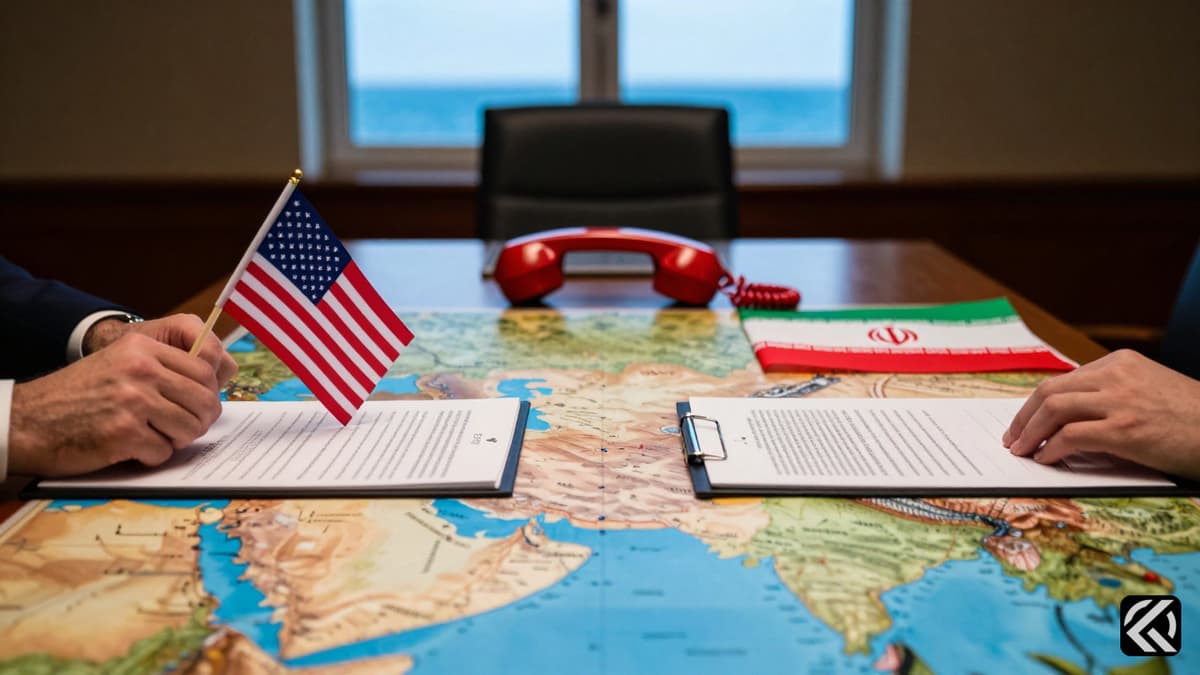
Marathons talks in Islamabad collapsed as Iran blamed a phone call from Benjamin Netanyahu to JD Vance for derailing progress, casting fresh doubt on the fragile ceasefire.
The United States and Iran failed to reach a peace deal after marathon 21-hour talks in Islamabad, casting uncertainty over a fragile two-week ceasefire. Both sides immediately began blaming each other for the breakdown, signaling a collapse in diplomatic efforts.
US Vice President JD Vance, who led the American delegation, stated that Iran refused to accept Washington's terms despite what he described as a "final and best offer." Vance noted, "We just could not get to a situation where the Iranians would accept our terms," adding that the proposal remains on the table for Iran to accept. Shortly after the talks collapsed, US President Donald Trump posted on social media that negotiations failed because "Iran is unwilling to give up its nuclear ambitions." Conversely, Iranian officials pointed to alleged external interference as a key reason for the breakdown. According to Iranian media, Foreign Minister Seyed Abbas Araghchi claimed that a phone call from Israeli Prime Minister Benjamin Netanyahu to Vance during the negotiations derailed progress.
Araghchi wrote on X, as reported by Press TV, that "Netanyahu's call to Vance during the meeting shifted the focus from US-Iran negotiations to Israel's interests." He further argued, "The US tried to achieve at the negotiating table what it could not achieve through war." The talks reportedly collapsed over unresolved differences regarding Iran's nuclear programme, control of the Strait of Hormuz, and the release of frozen Iranian assets. Iranian officials emphasized that the atmosphere of mistrust also made reaching a deal difficult. Foreign ministry spokesperson Esmaeil Baqaei stated, "These talks happened in the aftermath of a 40-day war and in an ambiance of mistrust and skepticism."
Baqaei added, "Naturally, we should have never expected to reach a deal in one session. We will continue to work to bring the two views of Americans and Iranians closer together." The failure of the talks casts immediate doubt on the durability of the tenuous ceasefire that had paused escalating hostilities. While neither side has formally declared an end to the truce, the lack of progress, combined with hardening rhetoric, suggests that renewed confrontation remains a real possibility.
The collapse has immediately reignited uncertainty over oil shipping and energy prices. Before the ceasefire announced on April 9, Brent crude had surged above $119 per barrel, its highest level since the early phase of the Strait of Hormuz crisis. The temporary diplomatic pause had previously eased prices to around $95, but that relief is now fading, analysts said. They warned that crude could return to triple-digit levels if the ceasefire lapses without a follow-up agreement. Financial markets in Asia are also expected to react sharply when trading opens on Monday, with fears of disruption in the Strait of Hormuz likely to push oil prices higher.
As per reports, analysts warn that crude could surge amid supply concerns, while equity markets, especially in energy-importing economies, may face broad sell-offs. The juxtaposition of high-stakes diplomacy in Pakistan and escalating rhetoric elsewhere underscores the fragile balance between negotiation and confrontation, with consequences that could extend far beyond the region. The failure of these talks has effectively halted the US Iran ceasefire collapse narrative, replacing hope with the specter of renewed conflict.
The immediate impact on the global economy centers on the Strait of Hormuz oil supply chain, which is now under renewed threat. The Iran nuclear deal remains the central point of contention, with the US maintaining its final offer while Iran accuses external actors of sabotaging the process. The breakdown highlights how quickly diplomatic gains can be undone by real-time political interference, leaving both nations in a state of heightened alert.
The collapse of the Islamabad talks marks a critical juncture where external geopolitical pressures have directly influenced a bilateral negotiation between the US and Iran. The immediate aftermath shows that the Strait of Hormuz oil market remains extremely volatile, with analysts predicting a return to triple-digit crude prices if the truce ends. The US Iran ceasefire collapse appears imminent, driven by the deep-seated mistrust stemming from a recent 40-day war and the perceived interference by third-party leaders. The Iran nuclear deal is now further away, as the atmosphere of skepticism prevents meaningful progress on frozen assets and nuclear ambitions. Looking forward, the lack of a follow-up agreement suggests that the region faces a heightened risk of renewed hostilities, potentially triggering broad sell-offs in equity markets and destabilizing global energy supplies further.
Jun 8, 2026 00:51 UTC
Trump Claims Iran Nuclear Deal Imminent Despite Diplomatic Fractures
Jun 8, 2026 00:47 UTC
Iran Fires Missiles at Israel After Beirut Strike
Jun 7, 2026 22:00 UTC
US, Iran Peace Hops Fade 100 Days Into War
Jun 7, 2026 20:57 UTC
Iran Strikes Israel: IRGC Promises Week of Continuous Offensive
Jun 8, 2026 02:28 UTC
Trump Walks Out of Meet the Press After Rejecting Evidence Demands


