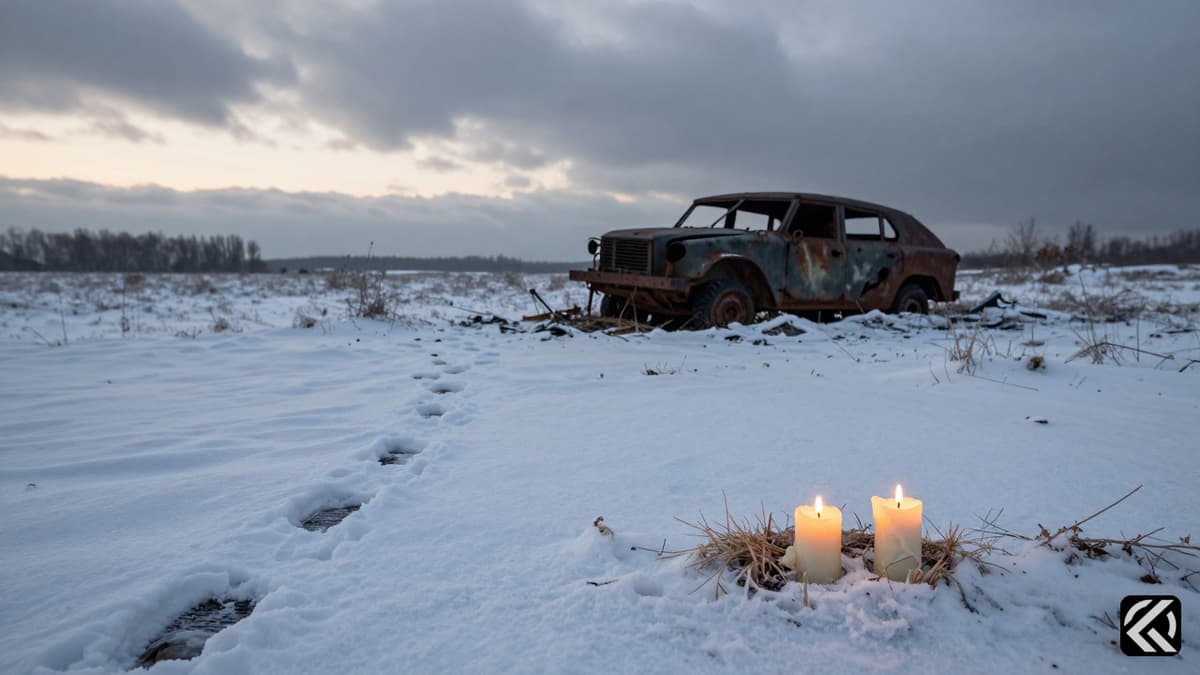
Tensions flare as Ukraine and Russia exchange blame for thousands of ceasefire violations during Orthodox Easter. Despite prisoner swaps, the truce remains fragile with attacks continuing on both sides.
The Ukraine-Russia ceasefire coinciding with Orthodox Easter celebrations has collapsed under a wave of mutual accusations. Ukrainian military officials reported 2,299 violations by Russian forces, while Moscow counters with claims of its own Ukrainian breaches. The truce, intended as a moment of peace, turned into a period of intense friction before the holiday even concluded.
On Saturday, Russian forces initiated 28 attacks and launched nearly 2,000 drone strikes, though no bombs or missiles were reportedly used. The Ukrainian military stated that Russian troops in the north-eastern Kharkiv region executed four Ukrainian soldiers after the ceasefire came into force. A local prosecutor's office described these killings as a "grave violation of international humanitarian law," while Kyiv labeled the incident a war crime. The Ukrainian military noted that the troops had been disarmed when they were shot. Authorities released drone footage showing four bodies lying in a clearing, providing visual evidence of the incident.
Despite the violence, the Zelensky Putin truce saw a significant diplomatic development: both sides agreed to swap 175 prisoners of war, including seven civilians on each side. However, this exchange did not translate into a lasting pause in hostilities. President Volodymyr Zelensky had earlier declared that his forces would respond "symmetrically" to any Russian attacks, emphasizing that Easter should be a time of peace. He expressed hope that the truce could be extended to aid stalled peace negotiations, which have been further complicated by the outbreak of war in the Middle East. Russia firmly rejected the proposal to extend the truce, stating its attacks would resume on Monday.
Ukrainian sources detailed the extent of the breach, citing specific locations and tactics used by Russian forces. In addition to the killings in Kharkiv, the Ukrainian military attributed three overnight attacks to Ukrainian forces in the Pokrovsk area and Otradne in the Dnipropetrovsk region, according to Russia's defense ministry. Moscow also claimed that four attempts by Ukrainian troops to advance in Sumy and Donetsk were thwarted. These conflicting reports of violations emerged after both sides initially accused each other of limited breaches in the first few hours of the Saturday truce before escalating their claims.
The context of this fragile moment is rooted in recent diplomatic maneuvers. Earlier in the year, Russian President Vladimir Putin had agreed to a US request to halt strikes on energy infrastructure as Ukraine faced bitterly cold temperatures. This previous acquiescence contrasts with his current stance on the Easter truce, where he had previously resisted repeated calls from Ukraine for a temporary cessation of fighting before announcing the short-term halt. The current situation highlights the deep skepticism on the ground. Ukrainian civilians and soldiers on the frontlines of the conflict, which has been raging since 2022, maintain low expectations regarding the viability of this ceasefire.
The immediate aftermath of the Ukraine-Russia ceasefire suggests a rapid return to the status quo of active engagement. With President Putin announcing that attacks would resume on Monday, the window for diplomatic breakthrough has narrowed significantly. The incident in Kharkiv, where disarmed soldiers were executed, serves as a stark indicator that the truce did not alter the rules of engagement for all units on the ground. The release of drone imagery showing fallen soldiers reinforces the gravity of these Orthodox Easter violations, moving the narrative beyond simple political rhetoric into the realm of documented war crimes.
Looking ahead, the failure to extend the truce implies that peace negotiations remain in a deep freeze, especially with the added geopolitical pressure from the Middle East conflict. The mutual accusation of thousands of violations indicates that neither side is willing to cede tactical ground or trust the other to honor a temporary halt. As the weekend concludes and Monday begins, the expectation is that the 2,299 violations reported by Kyiv will be matched by fresh Russian accusations of Ukrainian aggression. The grim reality on the frontlines remains unchanged: a conflict that has raged since 2022 shows no immediate signs of abatement, leaving civilians and soldiers with little hope for a genuine period of peace. The low expectations held by those on the ground reflect a history of broken promises and a strategic reliance on military pressure rather than diplomatic resolution.
Jun 8, 2026 00:51 UTC
Trump Claims Iran Nuclear Deal Imminent Despite Diplomatic Fractures
Jun 8, 2026 00:47 UTC
Iran Fires Missiles at Israel After Beirut Strike
Jun 7, 2026 22:00 UTC
US, Iran Peace Hops Fade 100 Days Into War
Jun 7, 2026 20:57 UTC
Iran Strikes Israel: IRGC Promises Week of Continuous Offensive
Jun 8, 2026 02:28 UTC
Trump Walks Out of Meet the Press After Rejecting Evidence Demands


