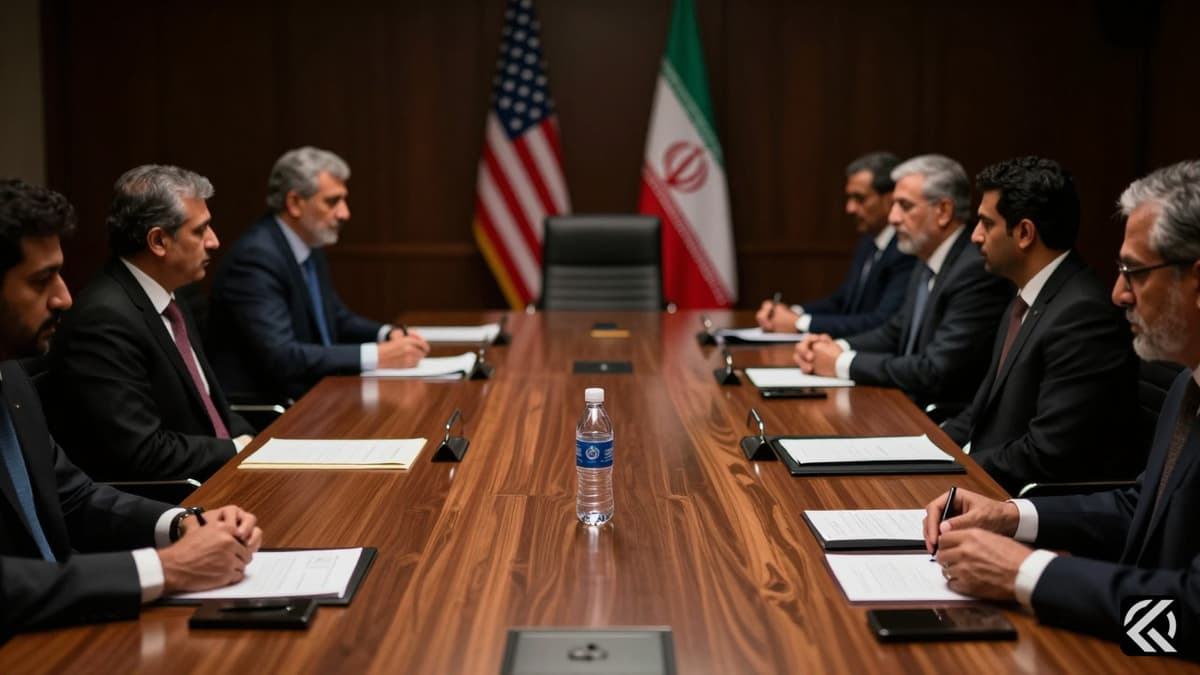
High-stakes diplomatic efforts collapsed as Vice President JD Vance confirmed Iran refused US terms during marathon talks in Islamabad, leaving regional tensions and nuclear concerns unresolved.
The United States and Iran have failed to secure a diplomatic breakthrough after marathon negotiations in the Pakistani capital, leaving high-level tensions unresolved. Vice President JD Vance announced the collapse of talks on Sunday, stating Tehran refused to accept Washington's terms following 21 hours of intense discussions in Islamabad.
This breakdown marks the end of the highest-level meeting between Washington and Tehran since the 1979 Islamic revolution, yet the failure to conclude a deal has intensified regional anxieties. Vance told reporters shortly before departing the capital that the outcome is detrimental, particularly for the Islamic Republic, though he did not explicitly detail the specific concession breakdown beyond the core demands.
" The bad news is that we have not reached an agreement, and I think that's bad news for Iran much more than it's bad news for the United States of America," Vance stated, emphasizing the gravity of the situation. He clarified that the United States is now demanding a "fundamental commitment" from Tehran, specifically requiring an affirmative pledge that Iran will not seek nuclear weapons or the tools necessary to build them quickly. Al Jazeera correspondent John Hendren, reporting from Washington, noted that the presence of Vance signaled the US was taking these talks with maximum seriousness, suggesting the US is prepared to endure a prolonged standoff if necessary.
Hendren observed that Vance's departure does not signal the total end of diplomatic engagement, suggesting that the talks could continue remotely. The primary obstacles appear to be the control of the Strait of Hormuz, which Iran continues to dominate, and the irreconcilable gaps regarding the nuclear dossier. While the US demands a comprehensive ban on nuclear ambitions, including rights for medical purposes, Iranian negotiators have not yet agreed to such a sweeping surrender of their program.
Iran's Ministry of Foreign Affairs responded to the collapse with a measured statement, noting that no one expected a full agreement to be reached in a single session. Spokesperson Esmaeil Baghaei told state broadcaster IRIB that Tehran remained confident that contacts mediated by Pakistan and other regional friends would continue. This stance aligns with reports from Tehran that the current discussions are far more comprehensive than previous negotiations, which focused primarily on uranium stockpiles, now expanded to include security assurances and regional stability issues.
The immediate aftermath of the failed talks has seen renewed calls for de-escalation from mediators. Pakistan, acting as the host and mediator, urged both nations to uphold their commitments to a ceasefire. Foreign Minister Ishaq Dar expressed gratitude for the efforts of both sides while hoping for a positive spirit to achieve durable peace. However, the context of the negotiations is overshadowed by a recent escalation in violence. A war launched by the US and Israel on February 28 has already resulted in over 2,000 deaths and widespread damage across Iranian military and civilian areas, with retaliatory attacks targeting Gulf countries hosting US assets.
The core disagreement remains the definition of a successful US-Iran nuclear deal. Experts and correspondents note that while previous rounds focused on the nuclear dossier, the current US demand is unprecedented in its scope. The US requires Iran to give up not just the weapons, but the very right to any nuclear program. This contrasts sharply with the framework proposed by Iran before the talks, which did not mention a total surrender of nuclear ambitions.
Al Jazeera's Osama Bin Javaid, reporting from Islamabad, highlighted the depth of the mistrust between the two powers. He noted that while a deal was once thought to be "within reach," the current ultimatum from Washington may only deepen the divide. The US delegation, led by Vance, and the Iranian delegation, led by Parliament Speaker Mohammad Bagher Qalibaf, attempted to advance a ceasefire, but deep disagreements and ongoing Israeli strikes in Lebanon have complicated the path forward.
The failure to reach an agreement also highlights the lingering impact of the global energy crisis triggered by Iran's chokehold on the Strait of Hormuz. With 20 percent of the world's oil and gas exports passing through this waterway, any further escalation poses a severe threat to the global economy. The breakdown in talks comes despite the war's expansion into the wider Middle East, raising fears that without a diplomatic resolution, the cycle of violence and economic disruption will continue to spiral.
Diplomatic Channels Remain Open Amidst Deadlock
While the immediate session concluded without a resolution, the historical precedent and recent statements suggest that the path to a US-Iran nuclear deal is not permanently closed. The US commitment to remote negotiations and the Iranian Ministry's assertion that agreements are not expected in a single session indicate a potential for future dialogue. However, the deep-seated mistrust and the uncompromising nature of the US demands regarding the Strait of Hormuz and nuclear capabilities create a high barrier to re-engagement.
Looking ahead, the region faces a precarious trajectory. If the current stance hardens, the risk of further military escalation remains acute, potentially drawing in more regional actors and exacerbating the global energy crisis. The continued Israeli attacks on Hezbollah and the ongoing retaliatory measures from Tehran suggest that the diplomatic window may narrow as the physical cost of the conflict rises. The international community, particularly the US and Pakistan, will likely face increasing pressure to bridge the gap, as the failure of this high-stakes meeting underscores the urgent need for a sustainable ceasefire and a verifiable agreement on nuclear non-proliferation to prevent further regional instability.
Jun 8, 2026 02:17 UTC
Magnitude 7.8 Quake Shakes Philippines, Urging Immediate Evacuations
Join 50,000+ readers getting the global briefing every morning.
No spam. Unsubscribe anytime.
Jun 8, 2026 02:17 UTC
Magnitude 7.8 Quake Shakes Philippines, Urging Immediate Evacuations
Jun 8, 2026 00:51 UTC
Trump Claims Iran Nuclear Deal Imminent Despite Diplomatic Fractures
Jun 8, 2026 00:47 UTC
Iran Fires Missiles at Israel After Beirut Strike
Jun 7, 2026 22:38 UTC
Congress Party Claims Unity for INDIA Bloc Delhi Meeting


