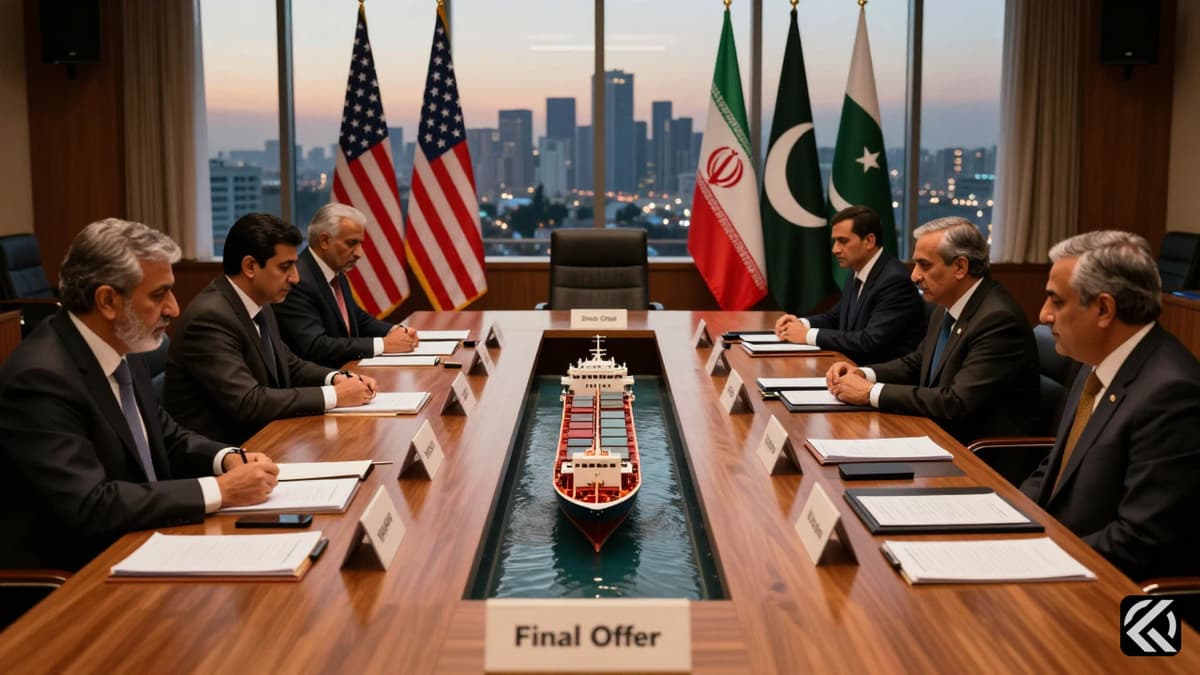
Marathon talks between US and Iranian officials in Pakistan collapsed without a deal, leaving the ceasefire in doubt and global energy supplies at risk.
The failure of marathon diplomatic talks between the United States and Iran marks a significant setback for peace efforts in the Middle East. US Vice President JD Vance departed Islamabad on Sunday after 21 hours of negotiations failed to produce a deal to end the ongoing conflict. Despite what Vance described as a "final and best offer," Iranian officials refused to commit to forgoing a nuclear weapon, leaving the future of the two-week Strait of Hormuz ceasefire in serious doubt.
The talks, which began on Saturday local time in Islamabad, ran through the night into Sunday morning. They represented the highest-level direct engagement between the two nations since the formation of the Islamic Republic in 1979. However, the delegations remained too far apart, not only in substance but in style and temperament. While US officials, led by Vance, pushed for a relatively quick solution following the implementation of a ceasefire, the Iranian delegation moved with a slower, long-term negotiating approach. Technical papers were exchanged and reviewed repeatedly, but the fundamental disagreements over nuclear enrichment proved insurmountable.
Vance stated that the US had presented "quite flexible" terms, yet Tehran rejected the conditions for a deal. Iranian state media outlet Tasnim reported that the US demands "prevented a common framework and agreement." The core issue remains the US requirement for a "cast-iron commitment" that Iran will not build a nuclear weapon. While Tehran insists it only seeks a nuclear power program and has long claimed it will not build a weapon, its recent ramping up of uranium enrichment levels has caused deep concern in the West and was a catalyst for last year's 12-day conflict with Israel.
During the negotiations, Vance maintained constant communication with the White House and key administration officials. He spoke consistently with President Donald Trump, as well as Secretary of State Marco Rubio, Secretary of Defense Pete Hegseth, Secretary of Treasury Scott Bessent, and Adm. Brad Cooper, commander of US Central Command. Despite the Vice President's insistence that the ball now sits in the Iranian court to accept the final offer or change its position, the failure to yield a deal throws the current ceasefire into question. Without a commitment from Iran to reopen the Strait of Hormuz, global energy supplies will continue to be throttled.
The atmosphere in Islamabad was tense as journalists waited for updates outside the Serena Hotel. As the sun set and rose again over the city, the diplomatic efforts stretched on for more than ten hours. Journalists at the Jinnah Convention Centre, where reporters had been waiting for information from the talks across the road, grew weary. Despite the fatigue, with some sipping sugary tea and coffee to stay awake, the excitement around the vast round hall remained low as whispers of no agreement began to circulate.
The failure of the talks also highlights the broader geopolitical tensions involving other world powers. President Donald Trump issued a stern warning regarding external support for Iran, specifically targeting China. Trump stated that China will have "big problems" if it ships weapons to Iran. This warning came amid intelligence reports, first reported by CNN, indicating that Beijing was preparing to deliver new air defense systems to Iran within the next few weeks. The intelligence suggests Iran may be using the ceasefire as an opportunity to replenish weapons systems with the help of key foreign partners. Trump did not specify if he had spoken to Chinese leader Xi Jinping, whom he plans to meet early next month, but he made the consequences of such actions clear.
Trump's stance on the conflict has appeared shifting. Before the ceasefire took effect, the President had promised that Iran's "whole civilization will die" if its leaders did not agree to a deal. Yet, as the negotiations unfolded, his rhetoric shifted to a sense of indifference regarding the outcome. He stated, "Whether we make a deal or not makes no difference to me," claiming the US had already defeated Iran militarily. This lack of clear direction on whether the maximalist threats will be revived adds to the uncertainty. With the talks stalling and no new negotiations previewed by Vance, the path forward remains unclear.
The diplomatic breakdown raises critical questions about the future of the conflict. How Iran will respond to the US walking away from the table remains a pivotal variable. Furthermore, the duration of the global economic limbo caused by the potential closure of the Strait of Hormuz is now a major concern. The two-week ceasefire, which began Tuesday against the backdrop of Trump's maximalist threats, is now fragile. The failure to secure a deal on the nuclear program leaves the region on a precipice, with the US having delivered its final offer and the Iranian court yet to respond.
The collapse of the Islamabad summit leaves the Strait of Hormuz ceasefire in immediate jeopardy, threatening to reignite global energy disruptions. As the US holds its "final and best offer" for Iran to forgo nuclear weapons, the lack of progress signals a potential return to hostilities. With President Trump warning of severe consequences for nations like China supplying weapons, the geopolitical landscape is becoming increasingly volatile. The failure to bridge the divide in style and substance suggests that without a shift in Iranian position, the window for a diplomatic resolution is closing rapidly. The coming days will be critical in determining whether the conflict escalates or if a new diplomatic window opens.
Jun 8, 2026 00:51 UTC
Trump Claims Iran Nuclear Deal Imminent Despite Diplomatic Fractures
Jun 8, 2026 00:47 UTC
Iran Fires Missiles at Israel After Beirut Strike
Jun 7, 2026 22:00 UTC
US, Iran Peace Hops Fade 100 Days Into War
Jun 7, 2026 20:57 UTC
Iran Strikes Israel: IRGC Promises Week of Continuous Offensive
Jun 8, 2026 02:28 UTC
Trump Walks Out of Meet the Press After Rejecting Evidence Demands


