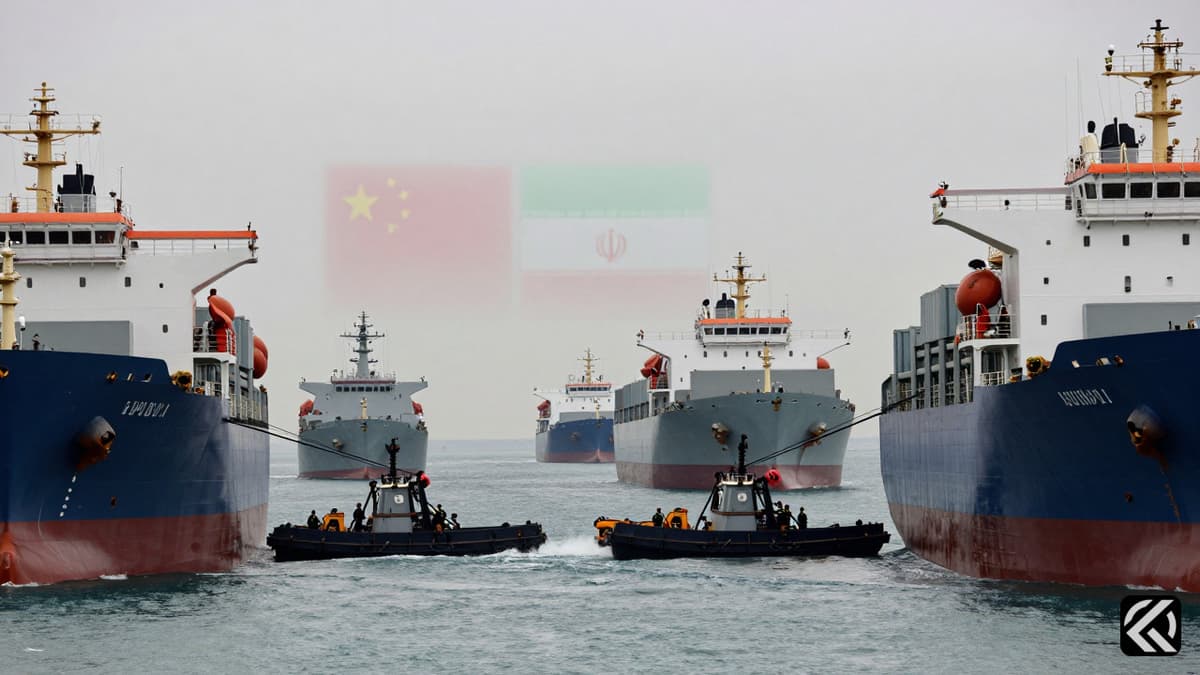
President Trump vows "staggering" 50% China tariffs over alleged military aid to Iran, while Strait of Hormuz blockades intensify following failed Islamabad negotiations.
President Donald Trump issued a stark warning to Beijing on Sunday, threatening to impose staggering new tariffs if China provides military assistance to Iran during the ongoing Middle East conflict. Speaking on Fox News, the US President confirmed that a 50% tariff penalty applies specifically to China if they are caught aiding Tehran. This threat comes as diplomatic efforts in Islamabad collapsed, with US officials reporting that negotiations have failed to produce a breakthrough in the six-week crisis.
The escalation involves direct accusations of military support. During the interview, host Maria Bartiromo asked if the 50% tariff warning was specifically aimed at China for supplying shoulder-fired anti-aircraft missiles. Trump acknowledged that while he does not always trust news reports, he has heard claims that China might be providing such weaponry. He expressed doubt that they would do so now due to his personal relationship with Beijing, yet he insisted that if they are caught doing it, the penalty would be immediate. Trump stated that the US will impose a 50% China tariffs rate on any nation aiding Iran, describing the figure as staggering.
Simultaneously, the physical conflict has intensified in the Persian Gulf. The US President announced a significant shift in strategy regarding the Strait of Hormuz, declaring that the United States Navy will begin a process to block any and all ships attempting to enter or leave the waterway. In a post on Truth Social, Trump labeled the situation as "world extortion," accusing Tehran of restricting traffic and charging tolls. He warned that any vessel paying such tolls would be intercepted. To counter the threat of mines, Trump confirmed that the US and allies, including the UK, are deploying minesweepers to clear the channel. Iran's Revolutionary Guards have responded by stating they maintain full control over the strategic waterway and warning of severe consequences for hostile actions.
Inside the realm of direct military capability, Trump reiterated the United States' overwhelming power. He claimed that the US could "take out Iran in one day," specifically noting the ability to destroy the nation's energy infrastructure within an hour. He detailed that the US could eliminate every electric generating plant, a strike that would take a decade to rebuild, according to his assessment. Trump admitted he hates to do it but emphasized the permanence of such damage, noting that bridges, including one he allegedly destroyed previously to demonstrate capability, also fall into the category of targets. He argued that such a devastating attack would render Iran unable to recover.
The rhetoric has played a central role in the current diplomatic landscape. Trump defended his hardline statements, including a previous warning that a "whole civilization will die tonight," asserting that such language was the catalyst that pushed Tehran to the bargaining table. He expressed confidence that Iran has no cards left to play and will eventually return to the table to give the US "everything we want." The recent negotiations in Islamabad, led by US Vice President JD Vance, involved a marathon 21-hour session that ended without a resolution. Vance declared that Washington had presented its "final and best offer," leaving the ball in Tehran's court.
As the diplomatic deadlock continues, the US maintains a posture of maximum pressure. The deployment of traditional and specialized minesweepers marks a tangible escalation from verbal warnings to active maritime intervention. The US stance is clear: any attempt to disrupt global shipping or assist Iran will be met with severe economic or military consequences. The interplay between the threat of economic sanctions and the threat of infrastructure destruction underscores the high stakes of the current standoff in the region.
The collapse of the marathon negotiations in Islamabad marks a critical juncture where diplomatic channels have reached a temporary impasse, leaving the region on a precipice of further escalation. With the US offering what Vice President Vance termed a "final and best offer" and Iran refusing to accept the demands, the immediate future points toward continued tension. Based on the US President's declaration of a blockade and the threat of crippling infrastructure, the most likely outcome is an intensification of maritime confrontations in the Strait of Hormuz. Unless Tehran accepts the US conditions, the economic and physical pressures described by the administration will likely increase, potentially leading to a prolonged period of instability where trade routes remain contested and the threat of military strikes remains active.
Jun 8, 2026 02:17 UTC
Magnitude 7.8 Quake Shakes Philippines, Urging Immediate Evacuations
Jun 8, 2026 00:51 UTC
Trump Claims Iran Nuclear Deal Imminent Despite Diplomatic Fractures
Jun 8, 2026 00:47 UTC
Iran Fires Missiles at Israel After Beirut Strike
Jun 7, 2026 22:00 UTC
US, Iran Peace Hops Fade 100 Days Into War
Jun 8, 2026 04:15 UTC
Trump Urges Netanyahu to Halt Iran Strike for Peace


