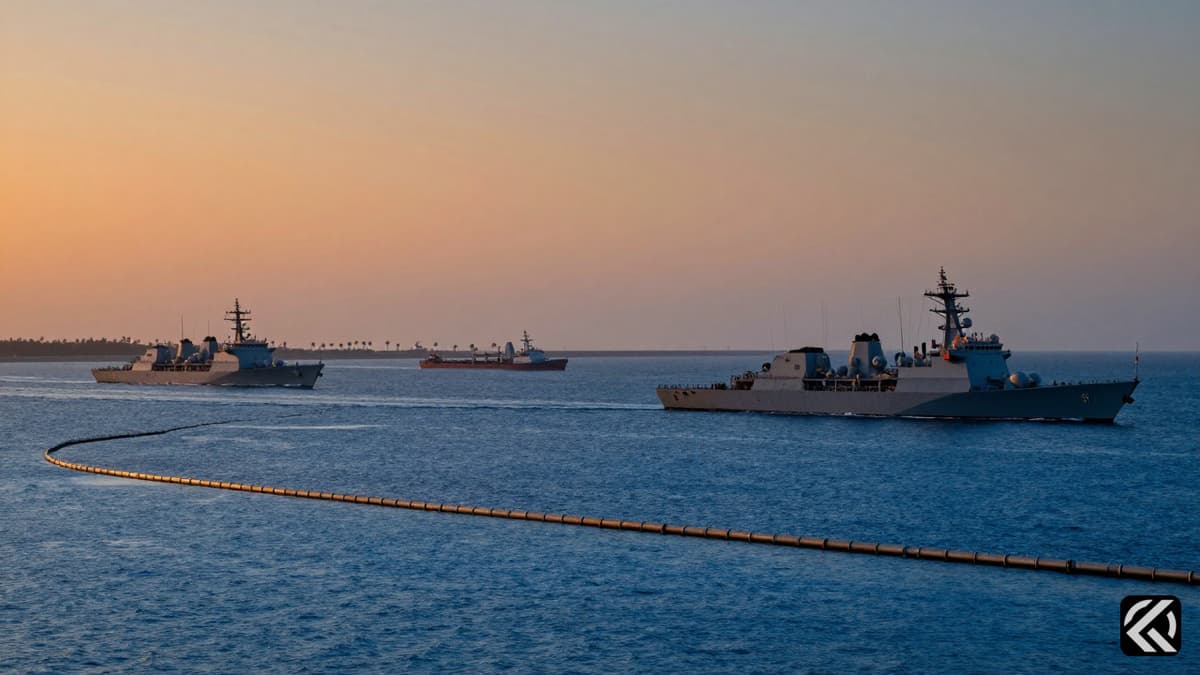
Following the collapse of high-stakes US-Iran talks in Pakistan, President Trump has ordered a naval blockade of the Strait of Hormuz, escalating regional tensions.
President Donald Trump has ordered a Strait of Hormuz blockade following the collapse of critical negotiations between the United States and Iran in Islamabad. The failed discussions, which lasted over 20 hours, concluded on Sunday, April 12, 2026, without a deal to end the fighting or address U.S. demands regarding regional security.
The breakdown of these high-stakes US-Iran talks was confirmed by U.S. Vice-President J.D. Vance, who admitted that the differences between the two delegations were insurmountable at this moment. Despite earlier threats from President Trump that he would "wipe out the whole civilisation" if Iran did not open the vital waterway, the talks ended in a stalemate. Trump stated on the 'Sunday Futures' programme that the U.S. Navy would begin the blockade to stop ships from entering or leaving the strategic passage, which handles one-fifth of the global oil supply.
In response to the impending blockade, Iran's Revolutionary Guards issued a stern warning on Sunday. They declared that any military vessels attempting to approach the Strait of Hormuz will be considered a violation of the two-week U.S. ceasefire. A statement reported by Iranian state media emphasized that the strait is under the "smart management" of Iran's Navy and remains open only for non-military vessels adhering to specific regulations. Iran's top negotiator, Mohammad Baqer Qalibaf, added that U.S. President Trump's new threats would have no effect on the Iranian nation, stating, "If you fight, we will fight, and if you come forward with logic, we will deal with logic."
The geopolitical fallout extends beyond the Persian Gulf, with a sense of dread spreading across West Asia. While the U.S. and Iran clashed over issues including the cessation of funding for Hamas, Hezbollah, and Houthis, and the future of Iran's uranium enrichment facilities, the situation on the ground in Lebanon has also intensified. During a visit to troops in southern Lebanon on Sunday, Israeli Prime Minister Benjamin Netanyahu announced that Israeli forces had eliminated the threat of a Hezbollah invasion. However, the United Nations Interim Force in Lebanon (UNIFIL) reported that Israeli soldiers rammed peacekeeping vehicles with Merkava tanks and blocked roads used to access UNIFIL positions.
UNIFIL noted that over the past week, IDF soldiers had fired warning shots near peacekeepers, with one instance resulting in a shot landing a meter away from a dismounted peacekeeper. This violence occurs as Lebanese Prime Minister Nawaf Salam vows to stop the war and ensure the withdrawal of Israeli forces. Salam's statement came on the eve of the anniversary of the country's 1975-1990 civil war, ahead of planned direct talks between Lebanese, Israeli, and U.S. officials scheduled for Tuesday in Washington.
President Trump also threatened China with "staggering" new tariffs, warning that Beijing could face a 50% tariff on goods entering the U.S. if it provides military assistance to Iran. This warning comes as the U.S. leader prepares to visit Beijing next month for talks with his Chinese counterpart, Xi Jinping. Meanwhile, international diplomatic efforts continue, with Russian President Vladimir Putin and Iranian President Masoud Pezeshkian discussing the latest developments in a phone call. Putin emphasized his readiness to help establish a just and lasting peace in West Asia, while Pezeshkian suggested that an agreement is within reach if the U.S. returns to the framework of international law.
The human cost of the conflict continues to mount, with the head of the Iranian Legal Medicine Organisation reporting that 3,375 people in Iran have been killed in the war with the United States and Israel. As the region faces the prospect of renewed fighting, the failure of the Pakistan-based negotiations leaves the international community to wonder if the two sides will continue to respect the existing ceasefire or if the new blockade will trigger a broader escalation.
Regional instability has expanded as Saudi Arabia summoned Iraq's ambassador regarding drone attacks launched from Iraqi territory targeting the kingdom and other Gulf states. The Saudi Foreign Ministry emphasized the need for Iraq to deal responsibly with these threats, highlighting the widening scope of the conflict. As U.S.-Iran relations sour and the blockade looms, the region faces a precarious future where diplomatic avenues are narrowing, and military confrontations are becoming increasingly likely. The collapse of the Pakistan talks suggests that without a significant shift in strategy or external intervention, the Strait of Hormuz may become a flashpoint for a larger global crisis, disrupting energy markets and deepening alliances in West Asia.
Jun 8, 2026 00:51 UTC
Trump Claims Iran Nuclear Deal Imminent Despite Diplomatic Fractures
Jun 8, 2026 00:47 UTC
Iran Fires Missiles at Israel After Beirut Strike
Jun 7, 2026 22:00 UTC
US, Iran Peace Hops Fade 100 Days Into War
Jun 7, 2026 20:57 UTC
Iran Strikes Israel: IRGC Promises Week of Continuous Offensive
Jun 8, 2026 02:28 UTC
Trump Walks Out of Meet the Press After Rejecting Evidence Demands


