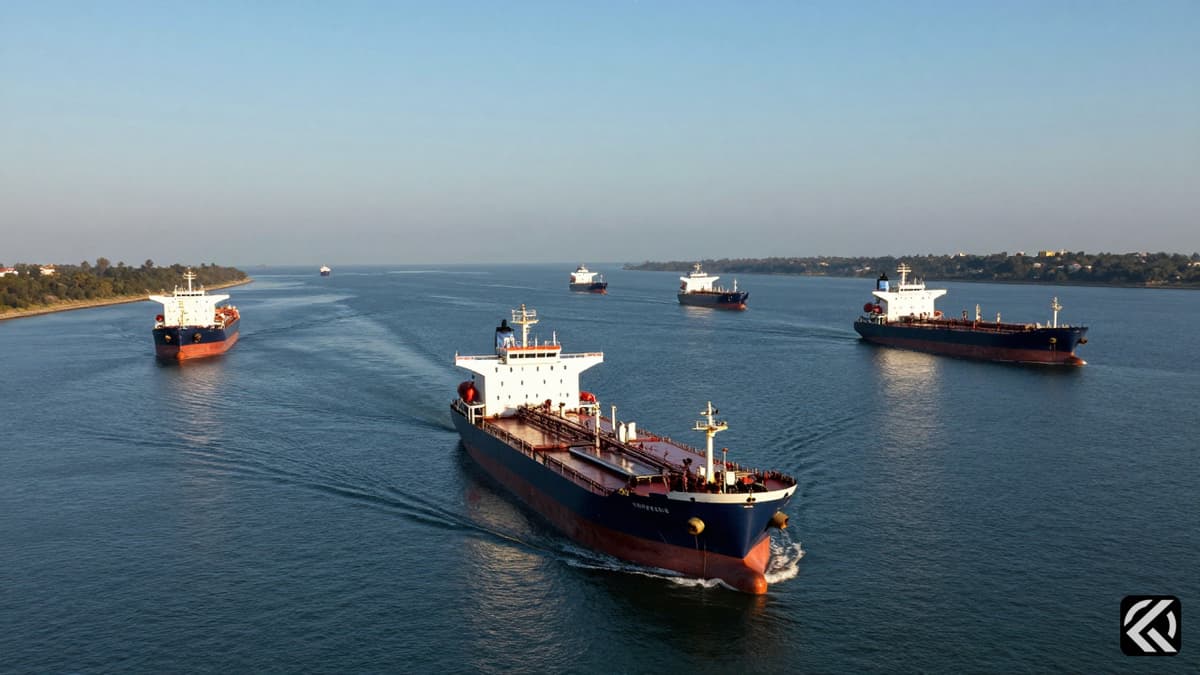
A US blockade of the Strait of Hormuz threatens global energy flows, forcing India to face soaring crude prices and potential shortages in essential LPG and LNG supplies.
The US Navy has officially initiated a blockade of the critical Strait of Hormuz as a pressure tactic against Iran following the failure of weekend peace talks. This strategic move restricts all vessels entering or departing Iranian ports, effectively isolating Iranian energy flows while aiming to uphold freedom of navigation for other nations. As global markets react, the ripple effects are already being felt, with crude oil prices surging past the $100 dollar mark. This escalation poses a significant challenge for India, a nation heavily dependent on energy imports from the region, as the blockade threatens to balloon import bills and disrupt essential fuel supplies.
The immediate trigger for this escalation was the collapse of diplomatic talks, leading the US to deploy CENTCOM forces to enforce an impartial blockade against any vessel interacting with Iranian coastal areas. While the US statement clarifies that the restrictions target only Iranian ports, the broader implications for global trade are severe. Experts emphasize that any restriction on crude oil flow inevitably drives up prices, directly impacting dependent economies like India. The market reaction has already been swift, with insurers and traders pricing in higher geopolitical risks, causing benchmark prices to spike even before the blockade fully takes effect.
For India, the situation presents a complex web of economic challenges. Sumit Ritolia, a modeling and refining manager at Kpler, notes that while direct exposure to Iranian crude is limited, the secondary effects could be profound. The primary concern lies in the potential displacement of China, which currently sources roughly 90% of Iranian crude. If China faces tighter enforcement or logistical hurdles, it may shift its demand to alternative suppliers, intensifying competition for the same barrels that India relies on. This "China displacement effect" could lead to higher benchmark prices for Brent and Dubai crude, particularly in the spot market where Indian refiners are active, thereby increasing the cost of India crude oil imports significantly.
Furthermore, the market dynamics could lead to a shortage of sour crude grades. Reduced access to Iranian medium-sour barrels might tighten the availability of similar grades from Saudi Arabia, Iraq, and the UAE, forcing Indian refiners to pay stronger premiums. This would negatively impact India's refining economics. Additionally, any escalation in the region, even without a full formal blockade, could spike tanker freight rates and insurance costs, further adding to the landed costs of crude oil. Sourav Mitra, a partner at Grant Thornton Bharat, warns that this scenario creates a stratified energy and economic shock for India that extends beyond just oil and gas, potentially widening the trade deficit and pressuring the rupee.
The reliance on Russian crude, which has helped mitigate supply risks previously, faces new challenges. While India has stepped up procurement from Russia, souring near levels seen in June 2023, the era of cheap Russian oil is diminishing. Heightened global demand, shrinking sanctions discounts, and rising logistics costs mean Russian crude is now trading at a premium on a delivered basis at Indian ports. As West Asian supplies face disruption, Russia's growing leverage allows it to price crude more aggressively. Consequently, while India can secure volumes, the inflation-shielding benefit that discounted Russian oil once provided is limited, leading to higher landed costs.
Beyond crude oil, the most critical vulnerability identified by experts is the potential for LPG and LNG supply disruption. Approximately 30-40% of India's crude, 45-55% of its LNG, and 85-90% of imported LPG volumes transit through the Strait of Hormuz. The ongoing tension has already forced the government to ration LPG for commercial purposes and extend the time period between bookings for domestic cylinders. If the US blockade persists or escalates, these supplies could face severe interruptions. This would directly impact fuel inflation, fertilizer costs, and household cooking gas subsidies, while also affecting the power sector and remittances, which are vital for India's macroeconomic stability given the 8-9 million workers in Gulf economies.
India is actively implementing mitigating measures to sustain supplies despite the volatile global scenario. The government has diversified crude sourcing to around 40 countries, with about 70% of crude import volumes now routed outside the Strait of Hormuz, reducing direct transit concentration. Refineries are operating at high utilization, and additional crude cargoes are en-route to support near-term continuity. For the critical LPG sector, which sees 60% of domestic consumption as import-dependent, the government has increased domestic production by diverting output from other sources. However, the main watchpoint remains the stability of gas procurement through alternative suppliers and routes, as any sustained disruption to Gulf economies could threaten the $100 billion annual remittance inflow, amplifying the macroeconomic blowback of what is already a volatile global scenario.
Jun 8, 2026 02:17 UTC
Magnitude 7.8 Quake Shakes Philippines, Urging Immediate Evacuations
Jun 8, 2026 00:51 UTC
Trump Claims Iran Nuclear Deal Imminent Despite Diplomatic Fractures
Jun 8, 2026 00:47 UTC
Iran Fires Missiles at Israel After Beirut Strike
Jun 7, 2026 22:00 UTC
US, Iran Peace Hops Fade 100 Days Into War
Jun 8, 2026 04:15 UTC
Trump Urges Netanyahu to Halt Iran Strike for Peace


