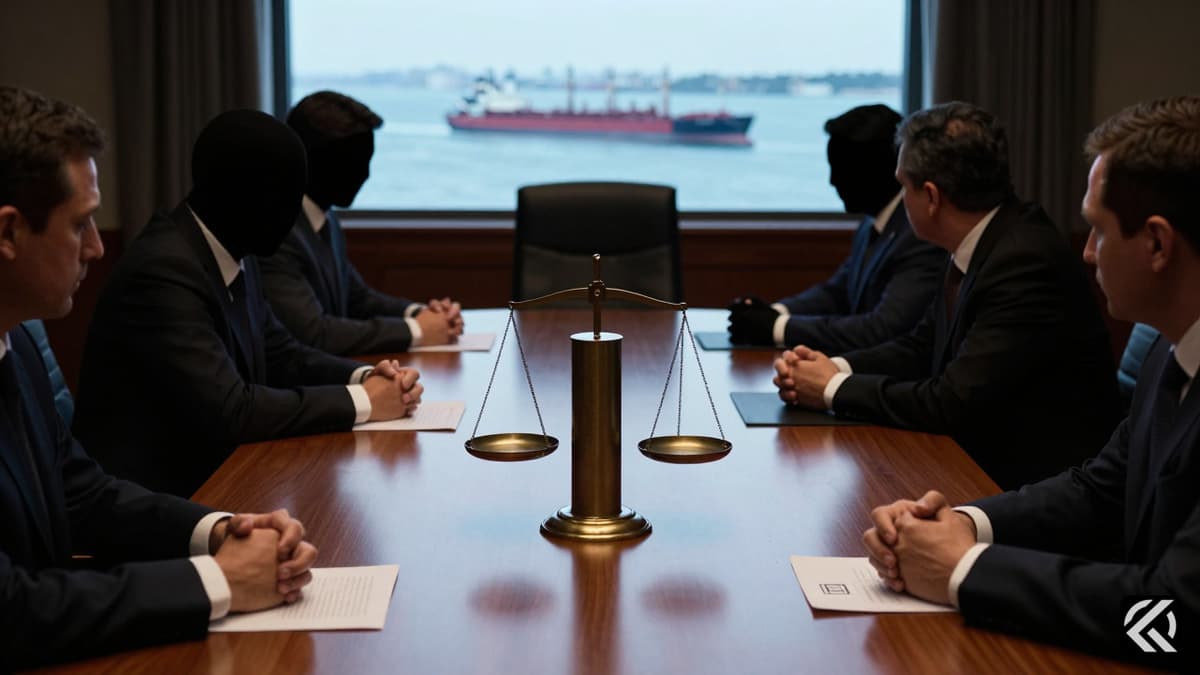
Diplomatic breakthroughs vanished instantly as Washington and Tehran failed to agree on the critical uranium enrichment duration, leaving the future of the Strait of Hormuz negotiations uncertain.
The US-Iran peace talks collapsed at the final mile following irreconcilable disagreements over nuclear commitments, with the specific uranium enrichment duration serving as the primary obstacle to a breakthrough. Negotiations, which stretched for more than 20 hours at Islamabad's Serena Hotel, ended without an agreement as Washington insisted on a twenty-year freeze while Tehran offered only five years.
The impasse was triggered by the starkly differing proposals from the two nations regarding the scope of curbs on Tehran's nuclear activities. While the Trump administration pushed for a permanent end to domestic enrichment and insisted on a twenty-year freeze, Iranian officials stated they could only agree to a five-year suspension. This fundamental disagreement on the uranium enrichment duration created an unbridgeable gap that neither side was willing to close, despite earlier reports of significant progress.
The atmosphere inside the negotiation room became increasingly heavy and unfriendly as the talks progressed. Reports indicate that during a particularly tense moment, voices were raised outside the negotiating chamber, leading to a chaotic scene that required the intervention of Pakistani mediators. Pakistan's Army Chief Asim Munir and Foreign Minister Ishaq Dar called for a tea break and physically moved the delegations back into separate rooms to de-escalate the situation. Despite these efforts, sources describe a lack of willingness from either side to ease the mounting tensions, with the mood remaining grim even as mediators attempted to soften the atmosphere.
Beyond the nuclear dispute, the two sides were divided on broader strategic issues, including the reopening of the Strait of Hormuz, a critical global energy transit route that had been effectively blocked by Iran. The US delegation prioritized the nuclear issue and the reopening of the strait, whereas Tehran sought a much broader agreement that addressed a wider range of geopolitical concerns. Mobile phones were barred from the main negotiation room, forcing delegates, including US Vice President JD Vance and Iranian Parliamentary Speaker Mohammad Baqer Qalibaf, to step outside during breaks to communicate with their respective governments.
The breakdown in negotiations occurred when the parties moved beyond the duration of the freeze to discuss guarantees, including non-aggression commitments and sanctions relief. At this stage, the tone of Iranian Foreign Minister Abbas Araghchi reportedly sharpened, according to two Iranian sources. The discussions were conducted across two separate wings and a shared area, highlighting the physical and diplomatic distance growing between the two sides. Despite the friction, officials told The Wall Street Journal they were considering a second round of face-to-face talks, though no specific details regarding the timing or agenda were disclosed.
The failure of these talks has significant implications for the region, particularly regarding the Strait of Hormuz and the lifting of international sanctions on Tehran. Sources involved in the negotiations stated that the sides had come "very close" to a resolution, estimating they were 80% there before hitting insurmountable issues. A Pakistani government source expressed a strong hope for a breakthrough in the middle of the talks, only to note that things changed within no time. The heavy atmosphere described by senior Iranian sources suggests that the trust required to finalize a deal on the uranium enrichment duration has eroded.
While the immediate outcome is a stalled agreement, the consideration of a second round indicates that the diplomatic channel remains open, albeit strained. The divergence between the US demand for a 20-year freeze and Iran's five-year offer remains the central friction point. As the delegations separate and return to their respective governments, the pressure mounts to resolve the impasse over the nuclear duration and the broader strategic interests tied to the Strait of Hormuz before further diplomatic capital is lost.
The collapse of the US-Iran peace talks marks a critical turning point, as the 20-hour negotiation session ended without a resolution on the uranium enrichment duration. With the US insisting on a 20-year freeze and Tehran limiting its commitment to five years, the path to a broader agreement involving the Strait of Hormuz appears blocked. Unless the parties can find a compromise on this central timeframe, the heavy atmosphere and unfriendly exchanges suggest that future rounds of talks may face similar hurdles, potentially leaving the region's energy transit routes and sanctions regime in a prolonged state of uncertainty.
Jun 8, 2026 00:51 UTC
Trump Claims Iran Nuclear Deal Imminent Despite Diplomatic Fractures
Jun 8, 2026 00:47 UTC
Iran Fires Missiles at Israel After Beirut Strike
Jun 7, 2026 22:00 UTC
US, Iran Peace Hops Fade 100 Days Into War
Jun 7, 2026 20:57 UTC
Iran Strikes Israel: IRGC Promises Week of Continuous Offensive
Jun 8, 2026 02:28 UTC
Trump Walks Out of Meet the Press After Rejecting Evidence Demands


