The sudden withdrawal of Eric Swalwell has plunged the Democratic party into disarray, potentially allowing a Republican to win California in the 2026 governor's race for the first time since 2011.
Representative Eric Swalwell has officially withdrawn from the 2026 California governor's race, a move that has shattered Democratic hopes of an easy victory in the state. Facing allegations of sexual assault and misconduct, Swalwell denied the accusations but announced his resignation from Congress on Monday, just hours after the US House of Representatives Ethics Committee opened an investigation. His departure has thrown the party into further chaos, raising the unsettling possibility that Republicans could secure a win in one of the most politically blue states in the country.
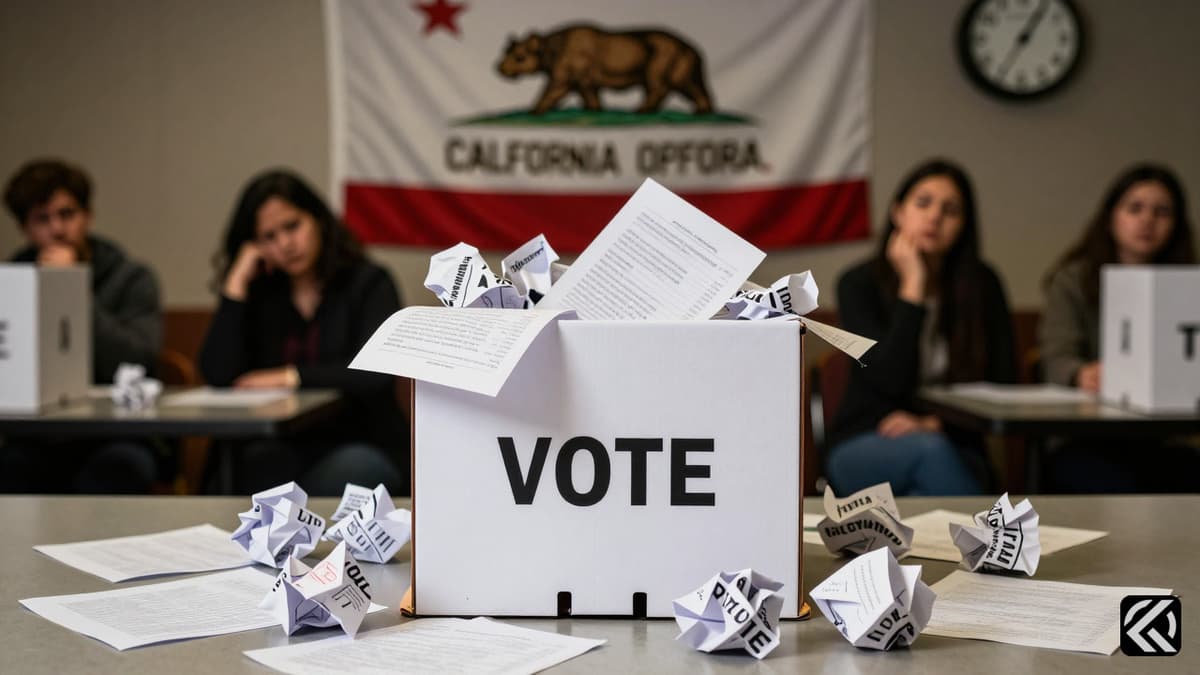
The exit of Swalwell, who was the leading candidate, has transformed a crowded Democratic field into a morass of undecided voters and splintered support. Political experts warn that an uncoordinated effort to replace him could result in a historic blunder, allowing a Republican to win despite Donald Trump's approval rating hovering below 30% in the state. This scenario would mark a significant shift, as California has not had a Republican governor since Arnold Schwarzenegger left office in 2011. The primary system, which allows the top two vote-winners to compete in the general election regardless of party affiliation, has exacerbated the risk.
Eric Swalwell scandal has already sparked a political earthquake, following a March poll by the University of California Berkeley's Institute of Governmental Studies that suggested two Republican candidates were garnering the most support. The packed field of Democrats has splintered their base, leaving the party vulnerable to a runoff that might exclude them entirely from the November ballot.
The stakes extend far beyond California's borders. As the fifth-largest economy in the world, the state's policies on environmental issues, consumer protection, and technology often dictate national regulations. A Republican victory here could signal a major shift in the national political landscape, particularly given the state's influence on global markets and policy trends.
Sitting Democratic Governor Gavin Newsom cannot run again due to term limit rules, and high-profile figures like former Vice President Kamala Harris have declined to run. This has left eight serious but lesser-known candidates struggling to gain traction in California's enormous and expensive media market. State Democrats had hoped Swalwell could surge enough to guarantee them a spot in the general election, but his exit has left the question of who can absorb his momentum unanswered.
Garry South, a long-time Democratic strategist who has managed four gubernatorial campaigns, described the situation as the most unsettled race he has ever seen. "The Democratic field was already pretty muddled, even after Swalwell took a small lead," South noted. "Now, it's just an outright morass." The Democratic field chaos is evident in the difficulty voters face in distinguishing between candidates and their respective policies.
The two candidates best positioned to capture Swalwell's voters are former Congresswoman Katie Porter and billionaire climate advocate Tom Steyer. However, neither is a sure bet. Porter has faced reports of allegedly mistreating staff, for which she pledged to be more intentional. Steyer has spent $89 million on advertisements, yet this expenditure has not resulted in a corresponding surge in opinion polls. Both have begun carving out space from other candidates, including former US Health and Human Services Secretary Xavier Becerra, San Jose Mayor Matt Mahan, Superintendent of Public Instruction Tony Thurmond, former Los Angeles Mayor Antonio Villaraigosa, and former State Controller Betty Yee.
Despite their efforts, Democratic political experts emphasize that the race lacks essential star power. Voters have struggled to differentiate between the candidates, leading to low enthusiasm. Tamara, a Santa Monica resident and Democrat, cited homelessness and the high cost of living as her key concerns but admitted she lacks enough information to choose a favorite among Steyer and Porter. Jacob Casey, a doctor with a busy schedule, expressed a similar sentiment, noting he has not yet seen a primary election with this level of indecision.
Mark DiCamillo, who led the UC Berkeley Institute of Governmental Studies poll, highlighted the unique nature of this cycle. "I haven't seen a primary election for governor with this level of indecision, and lack of voter enthusiasm, with less than two months to go before voting starts to take place," DiCamillo stated. The March poll indicated that Republican voters were evenly split, but with Democratic voters outnumbering Republicans by a 2-1 ratio, locking Democrats out remains the party's only conceivable path to victory in November.
As the campaign landscape shifts, Porter has tried to fill the vacuum by focusing on economic messaging, particularly soaring housing costs. She advocates for fast-tracking approvals and clearing regulatory hurdles to lower construction costs. Similarly, Steyer released a video detailing a plan to make California more affordable, while also challenging the president's actions regarding Iran. These pitches may appeal to undecided voters like Leila Salem, an independent opposed to war, though she notes she still needs more research before making a decision.
The outcome of this California governor's race 2026 hinges on whether a large share of Swalwell's supporters coalesce behind Steyer, Porter, or a potential late-entrant. Experts suggest that if the party fails to coordinate, the general election could feature no Democrats on the ballot, a historic first for the state. Conversely, a successful consolidation could restore a traditional Democrat-versus-Republican matchup. The next few days will be critical as the political dust settles, determining whether the state retains its status as a Democratic stronghold or experiences a paradigm shift that could resonate across the nation.
Jun 8, 2026 00:51 UTC
Trump Claims Iran Nuclear Deal Imminent Despite Diplomatic Fractures
Jun 8, 2026 00:47 UTC
Iran Fires Missiles at Israel After Beirut Strike
Jun 7, 2026 22:00 UTC
US, Iran Peace Hops Fade 100 Days Into War
Jun 7, 2026 20:57 UTC
Iran Strikes Israel: IRGC Promises Week of Continuous Offensive
Jun 8, 2026 02:28 UTC
Trump Walks Out of Meet the Press After Rejecting Evidence Demands