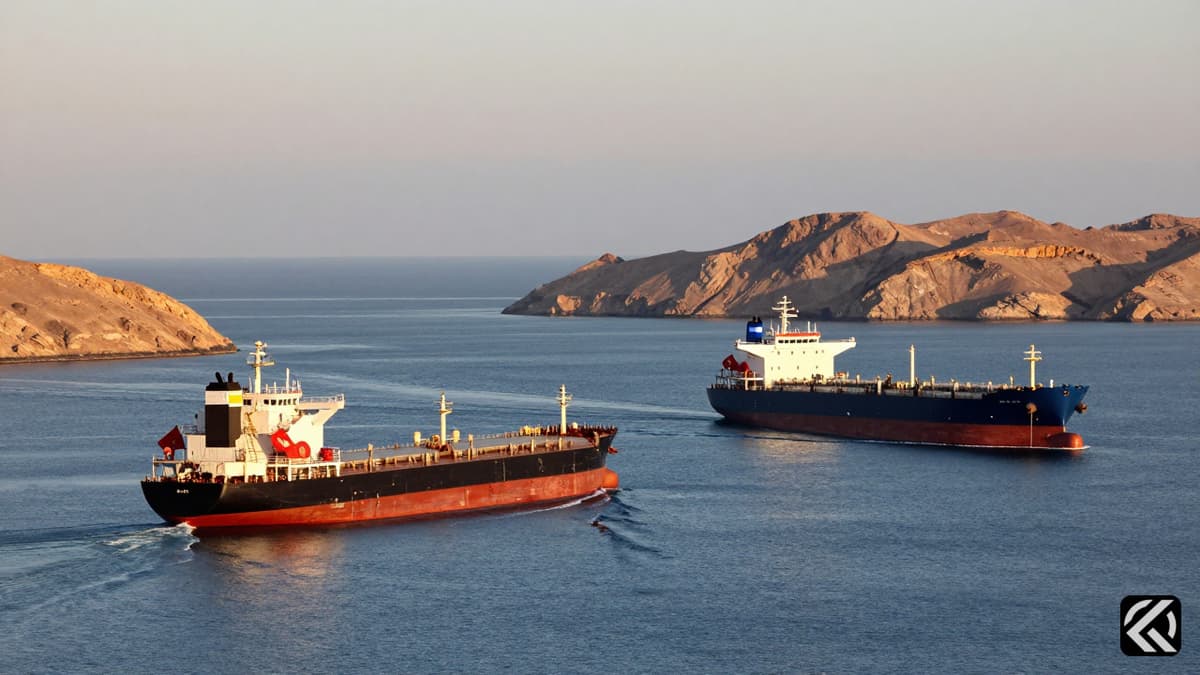
Global shipping faces unprecedented disruption as the US naval blockade takes effect, forcing vessels to navigate new IRGC-mandated routes while 22 ships face attacks in the strategic waterway.
At least three tankers successfully entered the Gulf via the strategic Strait of Hormuz on Tuesday, marking a shift in navigation protocols following recent escalation. Shipping data from LSEG and Kpler confirms the transit of the Panama-flagged Peace Gulf, which is bound for Hamriyah port in the United Arab Emirates. This vessel joined two other ships, the US-sanctioned Rich Starry and Elpis, all of which avoided Iranian ports to sidestep the newly implemented restrictions.
The movement of these three vessels occurs against a backdrop of intense geopolitical friction. On Monday, US Central Command (CENTCOM) declared that its forces began implementing a comprehensive blockade of maritime traffic to and from Iranian ports at 10am ET. This action, ordered by President Trump, targets "vessels of all nations" entering or departing Iranian coastal areas and ports in the Arabian Gulf and Gulf of Oman. Tehran has immediately warned that it could retaliate by targeting ports in neighboring Gulf countries, adding a layer of uncertainty to the region's security.
The disruption marks a dramatic departure from pre-war operations. Before the conflict began on February 28, ships utilized two dedicated lanes that functioned like a divided highway, carrying one-fifth of the world's oil and gas shipments. However, on March 2, Ebrahim Jabari, a senior adviser to the IRGC commander-in-chief, announced the strait was "closed." He warned that any vessels attempting to cross would be set ablaze by the IRGC and navy. Consequently, the Islamic Revolutionary Guard Corps (IRGC) has ordered all vessels to utilize a new navigation map due to the likelihood of anti-ship mines in the main traffic zone. The new route requires ships to enter the strait north of Larak Island and exit south of it, a directive issued in coordination with the IRGC's navy.
Under the US naval blockade, vessels not heading to Iranian ports were initially exempt, yet the confusion remains palpable as Washington and Tehran issue conflicting instructions. This clash of commands has created a chaotic environment for global shipping operators. The IRGC has labeled the previously used area as "restricted," forcing a complete rerouting of traffic that was previously the world's most critical energy chokepoint. The blockade and the mining threat have effectively closed the strait to most international shipping, a situation that has persisted despite a ceasefire between the US and Iran taking effect on April 8.
The impact of these events on global commerce is staggering. Ship-tracking data from Kpler indicates that traffic through the Strait of Hormuz has plummeted by more than 95 percent since the start of the war. Between February 28 and April 12, only 279 ships are known to have transited the strait, a fraction of the pre-war average of about 100 ships per day. The situation worsened after the April 8 ceasefire; only 45 ships have entered or exited the strait since that agreement came into effect.
Hundreds of tankers and other ships have been stranded in the Gulf since the war on Iran began, a disruption that has cut global oil and gas supply by 20 percent, representing the world's biggest-ever fuel supply disruption. This bottleneck has not only strained supply chains but has also directly impacted production capabilities. The war has damaged Gulf energy production facilities and has boosted oil prices by approximately 50 percent since the start of the fighting. Asian buyers are cited as being among the hardest hit by these surging costs and supply shortages.
The safety of those navigating these waters remains a critical concern. According to ship-tracking data from Kpler, 22 ships have been attacked in the Strait of Hormuz since the start of the war. The attacks spanned multiple jurisdictions, with eight ships targeted in UAE territorial waters, six in Omani waters, and two each in Iraqi and Qatari waters. Furthermore, one attack each was recorded in Bahraini, Kuwaiti, Saudi, and Iranian waters. These figures underscore the extreme volatility of the region, where the presence of anti-ship mines and military orders has turned a vital trade route into a danger zone.
The strategic landscape of the Strait of Hormuz remains fraught with uncertainty. While the US forces have begun their blockade, the threat of Iranian retaliation looms large, with Tehran warning of potential attacks on neighboring ports. The IRGC's decision to declare the strait "closed" and mandate the new route north of Larak Island has fundamentally altered the operational reality for mariners. The presence of various types of anti-ship mines in the main traffic zone has forced a reevaluation of navigation safety protocols, with the IRGC labeling the old lanes as restricted.
As the world watches, the divergence in instructions from Washington and Tehran continues to add confusion for global shipping. The cessation of hostilities between the US and Iran on April 8 has not yet led to a significant recovery in traffic volume, with only 45 ships moving since the agreement. The lingering threat of attacks, evidenced by the 22 vessels hit so far, suggests that a return to pre-war shipping levels will be slow. The damage to energy facilities and the 50 percent rise in oil prices indicate that the economic repercussions will be long-lasting. Unless the mining threat is cleared and the conflicting naval commands are resolved, the global energy market may continue to face severe disruptions, with Asian buyers likely bearing the brunt of continued supply constraints. The strategic importance of the Strait of Hormuz remains paramount, but its current status as a contested and dangerous waterway poses a persistent risk to international trade stability.
Jun 8, 2026 00:51 UTC
Trump Claims Iran Nuclear Deal Imminent Despite Diplomatic Fractures
Jun 8, 2026 00:47 UTC
Iran Fires Missiles at Israel After Beirut Strike
Jun 7, 2026 22:00 UTC
US, Iran Peace Hops Fade 100 Days Into War
Jun 7, 2026 20:57 UTC
Iran Strikes Israel: IRGC Promises Week of Continuous Offensive
Jun 8, 2026 02:28 UTC
Trump Walks Out of Meet the Press After Rejecting Evidence Demands


