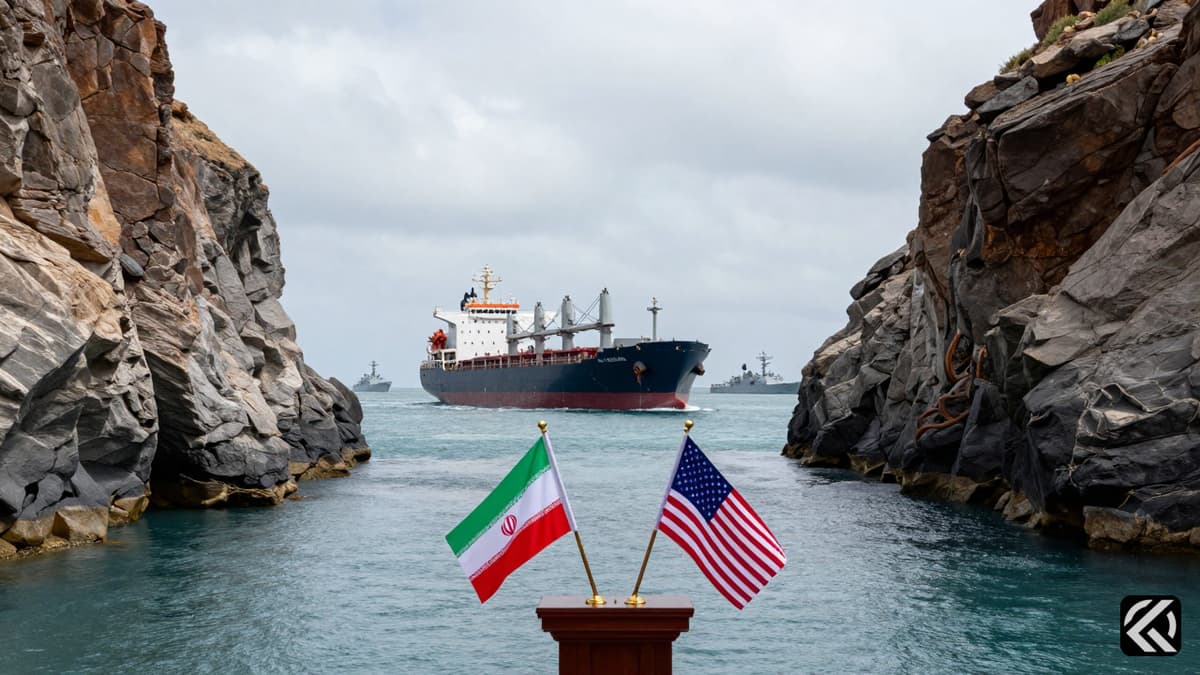
High-stakes talks collapse as the US and Iran fail to agree on the very terms of a truce, with fighting intensifying in Lebanon and the Strait of Hormuz.
This weekend's high-stakes negotiations aimed at ending the war with Iran represent one of the most critical diplomatic moments of Donald Trump's presidency and recent American history. However, a significant obstacle has emerged: the two sides cannot agree on what was actually agreed upon for the Iran ceasefire. The truce, announced just hours before a presidential deadline, has quickly unraveled in its first two days, marked by continued attacks and major disagreements over the deal's scope.
The initial two-week truce appeared to be secured rapidly on Tuesday, seemingly resolving the immediate threat of conflict. Yet, by Thursday, the situation appeared far more fragile. The Strait of Hormuz remains a logjam, and attacks continue to rain down on the region, undermining the stability the agreement was supposed to guarantee.
Perhaps the most critical point of contention is the status of Lebanon. On Wednesday, Israel launched extensive attacks against Iran's Hezbollah allies in Lebanon, a move Iran claims violates the ceasefire terms. Conversely, the United States and Israel maintain that Lebanon was never part of the deal. When Pakistani Prime Minister Shehbaz Sharif first announced the truce, he explicitly stated that "all parties had agreed to an immediate ceasefire everywhere including Lebanon and elsewhere." This specific inclusion is now at the heart of the dispute.
Tehran continues to insist that the agreement includes Lebanon, with high-ranking officials calling Israeli strikes a "flagrant violation" and an indicator of deceit. Iranian President Masoud Pezeshkian labeled the attacks a breach of the initial agreement. In contrast, President Trump told PBS News Hour on Wednesday morning that Lebanon was not included because of Hezbollah, calling the situation a "separate skirmish." White House press secretary Karoline Leavitt echoed this sentiment later that afternoon, stating clearly that "Lebanon is not part of the ceasefire."
The dispute has drawn in Pakistan, the intermediary chosen by the US to facilitate the deal. Pakistan's Ministry of Foreign Affairs issued a statement casting the situation in Lebanon as "serious violations," standing by Sharif's original claim. CNN reported that top Trump administration officials had been in contact with Pakistan throughout Tuesday regarding the terms and had largely signed off on specific elements of Sharif's post. This raises questions about whether the inclusion of Lebanon was intended from the start or if it was a genuine misunderstanding, as Vice President JD Vance suggested.
The confusion extends to the Strait of Hormuz, a critical waterway where Iran had previously shown significant leverage. In a statement Tuesday night, Iran indicated that passage would be possible via coordination with its Armed Forces, acknowledging technical limitations. President Trump initially posted this statement and seemed to agree to a temporary arrangement, even suggesting a "joint venture" where tolls would be charged to ships. However, as the strait did not become free-flowing, the White House's position shifted. By Wednesday afternoon, Leavitt suggested the deal required the strait to remain open "with no limitations or delays," disputing Iran's claim of partial control.
Furthermore, the very foundation of the negotiation-a "workable basis" for a permanent peace-remains unclear. Trump referenced a "10-point proposal from Iran" as a workable basis for negotiations. However, the 10-point list Iran shared publicly appeared to contain demands the US could not accept. Leavitt later claimed Trump was referring to a "different 10-point proposal" that was more reasonable and condensed, which the White House then sought to align with their own 15-point proposal. Despite this, the White House has offered no details on what this "new modified plan" contains.
Iran maintains that the 10 points they shared are the basis in question. Iranian Parliament Speaker Mohammad Bagher Ghalibaf stated that this basis had been "openly and clearly violated" before negotiations even began, citing the strikes in Lebanon and US claims about uranium enrichment.
The current trajectory suggests that the "workable basis" for a major deal to end the war was not workable at all. With both sides citing different versions of the agreement and disagreeing on the status of key regions like Lebanon and the Strait of Hormuz, the path to a more permanent peace looks increasingly obscured. If these fundamental misunderstandings are not resolved immediately, the truce may dissolve, potentially leading to escalated hostilities that could further destabilize the region and the global economy, which relies heavily on the security of the waterway.
Jun 8, 2026 00:51 UTC
Trump Claims Iran Nuclear Deal Imminent Despite Diplomatic Fractures
Jun 8, 2026 00:47 UTC
Iran Fires Missiles at Israel After Beirut Strike
Jun 7, 2026 22:00 UTC
US, Iran Peace Hops Fade 100 Days Into War
Jun 7, 2026 20:57 UTC
Iran Strikes Israel: IRGC Promises Week of Continuous Offensive
Jun 8, 2026 02:28 UTC
Trump Walks Out of Meet the Press After Rejecting Evidence Demands


