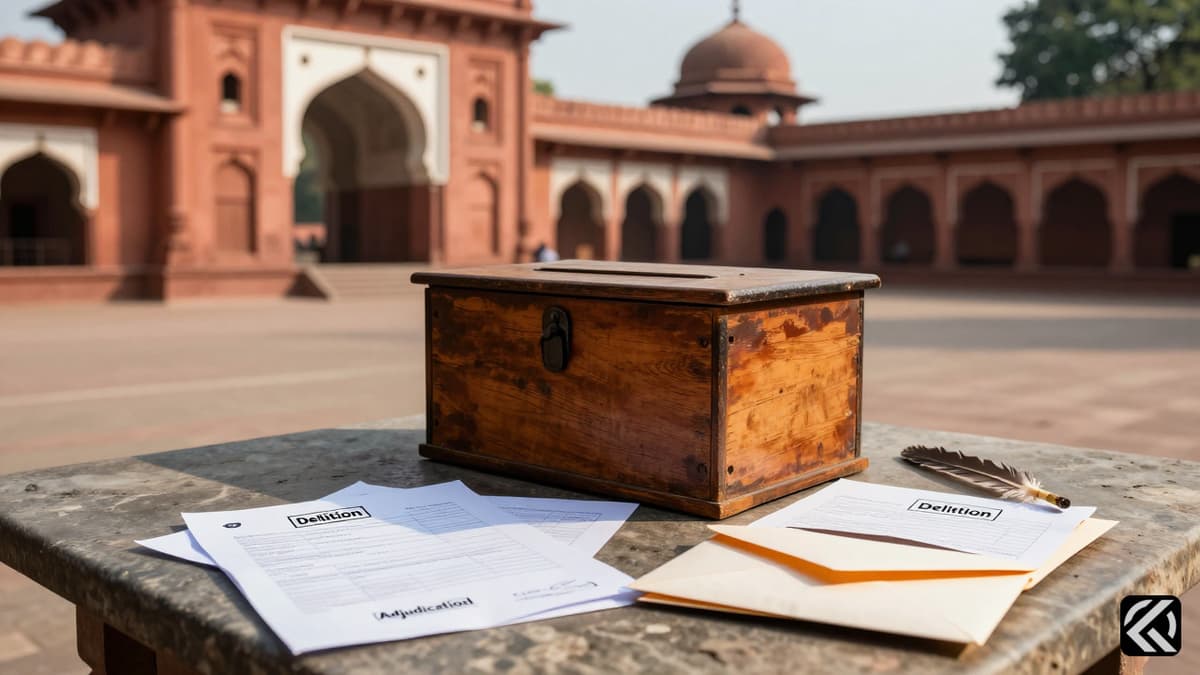
Over 27 lakh names have been struck from electoral rolls ahead of Bengal's 2026 elections, with Murshidabad district suffering the heaviest losses.
Lead Paragraph Kolkata, April 10: The Election Commission of India has finalized supplementary electoral rolls for the upcoming Bengal Assembly elections, revealing a massive purge of over 27 lakh voters following judicial adjudication.
Supporting Paragraph The data, released on Thursday, highlights significant disparities across districts, with the Muslim-dominant Murshidabad district facing the steepest declines while the Purulia-Jhargram tribal belt reported the fewest deletions. This drastic reduction has set the stage for heightened political tensions ahead of the voting dates.
Narrative Body The latest collated data from the Election Commission paints a stark picture of the electoral landscape in West Bengal ahead of the 2026 Assembly polls. The total number of deletions from the electoral rolls stands at approximately 27 lakh, a figure derived from the post-SIR (Special Electoral Roll) judicial adjudication process. The impact of this purge is far from uniform across the state. The districts of Murshidabad, Malda, North Dinajpur, South 24-Parganas, and Birbhum have witnessed the most significant numbers of names struck off. Among these, the Shamsherganj and Lalgola constituencies of Murshidabad district recorded the highest volume of removals.
In Shamsherganj alone, 74,775 names were deleted out of 1,08,400 that were under adjudication. Similarly, Lalgola saw 55,420 names removed from a pool of 99,082. While these numbers represent a fraction of the total 27-lakh purge, they underscore the intensity of the vetting process in these specific regions. The state's overall voter count currently stands at 6.7 crore, but the concentration of deletions in specific demographic belts has drawn sharp criticism.
The implications of these deletions are particularly acute in the Matua-dominant pockets of North 24-Parganas and Nadia, as well as the Muslim-dominant areas of Murshidabad. The scale of the Bengal voter roll deletions assumes critical significance due to the recent flare-ups in the Shamsherganj area. This region has been the site of protests linked to the Waqf (Amendment) Act and clashes during Ram Navami processions. Furthermore, neighboring Malda district has seen similar unrest. In the Mothabari constituency, more than 37,000 names were struck off from the 79,683 under adjudication. On April 1, protests over these block deletions turned violent, with mobs blocking roads and clashing with security personnel for several hours.
Political reaction has been immediate and forceful. Bengal Chief Minister Mamata Banerjee has repeatedly flagged the data as evidence of "targeted exclusions" against specific voter groups. Her administration's stance is that the mass exclusion is not a routine administrative exercise but a strategic move. The anxiety within the Matua community has been palpable. Sukesh Chowdhury, secretary of the All India Matua Mahasangha, stated that these exclusions have fueled significant anxiety, though he noted that the CM's promise of legal support remains reassuring.
On the opposing political front, the BJP's Bongaon unit has offered a different perspective. Bikash Ghosh, a secretary in the Bongaon unit, stated that affected voters will receive assistance in moving to tribunals to seek the restoration of their names. This suggests a potential legal battle ahead, especially given the Supreme Court's scheduled review.
The timing of the data release has created a tight window for any potential relief. Electoral rolls for the 142 constituencies scheduled for the second phase of voting on April 29 were frozen on Thursday, effectively halting all additions, deletions, or corrections until the elections conclude. Lists for the 152 constituencies voting in the first phase were sealed on April 6. The State Government has filed a plea for a review of these deletions, which the Supreme Court is scheduled to hear on April 13. This date leaves a small window of hope for the 2.7 lakh voters deleted from the rolls to potentially regain their status.
The impact of these deletions varies significantly across different constituencies. In the Krishnanagar North, Krishnanagar South, Ranaghat North West, Ranaghat North East, and Ranaghat South segments, over 90% of those under adjudication were excluded. Deletions in the six assembly segments of Bongaon ranged between 67% and 88%. However, two of the state's most closely watched constituencies, Bhowanipore in Kolkata and Nandigram in East Midnapore, reported deletions well below the state average.
In Bhowanipore, where the CM faces BJP's Suvendu Adhikari, only 27.5% of the 14,154 names under adjudication were removed, totaling 3,893 deletions. Similarly, in Nandigram, where Adhikari is contesting against former ally-turned-TMC candidate Pabitra Sarkar, 32.6% of the 10,616 voters under scrutiny were excluded, amounting to 3,461 names. In stark contrast, rural constituencies saw minimal impact. In Purulia's Manbazar, only 71 names were struck off from 2,771 under review. Onda, also in Purulia, reported a deletion rate of just 1%.
These statistics highlight a complex electoral scenario where administrative purging has intersected with deep-seated political and social tensions. The freeze on electoral rolls means that unless the Supreme Court intervenes in the upcoming review, the current roster of voters will remain fixed for the duration of the election period. The political fallout from these "targeted exclusions" is expected to intensify as the polling dates approach, particularly in the constituencies where the majority of the deletions occurred.
The heavy deletions in Murshidabad, particularly in Shamsherganj and Lalgola, signal a potential shift in the electoral dynamics of the district, which has historically been a stronghold for specific voting blocs. The convergence of high deletion rates in Muslim-dominant and Matua pockets suggests a strategic outcome that could alter voting patterns in the 2026 elections. With the Supreme Court review pending, the window for restoring these 27 lakh names is narrowing, and the political narrative will likely pivot towards the efficacy of the adjudication process itself. If the court upholds the deletions, the resulting voter base could fundamentally change the competitive landscape of the upcoming Assembly polls, potentially rewarding parties that can mobilize the affected communities through legal or grassroots channels. The outcome of the April 13 hearing will be critical in determining whether the electoral rolls will remain as frozen or if a significant restoration of voters is mandated before the first phase of voting begins.
$Meta_Title: 27L Purge in Bengal: Murshidabad Hit Hardest as Election Rolls Freeze
Lead Paragraph Kolkata, April 10: The Election Commission of India has finalized supplementary electoral rolls for the upcoming Bengal Assembly elections, revealing a massive purge of over 27 lakh voters following judicial adjudication.
Supporting Paragraph The data, released on Thursday, highlights significant disparities across districts, with the Muslim-dominant Murshidabad district facing the steepest declines while the Purulia-Jhargram tribal belt reported the fewest deletions. This drastic reduction has set the stage for heightened political tensions ahead of the voting dates.
Narrative Body The latest collated data from the Election Commission paints a stark picture of the electoral landscape in West Bengal ahead of the 2026 Assembly polls. The total number of deletions from the electoral rolls stands at approximately 27 lakh, a figure derived from the post-SIR (Special Electoral Roll) judicial adjudication process. The impact of this purge is far from uniform across the state. The districts of Murshidabad, Malda, North Dinajpur, South 24-Parganas, and Birbhum have witnessed the most significant numbers of names struck off. Among these, the Shamsherganj and Lalgola constituencies of Murshidabad district recorded the highest volume of removals.
In Shamsherganj alone, 74,775 names were deleted out of 1,08,400 that were under adjudication. Similarly, Lalgola saw 55,420 names removed from a pool of 99,082. While these numbers represent a fraction of the total 27-lakh purge, they underscore the intensity of the vetting process in these specific regions. The state's overall voter count currently stands at 6.7 crore, but the concentration of deletions in specific demographic belts has drawn sharp criticism.
The implications of these deletions are particularly acute in the Matua-dominant pockets of North 24-Parganas and Nadia, as well as the Muslim-dominant areas of Murshidabad. The scale of the Bengal voter roll deletions assumes critical significance due to the recent flare-ups in the Shamsherganj area. This region has been the site of protests linked to the Waqf (Amendment) Act and clashes during Ram Navami processions. Furthermore, neighboring Malda district has seen similar unrest. In the Mothabari constituency, more than 37,000 names were struck off from the 79,683 under adjudication. On April 1, protests over these block deletions turned violent, with mobs blocking roads and clashing with security personnel for several hours.
Political reaction has been immediate and forceful. Bengal Chief Minister Mamata Banerjee has repeatedly flagged the data as evidence of "targeted exclusions" against specific voter groups. Her administration's stance is that the mass exclusion is not a routine administrative exercise but a strategic move. The anxiety within the Matua community has been palpable. Sukesh Chowdhury, secretary of the All India Matua Mahasangha, stated that these exclusions have fueled significant anxiety, though he noted that the CM's promise of legal support remains reassuring.
On the opposing political front, the BJP's Bongaon unit has offered a different perspective. Bikash Ghosh, a secretary in the Bongaon unit, stated that affected voters will receive assistance in moving to tribunals to seek the restoration of their names. This suggests a potential legal battle ahead, especially given the Supreme Court's scheduled review.
The timing of the data release has created a tight window for any potential relief. Electoral rolls for the 142 constituencies scheduled for the second phase of voting on April 29 were frozen on Thursday, effectively halting all additions, deletions, or corrections until the elections conclude. Lists for the 152 constituencies voting in the first phase were sealed on April 6. The State Government has filed a plea for a review of these deletions, which the Supreme Court is scheduled to hear on April 13. This date leaves a small window of hope for the 2.7 lakh voters deleted from the rolls to potentially regain their status.
The impact of these deletions varies significantly across different constituencies. In the Krishnanagar North, Krishnanagar South, Ranaghat North West, Ranaghat North East, and Ranaghat South segments, over 90% of those under adjudication were excluded. Deletions in the six assembly segments of Bongaon ranged between 67% and 88%. However, two of the state's most closely watched constituencies, Bhowanipore in Kolkata and Nandigram in East Midnapore, reported deletions well below the state average.
In Bhowanipore, where the CM faces BJP's Suvendu Adhikari, only 27.5% of the 14,154 names under adjudication were removed, totaling 3,893 deletions. Similarly, in Nandigram, where Adhikari is contesting against former ally-turned-TMC candidate Pabitra Sarkar, 32.6% of the 10,616 voters under scrutiny were excluded, amounting to 3,461 names. In stark contrast, rural constituencies saw minimal impact. In Purulia's Manbazar, only 71 names were struck off from 2,771 under review. Onda, also in Purulia, reported a deletion rate of just 1%.
These statistics highlight a complex electoral scenario where administrative purging has intersected with deep-seated political and social tensions. The freeze on electoral rolls means that unless the Supreme Court intervenes in the upcoming review, the current roster of voters will remain fixed for the duration of the election period. The political fallout from these "targeted exclusions" is expected to intensify as the polling dates approach, particularly in the constituencies where the majority of the deletions occurred.
The heavy deletions in Murshidabad, particularly in Shamsherganj and Lalgola, signal a potential shift in the electoral dynamics of the district, which has historically been a stronghold for specific voting blocs. The convergence of high deletion rates in Muslim-dominant and Matua pockets suggests a strategic outcome that could alter voting patterns in the 2026 elections. With the Supreme Court review pending, the window for restoring these 27 lakh names is narrowing, and the political narrative will likely pivot towards the efficacy of the adjudication process itself. If the court upholds the deletions, the resulting voter base could fundamentally change the competitive landscape of the upcoming Assembly polls, potentially rewarding parties that can mobilize the affected communities through legal or grassroots channels. The outcome of the April 13 hearing will be critical in determining whether the electoral rolls will remain as frozen or if a significant restoration of voters is mandated before the first phase of voting begins.
Jun 8, 2026 02:17 UTC
Magnitude 7.8 Quake Shakes Philippines, Urging Immediate Evacuations
Jun 8, 2026 00:51 UTC
Trump Claims Iran Nuclear Deal Imminent Despite Diplomatic Fractures
Jun 8, 2026 00:47 UTC
Iran Fires Missiles at Israel After Beirut Strike
Jun 7, 2026 22:00 UTC
US, Iran Peace Hops Fade 100 Days Into War
Jun 8, 2026 04:15 UTC
Trump Urges Netanyahu to Halt Iran Strike for Peace