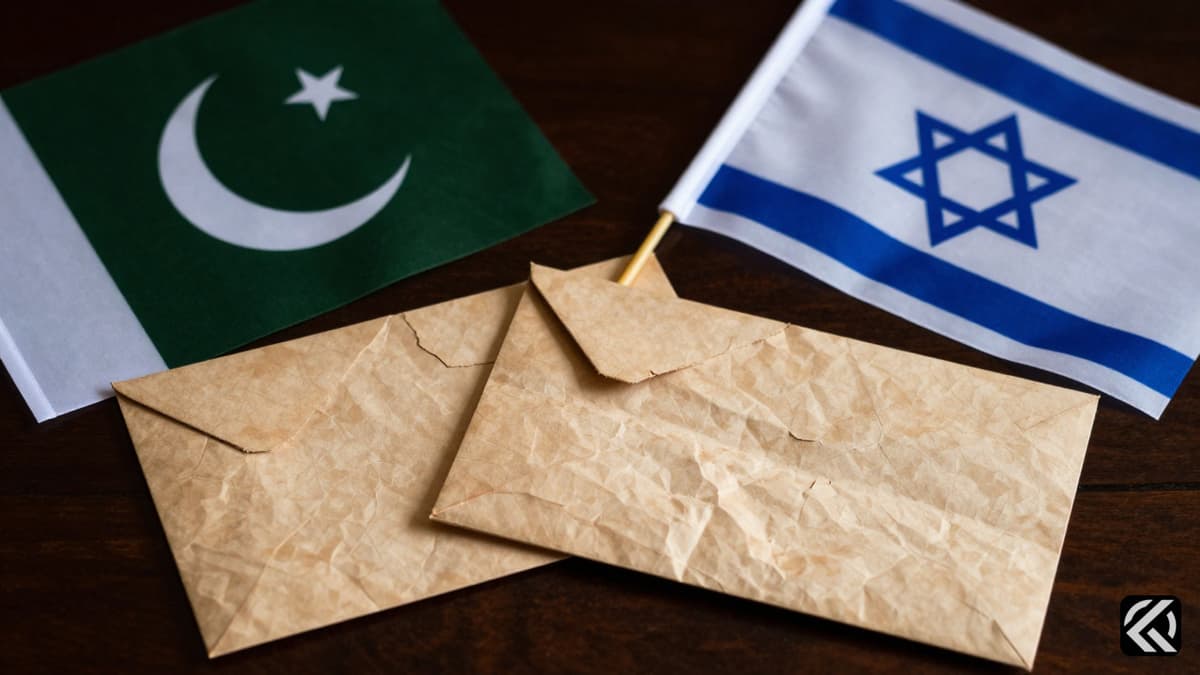
Tensions escalate as Pakistan's Defense Minister Khawaja Asif labels Israel 'evil' and calls for its destruction, prompting a sharp rebuke from Jerusalem during a critical peace moment.
Israel on Thursday sharply criticized remarks made by Khawaja Asif, Pakistan's Defense Minister, launching a scathing rebuke that questioned Islamabad's credibility as a neutral player in ongoing regional diplomacy. This diplomatic flashpoint occurred shortly after Asif posted a series of inflammatory comments on social media directly targeting the Jewish state. Reacting to the Defense Minister's specific call for Israel's annihilation, the Prime Minister's Office (PMO) of Israel declared the statement "outrageous." The controversy has ignited a significant Israel-Pakistan diplomatic row, marking a critical turning point in relations between the two nations.
The timing of this escalation could not have been more sensitive. The remarks emerged precisely as Pakistan was credited with successfully brokering a temporary two-week ceasefire between the United States and Iran. Furthermore, the country was in the process of preparing to host fresh peace talks scheduled to take place over the upcoming weekend. Amidst these high-stakes negotiations, Asif took to social media to unleash a barrage of rhetoric, describing Israel as "evil" and labeling it a "curse for humanity." His comments went as far as calling for the removal of European Jews and wishing that the individuals who created what he termed a "cancerous state" on Palestinian land "burn in hell."
Asif explicitly linked his rhetoric to the ongoing diplomatic efforts, stating that while "peace talks are underway in Islamabad," a "genocide is being committed in Lebanon." He elaborated on his grievances, noting that "innocent citizens are being killed by Israel, first Gaza, then Iran and now Lebanon," adding that "bloodletting continues unabated." These statements directly contradicted Pakistan's role as a mediator, prompting an immediate and severe response from the highest levels of the Israeli government. The Israeli PMO stated, "This is not a statement that can be tolerated from any government, especially not from one that claims to be a neutral arbiter for peace." The implication was clear: Pakistan's ability to mediate is now under serious scrutiny due to the perceived bias expressed by its Defense Minister.
Separately, Israeli Foreign Affairs Minister Gideon Sa'ar also condemned the remarks, describing them as "blatant antisemitic blood libels from a government claiming to mediate peace." Sa'ar emphasized the gravity of the situation by asserting that "Israel will defend itself against terrorists who vow its destruction." The inclusion of the term "blood libels" indicates that the Israeli leadership views Asif's language not merely as political rhetoric, but as a dangerous distortion of facts that undermines the peace process. The reference to "terrorists who vow its destruction" echoes Asif's own language about the state being a "cancerous" entity that must be eradicated.
The involvement of Prime Minister Netanyahu in the broader context of this diplomatic friction adds another layer of complexity, though the immediate firestorm centers on the clash between Sa'ar and Asif. The exchange highlights the fragility of current international alliances and the difficulty of maintaining neutrality when personal or nationalistic rhetoric dominates public discourse. The Israeli response was swift, aiming to isolate the offending statement and protect the integrity of the diplomatic channels they hoped to utilize with Pakistan. By questioning Pakistan's status as a neutral arbiter, Israel signals that the recent successes in brokering the US-Iran ceasefire may be viewed with suspicion by other regional actors, including itself.
The fallout from these comments suggests that the upcoming weekend peace talks may face significant hurdles, potentially derailing the momentum gained from the US-Iran ceasefire. If Pakistan is perceived by other nations as losing its neutrality, its role as a host for future negotiations could be compromised. The exchange underscores a volatile reality where diplomatic efforts are easily overshadowed by heated social media rhetoric. As the region grapples with ongoing conflicts in Gaza, Lebanon, and Iran, the potential for diplomatic breakthroughs remains fragile. The Israeli government's firm stance indicates that any future collaboration will depend heavily on the removal of such inflammatory rhetoric from the diplomatic sphere. The immediate future of the Israel-Pakistan diplomatic row remains uncertain, but the path to reconciliation appears steep given the current climate of mutual accusation and deep-seated grievances.
The immediate aftermath of the PMO's and Sa'ar's condemnations suggests a hardening of positions that could stall the scheduled weekend peace talks. The incident highlights the precarious nature of Pakistan's mediation role; having brokered the US-Iran ceasefire, Islamabad now faces the risk of being viewed as a hostile party rather than a neutral facilitator. If the rhetoric continues or is not formally withdrawn, the credibility of Islamabad as a mediator could be permanently damaged, potentially forcing a review of its diplomatic standing in the region. The long-term impact could see a reduction in trust between Israel and Pakistan, complicating future regional security arrangements that rely on neutral ground. Without a significant de-escalation or a formal clarification from the Pakistani side regarding Asif's comments, the window for effective mediation may close, leaving regional conflicts to fester without the benefit of neutral diplomatic intervention.
Jun 8, 2026 02:17 UTC
Magnitude 7.8 Quake Shakes Philippines, Urging Immediate Evacuations
Jun 8, 2026 00:51 UTC
Trump Claims Iran Nuclear Deal Imminent Despite Diplomatic Fractures
Jun 8, 2026 00:47 UTC
Iran Fires Missiles at Israel After Beirut Strike
Jun 7, 2026 22:00 UTC
US, Iran Peace Hops Fade 100 Days Into War
Jun 8, 2026 04:15 UTC
Trump Urges Netanyahu to Halt Iran Strike for Peace


