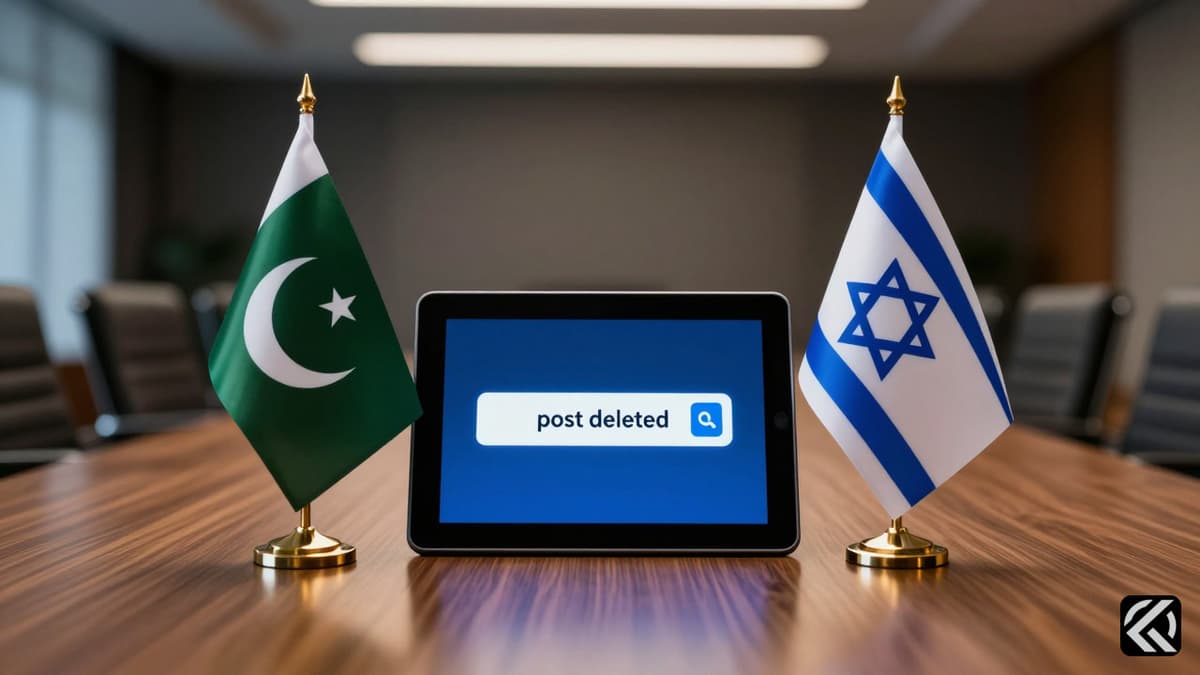
A diplomatic firestorm erupted after Pakistan's Defence Minister Khawaja Asif made inflammatory comments about Israel, prompting a sharp Israeli rebuttal and forcing Asif to delete his post.
In a volatile escalation of tensions, a fierce diplomatic rift has emerged between Islamabad and Jerusalem following controversial statements made by Pakistan's Defence Minister, Khwaja Asif. The conflict ignited when Asif posted remarks condemning Israel's military operations in Lebanon, describing the nation in extreme terms before retracting his words under intense international pressure. This sequence of events has triggered a sharp rebuttal from Israeli officials, who questioned Pakistan's credibility as a neutral party in regional diplomacy. The incident occurred against a backdrop of high-stakes negotiations, just as Pakistan was preparing to host fresh peace talks involving the United States and Iran, adding a layer of complexity to an already sensitive geopolitical landscape.
The immediate trigger for this Israel-Pakistan diplomatic row was a series of posts made by Khwaja Asif on social media, which he subsequently deleted. In these now-vanished messages, Asif characterized Israel as "evil" and a "curse for humanity," while also calling for the removal of "European Jews." He explicitly linked these inflammatory views to current events, stating that "genocide is being committed in Lebanon" and "bloodletting continues unabated" across Gaza, Iran, and Lebanon. He further expressed a wish that those responsible for the state's creation "burn in hell." These statements, which included a request to "get rid of European Jews," drew immediate and severe condemnation from Israeli leadership and international observers.
Israel responded with uncharacteristic speed and severity, with the Prime Minister's Office describing the remarks as "outrageous." The Israeli government not only condemned the specific language used but also rejected Islamabad's claim to a neutral mediation role in the region. A spokesperson stated, "This is not a statement that can be tolerated from any government, especially not from one that claims to be a neutral arbiter for peace." The Israeli position was further reinforced by Foreign Minister Gideon Sa'ar, who dismissed the comments as "blatant antisemitic blood libels." Sa'ar asserted that Israel would continue to defend itself against any threats to its existence.
The timing of this altercation could not have been more precarious. Pakistan has recently been credited with brokering a temporary two-week ceasefire between the United States and Iran. Furthermore, the capital, Islamabad, was scheduled to host fresh peace talks, a development that relied heavily on Pakistan's perceived neutrality. By making such inflammatory statements, the Defence Minister's actions risk derailing these crucial diplomatic efforts. The United States also weighed in, with Representative Josh Gottheimer criticizing the comments as "hateful rhetoric," signaling that the fallout extends beyond just the two nations directly involved.
It is worth noting the structural complications regarding Pakistan's stance on Israel. As the source material confirms, Pakistan does not formally recognize Israel. This lack of formal diplomatic recognition, combined with the recent inflammatory rhetoric, creates a significant hurdle for Islamabad's role as a potential mediator. While Pakistan insists that any ceasefire agreement must include Lebanon-a condition Israel disputes-the current atmosphere of hostility and the deletion of Asif's posts highlight the fragility of Pakistan's diplomatic position. The incident underscores the fine line between expressing national grievances and maintaining the credibility required for successful international mediation.
The删除 of the posts suggests a strategic retreat, yet the damage to diplomatic trust may already be done. The Israeli rejection of the mediation role indicates that the window for Pakistani influence in the region may be narrowing. As the conflict in Lebanon continues to unfold, with reports of civilian casualties in Gaza, Iran, and Lebanon, the rhetoric from both sides remains high. The international community's reaction, including the US criticism, suggests that such "hateful rhetoric" will not be easily ignored in the ongoing pursuit of regional stability. The situation remains fluid, with the potential for further diplomatic strain as the peace talks in Islamabad approach.
The immediate consequence of Khwaja Asif antisemitic remarks is a strained relationship that threatens to derail Pakistan's brokering efforts. Given Israel's rejection of Pakistan's neutrality and the US criticism, future mediation attempts may face heightened skepticism. The persistence of Israel's insistence on excluding Lebanon from ceasefire conditions, despite Pakistan's demands, suggests that resolving the conflict will require navigating significant political divergence without the buffer of diplomatic goodwill currently eroded by this row.
Jun 8, 2026 00:51 UTC
Trump Claims Iran Nuclear Deal Imminent Despite Diplomatic Fractures
Jun 8, 2026 00:47 UTC
Iran Fires Missiles at Israel After Beirut Strike
Jun 7, 2026 22:00 UTC
US, Iran Peace Hops Fade 100 Days Into War
Jun 7, 2026 20:57 UTC
Iran Strikes Israel: IRGC Promises Week of Continuous Offensive
Jun 8, 2026 02:28 UTC
Trump Walks Out of Meet the Press After Rejecting Evidence Demands


