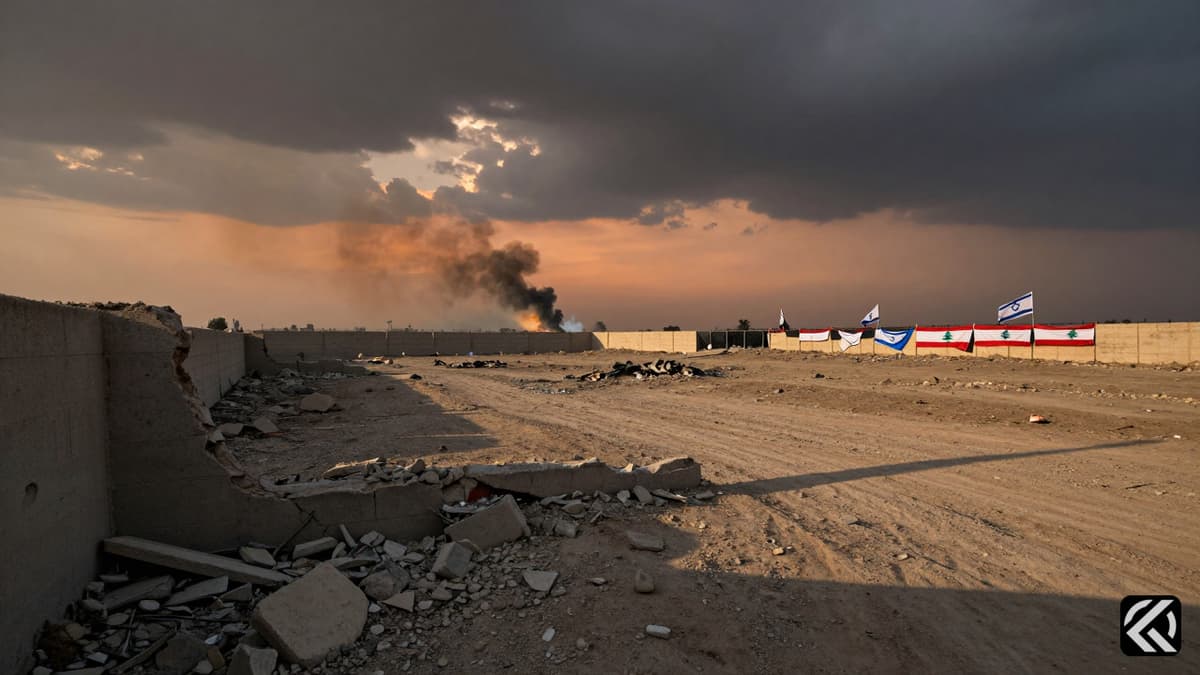
Massive Israeli strikes on Lebanon threaten to shatter the fragile US-Iran ceasefire. As delegations meet in Islamabad, conflicting reports on Lebanon's status create a volatile wildcard.
Israel's massive attacks in Beirut and across Lebanon this week are actively threatening to derail a fragile ceasefire with the United States and Iran. As US and Iranian delegations prepare to begin negotiations in Islamabad, Pakistan, this weekend, the situation on the ground serves as a potential wildcard. At least 303 people were killed in Wednesday's strikes alone, according to Lebanon's Health Ministry.
Tehran argues that these strikes violate the truce, a position echoed by mediator Pakistan, which views Lebanon as part of the agreement. In contrast, Israel and the United States maintain that Lebanon was explicitly not part of the deal. This fundamental disagreement over the scope of the truce creates a volatile backdrop for the upcoming diplomatic talks.
"The Lebanese front may ultimately undermine efforts to sustain the ceasefire," said Danny Citrinowicz, a senior researcher at the Institute for National Security Studies (INSS) in Tel Aviv. From Tehran's perspective, Israel's continued attacks on Lebanon "may justify a renewed response against Israel," he added.
Officials involved in the negotiations have issued conflicting statements regarding whether Lebanon is included in the ceasefire deal with Iran. Unlike most ceasefire agreements, there are no publicly available documents underpinning this one. Much of what is known about the deal came from social media posts by US President Donald Trump, Pakistani Prime Minister Shehbaz Sharif, and Iranian Foreign Minister Abbas Araghchi.
Sharif stated in an X post on Wednesday that Iran and the US agreed to "an immediate ceasefire everywhere including Lebanon." Sources familiar with the talks told CNN that top Trump administration officials were communicating with the Pakistanis throughout the day and had made clear what the US priorities were for an ultimate deal. However, Israel directly contradicted Sharif's comments.
"The battle in Lebanon continues and the ceasefire does not include Lebanon," Israeli military spokesperson Avichay Adraee said Wednesday on X as he issued evacuation orders for swaths of southern Lebanon. Israeli Prime Minister Benjamin Netanyahu has echoed that statement. Trump and Vice President JD Vance have since denied that Lebanon was part of the ceasefire agreement with Iran. Meanwhile, European leaders pushed for "all sides to implement the ceasefire, including in Lebanon." French Foreign Minister Jean-Noël Barrot also said that France "firmly condemns" Israel's strikes in Lebanon.
The violence in Lebanon on Wednesday was the heaviest round of attacks across the country since the war began. Large explosions were heard and smoke was seen at the Israel-Lebanon border, with residents telling CNN there was no safe place to go. Lebanon's Health Ministry said at least 303 people were killed in the attacks. According to the Israeli military, more than 100 Hezbollah command centers and military sites were struck simultaneously across the country. Israel launched fresh strikes in Lebanon on Thursday evening.
Hezbollah, an Iranian-backed Shiite Islamist movement with one of the most powerful paramilitary forces in the Middle East, has engaged in decades of conflict with Israel from its base in neighboring Lebanon. Israel launched a full-scale war on Hezbollah after the group fired at Israeli-held territory in support of Hamas following that group's October 7, 2023, attack on Israel. In November 2024, Israel approved a ceasefire deal that required it to withdraw from Lebanon. But Israeli forces continued to hold positions beyond the deadline and carried out near-daily strikes, citing Hezbollah violations.
After Israel killed Iran's supreme leader, Ayatollah Ali Khamenei, in an airstrike in late February, Hezbollah began firing at Israel. The Israeli military retaliated by launching an intense wave of airstrikes on what it said were Hezbollah positions and sent troops deeper into Lebanese territory, seeking to establish a buffer zone in the south of the country. More than 1 million people have been displaced in Lebanon since the start of the latest Hezbollah conflict. As of Tuesday, at least 1,530 people had been killed and 4,812 wounded, according to the Health Ministry.
Defense Minister Israel Katz has said the Israeli military intends to destroy villages in southern Lebanon and has barred the 600,000 Lebanese who have fled from returning to their homes "until the safety and security of northern Israeli residents is ensured." The destruction will be "in accordance with the Rafah and Khan Younis model in Gaza," Katz said. Far-right Finance Minister Bezalel Smotrich last month suggested annexing southern Lebanon, stating the Litani must become the new border. Human rights experts have warned that open-ended mass evacuation orders and the new security borders mandated by Israel amount to a "possible war crime."
Tehran says it will not accept continued attacks. Araghchi has demanded an end to "massacres in Lebanon," and other Iranian officials have warned that the strikes constitute a violation of the truce. "The Iran-US ceasefire terms are clear and explicit: the US must choose - ceasefire or continued war via Israel. It cannot have both," he wrote on X. "The ball is in the US court, and the world is watching whether it will act on its commitments."
Iran's Islamic Revolutionary Guard Corps (IRGC) has warned the US and Israel it would deliver what it called a "regret-inducing response" if attacks on Lebanon continue. The IRGC also said that shipping through the Strait of Hormuz had slowed sharply and then stopped as a result of Israel's attacks. Netanyahu insisted Thursday that there would be no ceasefire for Lebanon, even as he called for direct talks between the two countries. Meanwhile, two Lebanese officials told CNN that their government had not been officially notified of an invitation to open talks. One also said that there could be "no negotiations" while Lebanon is under fire.
Experts say only intervention by Trump can restrain Israel. Citrinowicz, the researcher at Israel's Institute for National Security Studies, said Netanyahu's commitments to keep residents of northern Israel safe and broader political considerations could make a ceasefire in Lebanon unlikely. "This reality complicates any attempt to extend de-escalation to the Lebanese front," he said. "President Trump will likely need to engage directly and make a strategic decision."
Israel's continued attacks could draw it into another war with Iran, and possibly bring in Yemen's Iranian-backed Houthi rebels, dampening any attempts to de-escalate, experts said. Israel may be trying to "torpedo" the US-Iran ceasefire, said Fawaz Gerges, a professor of International Relations at the London School of Economics, as Netanyahu tries to "salvage whatever remains of his political career in Israel."
If Israel persists in its offensive operations without a formal inclusion of Lebanon in the ceasefire, the diplomatic momentum gained during the US Iran negotiations could be completely lost. With the IRGC threatening a "regret-inducing response" and shipping in the Strait of Hormuz halted, the risk of a broader regional escalation involving Iran and its proxies is significantly heightened. Unless President Trump intervenes directly to force a strategic decision, the "Israel Lebanon ceasefire" may fail, leading to further displacement, increased casualties, and a prolonged period of conflict that extends beyond the current borders.
Jun 8, 2026 02:17 UTC
Magnitude 7.8 Quake Shakes Philippines, Urging Immediate Evacuations
Jun 8, 2026 00:51 UTC
Trump Claims Iran Nuclear Deal Imminent Despite Diplomatic Fractures
Jun 8, 2026 00:47 UTC
Iran Fires Missiles at Israel After Beirut Strike
Jun 7, 2026 22:00 UTC
US, Iran Peace Hops Fade 100 Days Into War
Jun 8, 2026 04:15 UTC
Trump Urges Netanyahu to Halt Iran Strike for Peace


