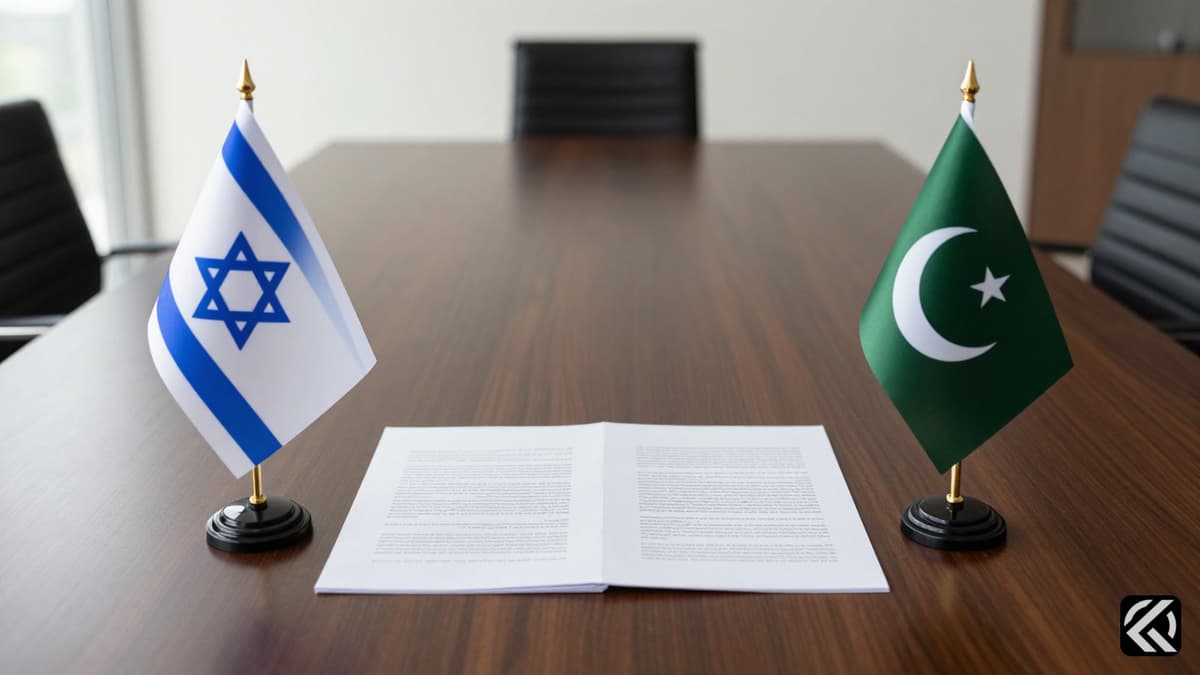
A fierce diplomatic row erupts as Israel condemns Pakistan's Defense Minister Khwaja Asif for calling Israel's creation a 'cancerous state' during sensitive peace negotiations.
In a sharp diplomatic rebuke issued on Thursday, Israel questioned Pakistan's credibility as a neutral arbiter following explosive remarks made by its Defense Minister. The controversy centers on Khwaja Asif, who used social media to describe Israel as a "cancerous state" and a "curse for humanity." The Israel Prime Minister's Office (PMO) responded immediately, labeling the call for Israel's annihilation as "outrageous." This escalation occurs at a critical juncture, with Pakistan having recently been credited with brokering a temporary two-week ceasefire between the United States and Iran. The timing of these hostile comments suggests a significant disruption to ongoing regional diplomacy, specifically as Islamabad prepares to host fresh peace talks over the weekend.
The diplomatic rift was triggered by a series of statements made by Asif, in which he labeled the ongoing diplomatic efforts as contradictory to the reality on the ground. He asserted that while "peace talks are underway in Islamabad," a "genocide is being committed in Lebanon." Asif's rhetoric intensified when he listed the victims of Israeli military action, stating, "Innocent citizens are being killed by Israel, first Gaza, then Iran and now Lebanon." He described this "bloodletting" as continuing "unabated." The situation escalated further when he directed a severe curse at the founders of the state, saying, "I hope and pray that the people who created this cancerous state on Palestinian land to get rid of European Jews [sic] burn in hell."
Israel's reaction was swift and severe, moving beyond standard diplomatic displeasure to question the integrity of the mediator. The PMO issued a statement stating, "This is not a statement that can be tolerated from any government, especially not from one that claims to be a neutral arbiter for peace." The response highlighted the contradiction between the harsh language used by the Pakistani Defense Minister and the role Pakistan has assumed in facilitating peace. The Israeli government emphasized that Asif's comments, which included calls to "get rid of European Jews," directly undermined the very purpose of the mediation efforts they were ostensibly supporting.
Adding to the diplomatic tension, Israeli Foreign Affairs Minister Gideon Sa'ar joined the condemnation, characterizing the Defense Minister's words as "blatant antisemitic blood libels." Sa'ar's statement underscored the gravity of the situation, noting that such rhetoric comes from a government that claims to be mediating peace. "Israel will defend itself against terrorists who vow its destruction," Sa'ar declared, drawing a direct line between the words spoken by Asif and the actions of groups Israel is currently engaging with. The Foreign Minister's comments reinforced the Israeli position that the remarks were not merely rhetorical but constituted a direct threat to the state's security and existence.
The fallout from these comments has cast a shadow over Pakistan's recent diplomatic achievements. While Islamabad had been credited with brokering a ceasefire between the US and Iran, the Israel-Pakistan diplomatic row now threatens to derail these gains. The PMO's critique suggests that Pakistan's role as a neutral player is now in serious doubt. The timing of Asif's social media posts, released while the country was preparing to host fresh talks, indicates a significant clash between public rhetoric and diplomatic necessity. The international community will likely watch closely to see if these comments lead to a suspension of mediation efforts or a broader cooling of relations between the two nations.
The immediate future of the peace talks remains uncertain as the diplomatic temperature rises. The conflicting narratives-one of mediation and another of annihilation-create a complex web of mistrust. As the region braces for further developments, the ability of any government to claim neutrality is being tested by the extreme nature of the language used. The situation underscores the delicate balance required in international diplomacy, where a single remark can jeopardize weeks of negotiation. Whether these talks can proceed without further incident remains to be seen, but the immediate consequence is a damaged reputation for the mediator and a heightened state of alert for Israel.
Jun 8, 2026 02:17 UTC
Magnitude 7.8 Quake Shakes Philippines, Urging Immediate Evacuations
Jun 8, 2026 00:51 UTC
Trump Claims Iran Nuclear Deal Imminent Despite Diplomatic Fractures
Jun 8, 2026 00:47 UTC
Iran Fires Missiles at Israel After Beirut Strike
Jun 7, 2026 22:00 UTC
US, Iran Peace Hops Fade 100 Days Into War
Jun 8, 2026 04:15 UTC
Trump Urges Netanyahu to Halt Iran Strike for Peace


