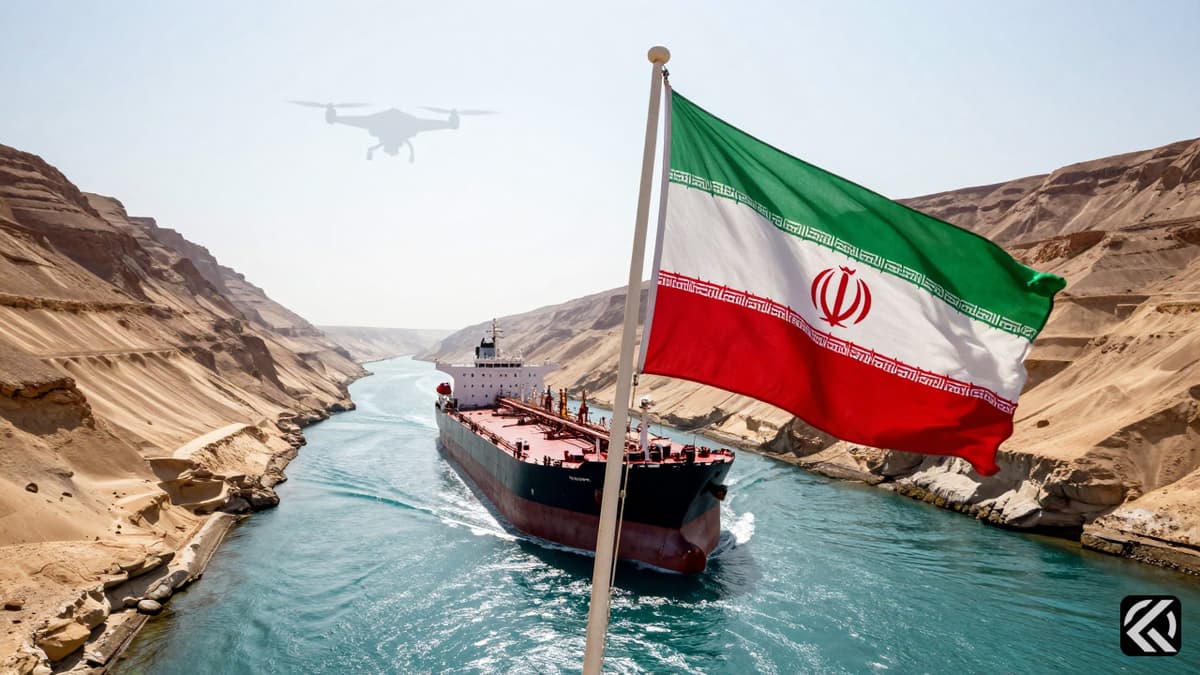
President Trump warns Iran to stop tolling ships as oil resumes flowing, even without their aid, while Lebanon faces rising casualties and Pakistan hosts crucial US-Iran talks.
Key Takeaways
U.S. President Donald Trump warned Iran on Thursday to halt any tolls on ships transiting the Strait of Hormuz, predicting that oil would soon flow freely even without Tehran's assistance. This statement follows reports of Iran drone attacks targeting Kuwait and escalating violence in Lebanon.
Earlier in the day, Kuwait's foreign ministry condemned drone strikes on a National Guard site, marking a breach of sovereignty during a fragile ceasefire. Meanwhile, in Lebanon, the death toll from Israeli strikes rose to 303, prompting calls for direct negotiations between Beirut and Jerusalem.
The global economy faces a darkening outlook, with IMF Managing Director Kristalina Georgieva forecasting a growth downgrade despite the potential for a lasting peace.
The geopolitical landscape shifted dramatically on Thursday as President Trump took to his Truth Social platform to address the unfolding crisis. He issued a stark warning to Tehran regarding the strategic importance of the Strait of Hormuz ceasefire. "There are reports that Iran is charging fees to tankers going through the Hormuz Strait -- They better not be and, if they are, they better stop now!" Trump declared. He further added that "very quickly, you'll see Oil start flowing, with or without the help of Iran," suggesting a potential shift in regional leverage regardless of diplomatic outcomes.
This warning coincided with a significant maritime development. For the first time since the announcement of a fragile two-week ceasefire between Iran and the United States, a non-Iranian oil tanker navigated the waterway. Data from MarineTraffic confirmed that the MSG, a Gabon-flagged vessel carrying approximately 7,000 tonnes of Emirati fuel oil, passed through the channel bound for India. However, traffic remains sparse, with only two other Iran-flagged tankers and six bulk carriers having transited since the truce began, according to maritime monitor Kpler.
In response to the tension, Kuwait's state news agency reported that a National Guard site had been targeted by drones, resulting in significant material damage though no injuries were sustained. The foreign ministry issued a strong statement condemning the incident as a violation of Kuwait's sovereignty and airspace. Conversely, Iran's Revolutionary Guards denied on state media that they had launched any attacks during the ceasefire period, stating that any future strikes would be announced publicly in an official capacity.
The conflict has now extended deep into Lebanon, where the Israel Hezbollah war continues to exact a heavy toll. The Israel Defense Forces (IDF) confirmed on Thursday that they had begun striking Hezbollah launch sites in Lebanon. This action followed a warning from the Israeli military that the scope of projectile launches from Lebanese territory could expand beyond the northern border area into central Israel, where the largest population centers are located.
The human cost of this escalation has become increasingly dire. Lebanon's Health Ministry reported that the death toll from Israeli strikes on the previous day had climbed to 303. The total number of fatalities since March 2 stands at 1,888, with over 6,000 wounded. Officials stated that the toll is not final as rescue teams continue to recover bodies from under the rubble.
Amidst this volatility, leadership from Tehran has signaled a desire to avoid total war while maintaining a firm stance on national rights. Iran's new Supreme Leader, Mojtaba Khamenei, addressed the nation in a written message read on state television. He stated, "We did not seek war and we do not want it," but added that the Islamic Republic would "not renounce our legitimate rights under any circumstances." This message coincides with the 40-day mark since the death of his father, Ayatollah Ali Khamenei, which the source material notes was the first day of the war. Khamenei further emphasized that the leadership considers the "entire resistance front as a whole," specifically referencing the situation in Lebanon.
Diplomatic efforts are intensifying on multiple fronts. Vice President J.D. Vance is scheduled to hold talks with Iranian representatives in Pakistan on Saturday. In Washington, President Trump expressed optimism to NBC News regarding a potential peace deal, noting that Iran's leaders had appeared "much more reasonable" in private discussions. He cautioned, however, that "if they don't make a deal, it's going to be very painful."
On the Israeli front, Prime Minister Benjamin Netanyahu has agreed to a shift in strategy. Following devastating strikes on Wednesday, Netanyahu told President Trump via phone call to "low-key it" with Lebanon. Subsequently, Netanyahu instructed his cabinet to begin direct negotiations with Lebanon "as soon as possible," with the stated goals of disarming Hezbollah and establishing peace relations. A Lebanese official told Reuters that they seek a temporary ceasefire to facilitate these talks, envisioning a "separate track but the same model" as the truce brokered by Pakistan between the U.S. and Iran.
Economic repercussions are already being felt globally. IMF Managing Director Kristalina Georgieva warned that the world economy is facing a darkening outlook, regardless of whether the ceasefire holds. She announced that the fund would downgrade its forecast for global growth at the upcoming IMF-World Bank spring meetings. "Had it not been this shock, we would have been upgrading global growth," Georgieva stated. She identified Sub-Saharan Africa and small island nations as the most vulnerable to the resulting energy shock. While some countries are attempting to mitigate damage by urging remote work and limiting public official travel, Georgieva cautioned policymakers against "go-it-alone" moves like export limitations or price controls, urging them not to "pour gasoline on the fire."
NATO Secretary General Mark Rutte addressed the alliance's support for the United States, noting that while some members were initially slow to respond, nearly all are now providing the logistical and military support requested by President Trump. Rutte explained that the U.S. president had opted not to inform allies in advance to maintain the element of surprise for initial strikes.
The conflict has firmly established a negative trajectory for global economic stability, with the IMF projecting slower growth even under optimistic peace scenarios. As the U.S. military remains deployed near Iran pending a "real agreement," and NATO allies rally to support logistical needs, the region remains a flashpoint. The continued Israel Hezbollah war and the uncertainty surrounding the Strait of Hormuz ceasefire suggest that energy markets will face persistent volatility. With Pakistan hosting critical talks between the U.S. and Iran, the coming days will determine whether the "very quickly" predicted oil flow can materialize or if the economic fallout, particularly for vulnerable nations in Africa and small islands, will deepen. The international community now watches closely as diplomatic channels attempt to convert the current fragile truce into a durable solution.
Jun 8, 2026 02:17 UTC
Magnitude 7.8 Quake Shakes Philippines, Urging Immediate Evacuations
Jun 8, 2026 00:51 UTC
Trump Claims Iran Nuclear Deal Imminent Despite Diplomatic Fractures
Jun 8, 2026 00:47 UTC
Iran Fires Missiles at Israel After Beirut Strike
Jun 7, 2026 22:00 UTC
US, Iran Peace Hops Fade 100 Days Into War
Jun 8, 2026 04:15 UTC
Trump Urges Netanyahu to Halt Iran Strike for Peace


