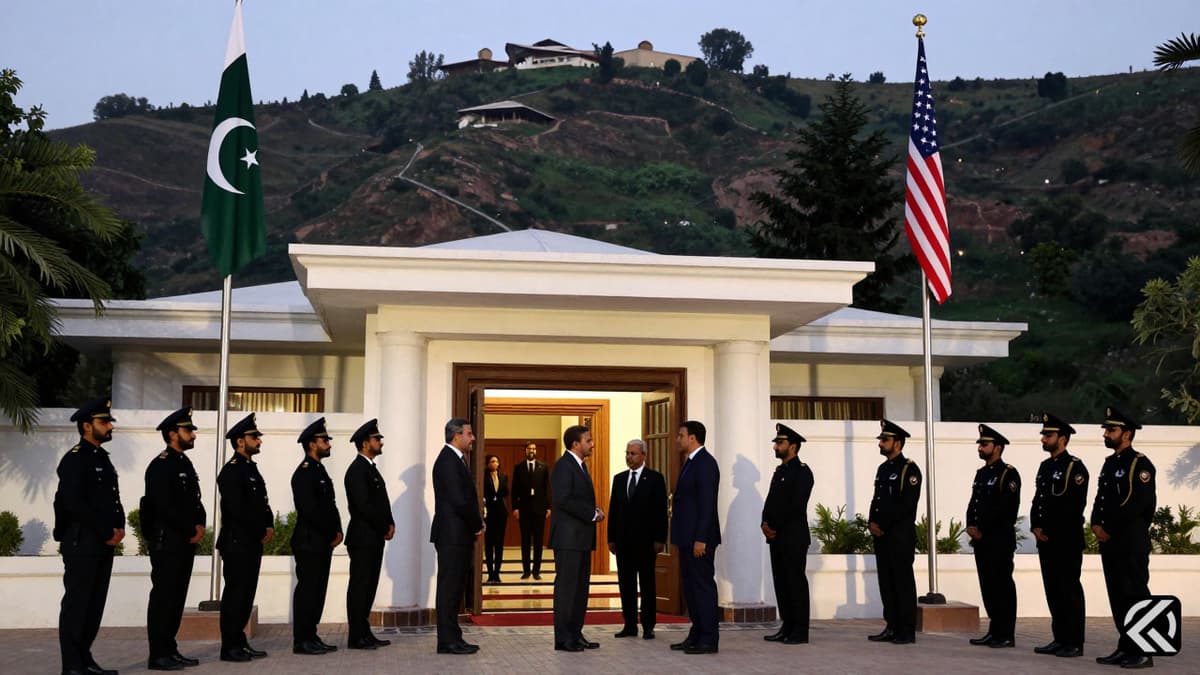
As tensions reach a fever pitch, US and Iranian officials converge in Islamabad for critical negotiations to end a war that has disrupted global oil supplies and cost thousands of lives.
The capital of Pakistan is bracing for a pivotal moment as the world watches Islamabad prepare to host high-stakes meetings between the United States and Iran. The city has undergone rigorous security preparations, with pavement painting and a bolstered security presence, creating an atmosphere of intense anticipation and anxiety. These talks are set to take place this weekend, marking a crucial test for a Pakistan-mediated two-week ceasefire that recently was agreed upon by Washington and Tehran.
This diplomatic push arrives exactly six weeks after coordinated US-Israeli strikes on Iran resulted in the death of Supreme Leader Ayatollah Ali Khamenei and ignited a wider conflict. The war, which began on February 28, has already claimed thousands of lives, shut down the critical Strait of Hormuz, and driven global energy prices to record highs. Iran effectively closed the passage, through which 20 percent of the world's oil and gas flows, to any vessel not having a negotiated deal, rattling global markets and threatening the world's biggest energy hub.
The negotiations, confirmed by the White House, are scheduled to begin on Saturday morning local time. US Vice President JD Vance will lead the American delegation, accompanied by top envoy Steve Witkoff and Jared Kushner. On the other side, Iranian Parliament Speaker Mohammad Bagher Ghalibaf and Foreign Minister Abbas Araghchi are expected to head their team, though it remains unclear if a representative from the Islamic Revolutionary Guard Corps (IRGC) will be present. The Serena Hotel in the capital's Red Zone has been requisitioned for the duration of the talks, serving as the venue where delegations will convene.
Security has been tightened significantly, with the Red Zone sealed and key entry points closed. Authorities have declared April 9 and 10 public holidays to facilitate the event. Prime Minister Shehbaz Sharif is expected to formally host the proceedings, holding preliminary meetings with both sides, while Deputy Prime Minister Ishaq Dar will likely facilitate the actual negotiations. The presence of JD Vance is a notable development, as Iranian officials have expressed skepticism toward previous US negotiators like Witkoff and Kushner, particularly given prior bombing of Iran during earlier discussions in Muscat and Geneva. Vance has positioned himself as more open to ending the conflict, viewing himself as a potential contender for the 2028 Republican presidential nomination.
Iran's Ambassador to Pakistan, Reza Amiri Moghadam, announced on social media that the delegation would arrive on April 9 to engage in "serious talks" based on a 10-point proposal, despite public skepticism regarding Israeli ceasefire violations. However, the ambassador later deleted the post. The talks face immediate roadblocks, particularly regarding the status of Lebanon. While Iranian officials warn that Tehran may abandon the ceasefire if Israeli strikes continue, US officials, including Vance, have stated that the ceasefire terms do not cover Lebanon. This divergence has led to accusations that Israel is playing a spoiler role, with former Pakistani ambassador Masood Khalid suggesting that the relentless bombing is intended to harden positions and scuttle the peace process.
The agenda includes significant discrepancies between the two nations. Iran's 10-point proposal calls for Iranian oversight of the Strait of Hormuz and the withdrawal of US combat forces from the Middle East. In contrast, the US has not formally accepted these terms, with the White House insisting that Iran must surrender its stock of enriched uranium-a demand Iran has not officially acknowledged. Despite these differences, Pakistan's unique position as a mediator has been highlighted. Unlike many nations in the Middle East, Pakistan does not host US military bases, lending it credibility in Iranian eyes, yet it remains a Major Non-NATO Ally of the US. This diplomatic balancing act is underscored by the fact that the US ambassadorial post in Islamabad has been vacant since 2025, and the last US vice president to visit was Joe Biden in 2011.
The path to a lasting resolution is fraught with challenges, as the truce itself is already under strain. Different interpretations of the pause in fighting and the continued escalation in Lebanon create a volatile environment for the negotiations. While the delegations are expected to meet in separate rooms with Pakistani officials carrying messages, the success of these efforts hinges on whether the parties can bridge the gap over the strategic demands of the 10-point plan and the definition of the ceasefire scope. The international community watches closely, knowing that the outcome could determine the stability of global energy markets and the potential for further regional escalation.
The convergence of US and Iranian leadership in Islamabad represents a critical juncture for the Middle East. If the negotiations yield a comprehensive agreement that addresses the Strait of Hormuz and US troop withdrawals, it could stabilize energy prices and de-escalate the conflict. However, if the dispute over Lebanon persists and Israel continues its bombing campaigns, the truce risks collapsing entirely. The long-term impact will depend on whether the Islamabad ceasefire can hold against these external pressures. The success or failure of these talks will likely define the trajectory of the conflict for years, potentially altering the geopolitical landscape of the region and the role of Pakistan as a key mediator. The presence of JD Vance at the table suggests a US desire to pivot from military confrontation to diplomatic resolution, but the outcome remains uncertain without a clear agreement on the terms of surrender and regional security.
Jun 8, 2026 04:15 UTC
Trump Urges Netanyahu to Halt Iran Strike for Peace
Join 50,000+ readers getting the global briefing every morning.
No spam. Unsubscribe anytime.
Jun 8, 2026 02:28 UTC
Trump Walks Out of Meet the Press After Rejecting Evidence Demands
Jun 8, 2026 02:17 UTC
Magnitude 7.8 Quake Shakes Philippines, Urging Immediate Evacuations
Jun 8, 2026 00:51 UTC
Trump Claims Iran Nuclear Deal Imminent Despite Diplomatic Fractures
Jun 8, 2026 00:47 UTC
Iran Fires Missiles at Israel After Beirut Strike


