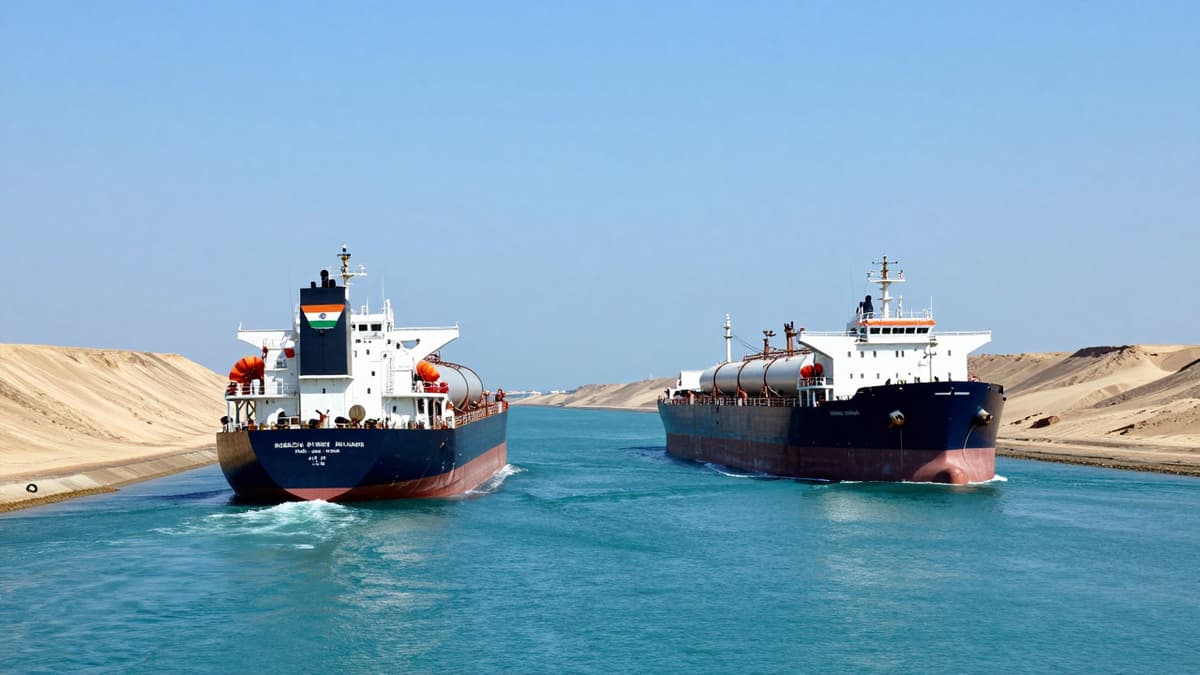
As global energy supplies remain sensitive, two massive Indian vessels have successfully departed their holding position, marking a critical step in securing the nation's fuel imports.
Two massive Indian-flagged vessels, the BW Tyr and the BW Elm, are actively navigating the Strait of Hormuz as of Friday morning, according to data from ship tracking websites. These LPG carriers, owned by BW LPG India, were previously anchored in a holding pattern north of Dubai-Ras Al Khaima since Friday, March 28, 2027. Their movement signifies a continued effort to transport essential energy supplies, with the two ships jointly carrying a cargo of approximately 93,000 tonnes. This volume is significant enough to meet India's daily import requirements for three days.
The departure marks a crucial development following reports of a broader evacuation list involving 22 India-bound ships. The BW Tyr is chartered by Bharat Petroleum Corporation Limited (BPCL), while the BW Elm is operated by Hindustan Petroleum Corporation Limited (HPCL). Their intended destinations prior to this transit were Mumbai and the New Mangaluru Port, respectively. The successful movement of these vessels, which have a combined carrying capacity exceeding 106,000 tonnes, underscores the ongoing logistical challenges and strategic maneuvers required to maintain energy security in the region.
Prior to the arrival of these two ships, other vessels belonging to the state-owned Shipping Corporation of India (SCI) had already completed the crossing and successfully discharged their cargo within India. This precedent suggests a phased approach to securing the supply chain, with state-owned entities and private charters working in tandem to mitigate potential disruptions. The coordinated movement of these commercial tankers is essential for maintaining the steady flow of liquefied petroleum gas to the subcontinent, a commodity critical for domestic heating, cooking, and industrial processes.
The timing of this transit is notable given the broader geopolitical context often associated with the Strait of Hormuz. While specific details regarding the immediate triggers for the anchorage at Dubai-Ras Al Khaima are not explicitly detailed in the current reports, the rapid transition from a waiting posture to active transit indicates a resolved or managed situation regarding the safety of the passage. The LPG carriers represent a significant portion of the nation's energy import infrastructure, and their unimpeded movement is a positive indicator for market stability.
The involvement of major players like HPCL and BPCL highlights the critical role of India's largest public sector undertakings in navigating complex maritime environments. These companies have invested heavily in a fleet of vessels to ensure that the country remains self-sufficient in meeting its volatile energy demands. The ability to move such massive tonnage, equivalent to three days of imports, in a single convoy demonstrates the operational readiness of the maritime supply chain.
As the BW Tyr and BW Elm proceed, they join a small but significant group of Indian vessels that have successfully traversed the passage. The prior success of SCI ships suggests that the operational risks associated with the route have been managed, allowing for the resumption of regular trade flows. The continued monitoring of these vessels by ship tracker websites confirms their progress, providing real-time transparency for stakeholders tracking the flow of energy commodities.
The operational status of the Strait of Hormuz remains a focal point for global energy analysts, as any disruption in this narrow waterway can have cascading effects on international fuel prices and supply chains. The successful transit of these two large vessels suggests that the immediate security concerns have either been alleviated or managed effectively enough to allow commercial traffic to resume its scheduled routes without significant delay.
The current movement of the BW Tyr and BW Elm serves as a strong indicator of the resilience within India's maritime logistics framework. With nearly 93,000 tonnes of LPG currently in transit, the nation is actively replenishing its strategic reserves. If the current trend of successful crossings continues, it is highly probable that the remaining vessels on the evacuation list will follow suit, ensuring a complete normalization of import schedules. The precedent set by the SCI ships further reinforces the likelihood that this corridor will remain open for critical energy shipments, securing the nation's energy supply against potential future volatility.
Jun 8, 2026 00:51 UTC
Trump Claims Iran Nuclear Deal Imminent Despite Diplomatic Fractures
Jun 8, 2026 00:47 UTC
Iran Fires Missiles at Israel After Beirut Strike
Jun 7, 2026 22:00 UTC
US, Iran Peace Hops Fade 100 Days Into War
Jun 7, 2026 20:57 UTC
Iran Strikes Israel: IRGC Promises Week of Continuous Offensive
Jun 8, 2026 02:28 UTC
Trump Walks Out of Meet the Press After Rejecting Evidence Demands


