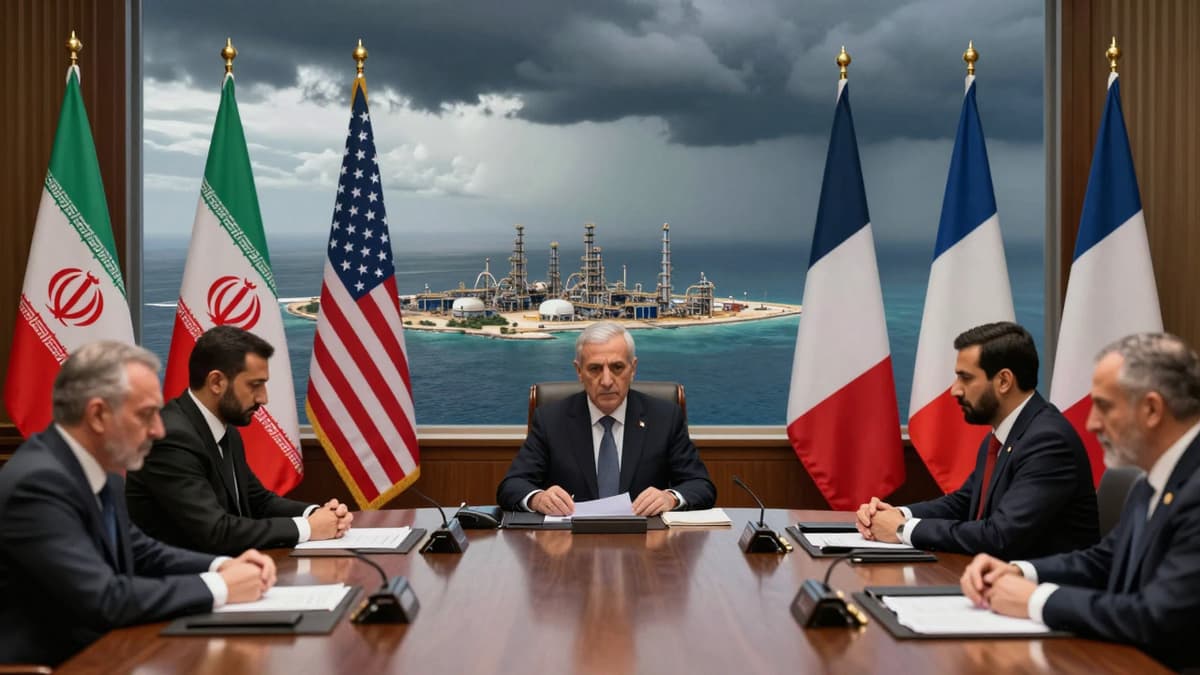
International tensions spike as UN calls emergency session, Trump faces war crime allegations, and experts question US ground forces on Kharg Island amid ongoing conflict.
A volatile escalation has gripped the Middle East as Iran denies recent negotiations with the US while President Trump issues stark threats targeting civilian infrastructure. The United Nations Security Council is set to convene an emergency meeting following the tragic deaths of UN peacekeepers in southern Lebanon. Simultaneously, military experts are debating the feasibility and risks of deploying US ground forces to seize Kharg Island, a critical Iranian oil export terminal. These developments mark a critical juncture in the ongoing conflict, which has now spanned thirty-one days.
French Foreign Minister Jean-Noël Barrot initiated the call for the UN Security Council emergency meeting after an explosion of unknown origin destroyed a vehicle near Bani Hayyan, killing UN personnel. Barrot condemned the incident, stating that violations of security and intimidation by soldiers of the Israeli army are unacceptable, especially since deconfliction procedures were respected. Unifil, the UN peacekeeping force in Lebanon, confirmed the casualties, while UN Special Coordinator Jeanine Hennis-Plasschaert called for an immediate truce, describing Lebanon as a shadow of its former self. Barrot communicated France's condemnation to the Israeli ambassador in Paris.
Iranian spokesperson Esmaeil Baqaei firmly denied that negotiations are currently underway with US officials. Baqaei stated that while negotiation requests and American proposals have reached Iran through intermediaries like Pakistan, "no negotiations" have occurred in the past thirty-one days. He emphasized that as military aggression continues with full intensity, Iran is focused on defending its essence, recalling the "betrayal that was inflicted upon diplomacy" in the past year. This denial comes amidst a backdrop where White House Press Secretary Karoline Leavitt has suggested a timeline of four to six weeks for the conflict, though she admitted Iranian officials are struggling to communicate following strikes on command and control systems.
The strategic implications of the US military's potential actions are drawing sharp scrutiny. By Thomas Spencer, BBC Verify consulted three experts regarding the challenges of an amphibious assault on Iran's Kharg Island. Sidharth Kaushal of the Royal United Services Institute noted that the US would first need to clear sea mines and neutralize coastal defense missiles. However, Alessio Patalano from King's College London warned that Kharg would become an "ideal fixed target for Iranian missiles and drones" if US forces attempted to hold it. Conversely, retired US Marine Corps colonel Mark Cancian suggested the US possesses "good, though not perfect, air defences" to counter such threats, highlighting the complex calculus of attempting to put US ground troops Kharg Island under such hostile conditions.
President Trump has further inflamed tensions with an ultimatum posted on Truth Social, threatening to destroy electricity plants, oil wells, and water desalination facilities in Iran. He framed this as retribution for forty-seven years of alleged regime killing of Americans. This stance has drawn immediate legal concern; Luis Moreno Ocampo, former ICC prosecutor, argued that such attacks on energy infrastructure do not constitute legitimate targets under the Rome Statute, which defines the intentional direction of attacks at civilian objects not being military objectives as a war crime. Ocampo noted that in 2024, the ICC indicted Russian officials for similar attacks on Ukrainian energy plants.
Legal analysts suggest that the "categorical and retributive framing" of the president's warning constitutes a Trump war crimes threat. Brian Finucane, a former US State Department lawyer, echoed these concerns on social media. The White House defended the administration's position, stating that the Iranian regime has brought a "devastating impact on civilian life" for decades and that achieving military objectives under Operation Epic Fury is necessary for regional safety. However, Press Secretary Leavitt declined to specify what military objective would be achieved by bombing a desalination plant, maintaining only that the US Armed Forces act within the confines of the law.
President Trump has previously stated he does not "need international law," preferring to be guided by his "own morality." Despite the White House claiming the administration acts within legal bounds, the lack of clarity on how the conflict will end or the specific goals of targeting energy infrastructure has left many Americans uneasy. The administration's emphasis on "optionality" on military options fails to assuage fears of further ground engagement. As the emergency session unfolds and military planners weigh the risks of an amphibious assault, the region faces a prolonged period of uncertainty where the rules of engagement appear to be shifting away from established international norms. The potential for long-term instability remains high as the conflict continues to evolve with significant geopolitical and humanitarian implications.
Jun 8, 2026 00:51 UTC
Trump Claims Iran Nuclear Deal Imminent Despite Diplomatic Fractures
Jun 8, 2026 00:47 UTC
Iran Fires Missiles at Israel After Beirut Strike
Jun 7, 2026 22:00 UTC
US, Iran Peace Hops Fade 100 Days Into War
Jun 7, 2026 20:57 UTC
Iran Strikes Israel: IRGC Promises Week of Continuous Offensive
Jun 8, 2026 02:28 UTC
Trump Walks Out of Meet the Press After Rejecting Evidence Demands


