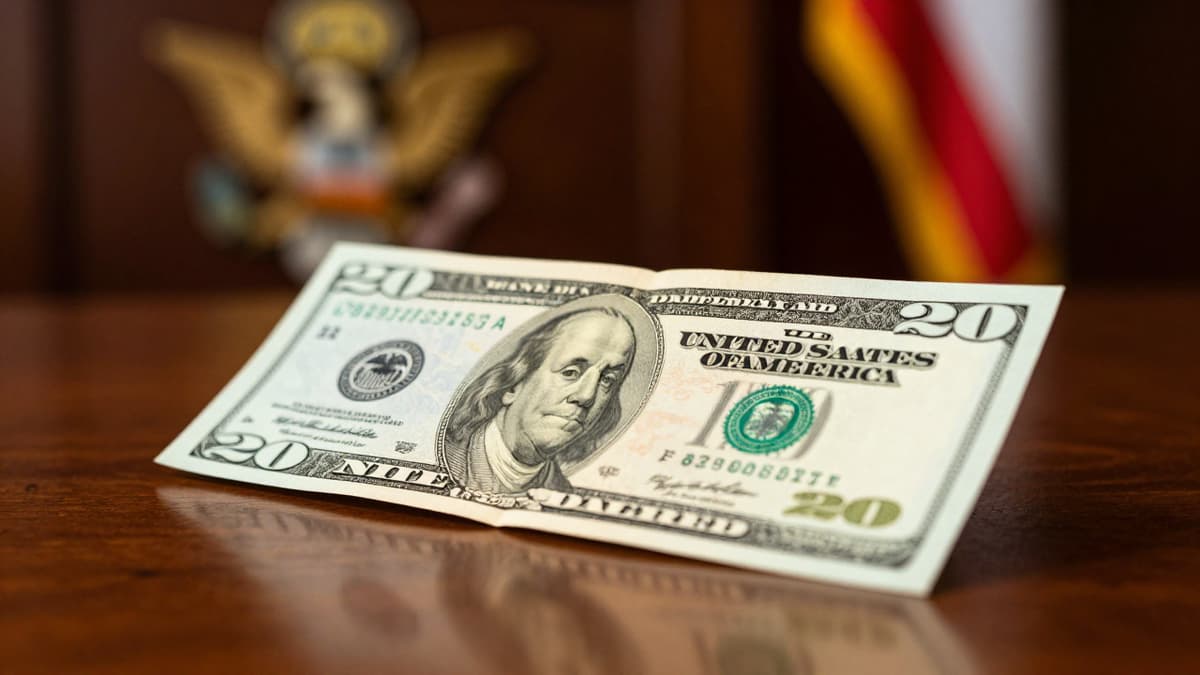
In a historic first, the Treasury Department will place Donald Trump's signature on US currency to honor his tenure, sparking immediate political debate and legal scrutiny.
The US Department of the Treasury Department has officially announced that President Donald Trump's signature will soon appear on US banknotes. This historic change, set to coincide with the 250th anniversary of the country's Independence Day on July 4, represents a first for any sitting president.
The decision was revealed on Thursday and immediately drew attention as a precedent-setting move. Until now, all US banknotes, which include denominations ranging from $1 to $100, have featured only the signatures of the Treasury secretary and the treasurer. The administration argues this new addition recognizes the president's "historic achievements" and the nation's path toward "unprecedented economic growth" and "fiscal strength and stability," according to Treasury Secretary Scott Bessent.
The justification provided by the Treasury Department relies heavily on the administration's narrative regarding the nation's economic performance. Secretary Bessent stated that under President Trump, the country is on a path of economic success that warrants this unique commemoration. However, data presented in the announcement suggests a more nuanced reality. Economic growth under the current administration has been described as broadly in line with the post-pandemic trends overseen by Democratic predecessor Joe Biden. Specifically, US gross domestic product (GDP) grew by 2.2 percent in 2025, which is slightly below the 2.5 percent average expansion recorded between 2022 and 2024.
Despite the statistical context, the move has triggered sharp political responses. California Governor Gavin Newsom, a prominent figure widely viewed as a frontrunner for the 2028 Democratic presidential nomination, strongly mocked the announcement. In a social media post, Newsom argued that the change would serve only to clarify who Americans should blame for increasing costs. "Now Americans will know exactly who to blame as they're paying more for groceries, gas, rent, and health care," Newsom said, highlighting the public's frustration with inflationary pressures.
The inclusion of a sitting president's signature on US currency has been described by critics as an aggressive precedent-busting move that aligns with the behavior of dictators and monarchs. The announcement follows a similar action taken just a week prior, where the US Commission of Fine Arts, led by Trump appointee Rodney Mims Cook Jr., approved the minting of a commemorative gold coin bearing the Republican president's image. That earlier decision relied on a specific loophole in federal law, which strictly prohibits depictions of living presidents on circulating currency. The use of such loopholes to bypass long-standing restrictions has fueled backlash from opponents who view the actions as an overreach of executive power.
This trend of personal branding continues a trajectory established by Trump during his career as a real estate mogul. Since returning to the White House, the president has attached his name to a growing list of institutions and projects. These include the John F. Kennedy Center for the Performing Arts, the US Institute of Peace, and an upcoming class of battleships. The decision to place his signature on banknotes extends this pattern of branding from real estate and infrastructure into the very fabric of the nation's money supply.
The reaction from political opponents and the broader public suggests a deep divide over the normalization of such personalization in federal institutions. While the administration frames the change as a recognition of economic stability, the criticism focuses on the symbolism of a living leader permanently marking the nation's currency. The debate highlights the tension between commemorative honors and the traditional separation of presidential branding from official government functions.
This unprecedented decision to alter US currency design to feature a sitting president's signature signals a potential shift in how the Department of the Treasury approaches presidential commemoration. If the current trajectory continues, future administrations may face similar pressures to demand their names or images be placed on federal assets, potentially leading to a cascade of personalized branding on national standards. The reliance on legal loopholes, as seen in the gold coin approval, suggests that procedural barriers to such actions may continue to erode, allowing for more frequent departures from historical norms regarding the depiction of living leaders.
The long-term impact could reshape public perception of currency, transforming it from a neutral medium of exchange into a canvas for political expression. As the 250th anniversary approaches, the public will witness the tangible result of these policy choices, with the signature of Donald Trump becoming a permanent fixture in the pockets and wallets of Americans. Whether this serves as a celebrated milestone of the administration's economic policies or a controversial symbol of overreach remains to be seen as the currency enters circulation. The debate underscores the enduring influence of presidential branding in the modern political landscape, where the boundaries between personal legacy and public institution are increasingly blurred.
Jun 8, 2026 02:17 UTC
Magnitude 7.8 Quake Shakes Philippines, Urging Immediate Evacuations
Join 50,000+ readers getting the global briefing every morning.
No spam. Unsubscribe anytime.
Jun 8, 2026 02:17 UTC
Magnitude 7.8 Quake Shakes Philippines, Urging Immediate Evacuations
Jun 8, 2026 00:51 UTC
Trump Claims Iran Nuclear Deal Imminent Despite Diplomatic Fractures
Jun 8, 2026 00:47 UTC
Iran Fires Missiles at Israel After Beirut Strike
Jun 7, 2026 22:38 UTC
Congress Party Claims Unity for INDIA Bloc Delhi Meeting


