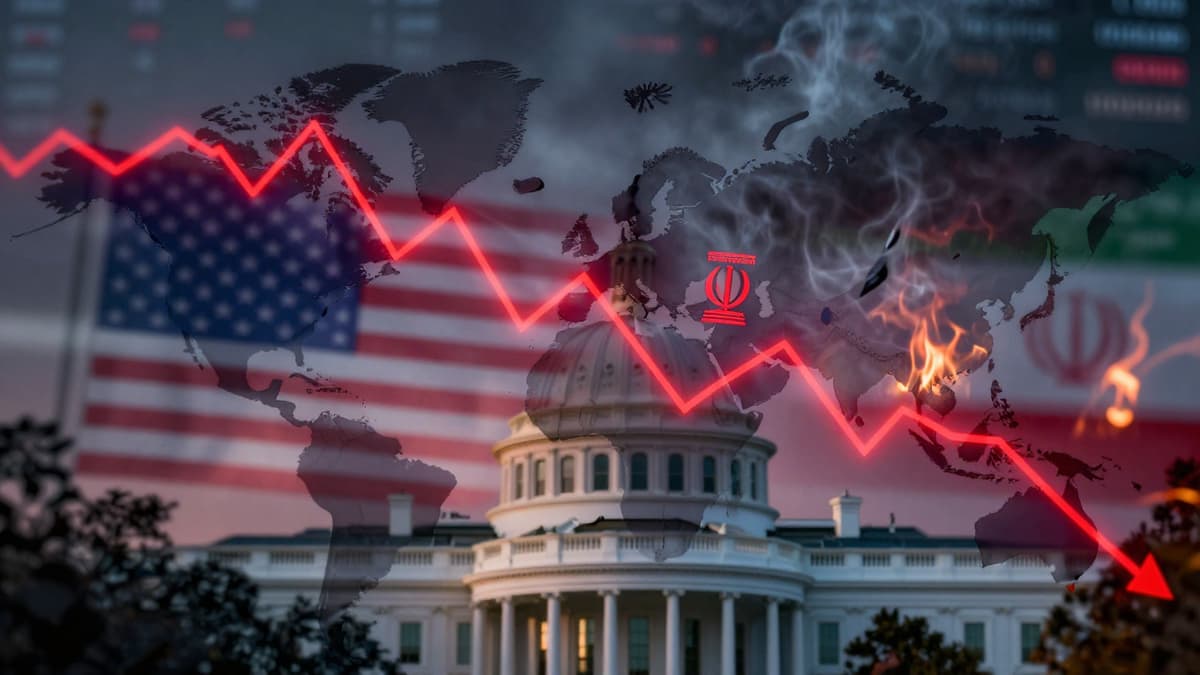
As four weeks of fighting continue, President Trump's vacillating signals on the Iran war are creating deep uncertainty among allies, while oil prices surge and political pressure mounts.
The first month of fighting has left President Donald Trump's administration facing deepening criticism regarding its approach to the Donald Trump war in Iran. Despite the President's claims that the conflict is ahead of schedule and effectively won, conflicting messages from the White House have spurred frustration among GOP lawmakers and political allies who fear a lack of a clear endgame. This uncertainty has left even close advisers in the dark about the administration's specific plans for victory or withdrawal.
In recent days, the President has simultaneously expressed a desire for peace while ordering thousands more troops to the region, creating a landscape of minute-by-minute vacillations. While Trump has insisted that Iran is eager to negotiate a truce and praised progress toward a resolution, he has also threatened strikes on critical infrastructure and a potential ground invasion. This duality has unnerved the political sphere, with officials acknowledging little idea of what will happen next as the administration manages a conflict laden with political and economic peril.
The White House is currently navigating competing pressures that complicate any effort to finalize the GOP war strategy. Arab allies are urging the President not to leave behind an even more dangerous Iranian regime, while members of the GOP press him to declare victory and withdraw before voters sour further on his presidency. Compounding this diplomatic tightrope is the immediate economic fallout; oil prices have surged to fresh highs, ignoring Trump's assurances that the economic pain of his "little stopover" in Iran is close to finished.
Behind closed doors, the administration's planning appears just as shaky. Officials have struggled in classified briefings to detail how they will achieve key objectives, such as reopening the Strait of Hormuz or permanently ending Iran's nuclear ambitions, if the regime refuses to cooperate. Interior Secretary Doug Burgum recently told an energy industry conference that the war "will be over when the president decides it'll be over," even as he dismissed the spike in oil and gas prices as only a "temporary increase." This lack of specificity has exposed fresh cracks within the Republican Party, with senior lawmakers publicly criticizing the Pentagon for lackluster briefings that offered few answers to pressing questions about troop massing and war termination.
The rising costs of the conflict are becoming impossible to ignore. Iran has vowed to maintain control over the Strait of Hormuz, effectively halting the flow of oil and driving up prices globally. Oil executives warn that the supply crunch will worsen the longer the war drags on, intensifying competition for barrels and rippling across the economy. In a sign that contagion is beginning, US stocks have steadily declined over the past month, with the Dow Jones Industrial Average losing more than 7% of its value. This economic strain is particularly dangerous as concerns grow about the economic consequences and the approaching November midterm elections. Recent polling indicates that Trump's approval rating on the economy stands at 29%, a lower figure than former President Joe Biden ever recorded during his term.
Despite the President's private eagerness to wrap up the war and move on to other priorities, the path forward remains unclear. White House spokesperson Anna Kelly stated that Trump's "first instinct is always diplomacy" and that the regime is now "begging to make a deal" after its ballistic missile capacity and navy have been "annihilated." However, negotiations are facing significant hurdles. The administration has deputized Vice President JD Vance alongside envoys Steve Witkoff and Jared Kushner to spearhead talks, yet discussions could be slow going. Secretary of State Marco Rubio noted that it remains unclear who will even speak for the Iranians, as the US awaits a response to its opening 15-point peace proposal.
Republican lawmakers are increasingly vocal about their frustration with the lack of clarity. GOP Sen. Mike Rounds admitted that "not every question that every member asked could be answered" during recent classified sessions. Meanwhile, defense hawks like Texas Rep. Michael McCaul have expressed alarm over the administration's efforts to mitigate the war's ripple effects, such as lifting sanctions on Russian oil. McCaul argued that such moves are unwise, noting that Russia provides active intelligence to the military and collaborates with Iran on Shahed drones. The fear of a Middle East quagmire is driving many to urge a quick conclusion to avoid a protracted conflict similar to those in Vietnam, Iraq, and Afghanistan.
The prospect of deploying ground troops has also sparked internal debate. Several lawmakers warn that sending soldiers to the region would drive a wedge through the party, prompting a push for the first formal vote to authorize military force since 2002. This move is intended to further imperil any effort to approve hundreds of billions of dollars in additional funding. Rep. Jeff Van Drew, while supporting the President and troops, expressed a hope that the US has learned from past mistakes and prays it is not drawn into a prolonged war. Rep. Brian Fitzpatrick echoed these sentiments, expressing frustration that information about potential ground troops is coming through press reports rather than official classified briefings, demanding concurrence from the intelligence committee if the deployment differs from the status quo.
As the war drags on, the immediate economic impact threatens to redefine the political landscape for President Trump. With oil prices surging and the Dow Jones plummeting, the administration faces a precarious balance between military objectives and voter sentiment. The inability to provide a clear timeline for victory or a strategy for post-war stability has deepened the rift between the White House and the Republican base. If the administration cannot secure the Strait of Hormuz quickly or demonstrate a viable exit strategy, the economic repercussions could severely damage the President's approval ratings before the midterm elections. The current trajectory suggests that without a decisive resolution, the conflict risks becoming a prolonged drain on resources that the broader political system and global markets may no longer tolerate.
Jun 8, 2026 00:51 UTC
Trump Claims Iran Nuclear Deal Imminent Despite Diplomatic Fractures
Jun 8, 2026 00:47 UTC
Iran Fires Missiles at Israel After Beirut Strike
Jun 7, 2026 22:00 UTC
US, Iran Peace Hops Fade 100 Days Into War
Jun 7, 2026 20:57 UTC
Iran Strikes Israel: IRGC Promises Week of Continuous Offensive
Jun 8, 2026 02:28 UTC
Trump Walks Out of Meet the Press After Rejecting Evidence Demands


