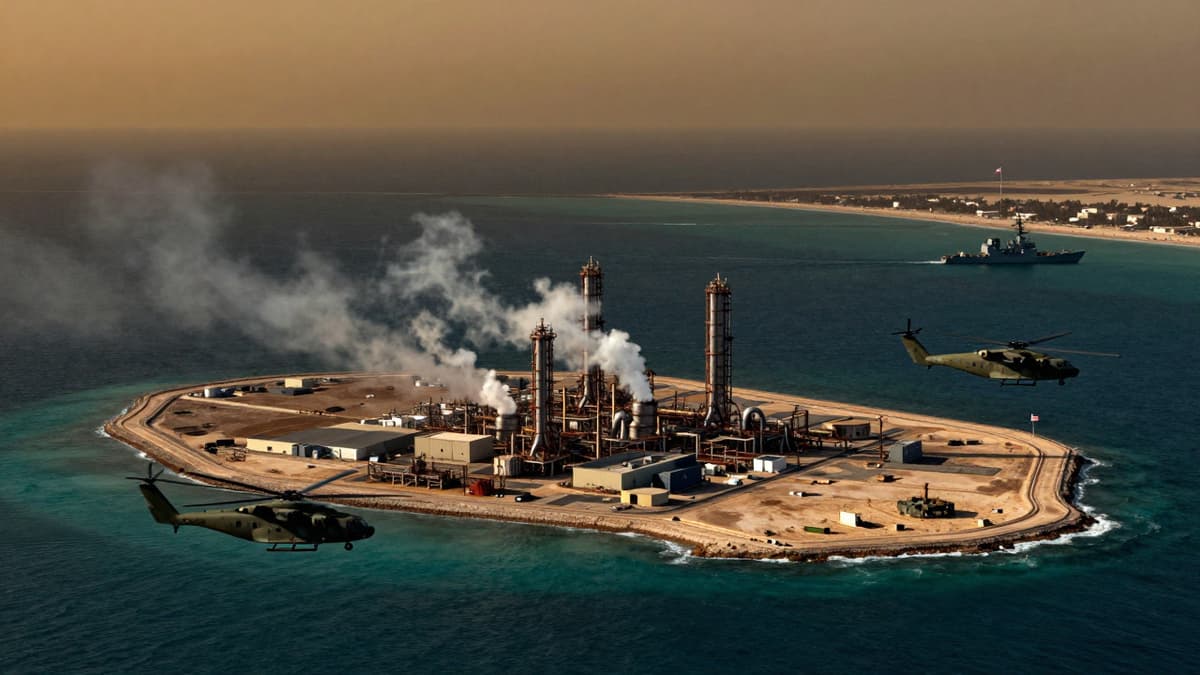
President Trump faces a critical juncture as diplomatic efforts stall. Military planners are weighing severe risks, including potential ground troops, to secure strategic oil infrastructure and end the war.
President Donald Trump is currently weighing several military strategies to dramatically escalate the war against Iran, should his recent diplomatic push fail. According to sources familiar with the discussions, Pentagon officials have prepared scenarios that could involve deploying ground troops to seize specific targets within the country. These plans are being developed as economic and political pressure mounts on the administration to find a decisive solution to the ongoing conflict.
While the current campaign has relied heavily on aerial bombardment, internal game-planning has intensified as the administration seeks a path to victory. However, officials warn that these new options are far from ideal. Any move involving ground forces carries a high risk of heavy casualties for US troops and offers no guarantee of successfully ending the war. As Trump orders thousands of additional soldiers to the region, he remains wary of a misstep that could transform the conflict into a prolonged and bloody endeavor.
In a recent Cabinet meeting, Trump stated that Iran is defeated and has a chance to negotiate, though he has not yet decided on a final course of action. While he has extended deadlines for targeting energy infrastructure to allow time for negotiations, the rejection of his 15-point peace proposal by Iran suggests a diplomatic stalemate. Despite Trump claiming talks are proceeding well, the US and Israel have subjected Iran to weeks of intense shelling, killing senior leaders and degrading offensive capabilities, yet the Iranian regime has consolidated control and tightened its grip on regional energy flows.
The strategic urgency centers on the Strait of Hormuz oil exports, which have been effectively choked off by the Iranian regime, triggering a global energy crisis. Administration officials are exploring ways to eliminate this leverage, including seizing control of the strait or destroying Iran's ability to export oil. One option being debated is a mission to extract enriched uranium from buried nuclear facilities, viewed by some as a potential clear win for the President.
Beyond uranium extraction, officials have developed plans for a Kharg Island invasion or bombing raids to cripple the nation's oil infrastructure. The island, which handles roughly 90% of Iran's crude exports, is considered a critical target. White House officials believe that capturing this location could "totally bankrupt" the Revolutionary Guard and force a definitive end to the conflict. Intelligence officials have privately argued that if diplomatic efforts continue to fail, troops will be necessary to force Iran back to the negotiating table.
However, these scenarios introduce severe uncertainties. Military escalation by the US would almost certainly prompt Iran to retaliate by striking energy targets in the region, potentially widening the war. The regime has already threatened to call on Houthi rebels to target oil tankers diverted through the Red Sea, which currently serves as the only relatively safe shipping route. A major disruption in the Red Sea could pose a complete choke-off of oil from the Gulf, exacerbating the global crisis.
The peril extends to the American soldiers themselves. Seizing islands or sending special forces into Iran's interior would immediately expose US troops to significant casualties, countering the narrative of a limited "excursion." Several GOP senators have already signaled opposition to any deployment of troops, foreshadowing a major political fissure within the party. Furthermore, Iran has reportedly laid traps and moved weapons to Kharg Island, making any invasion treacherous and likely to result in sustained missile and drone attacks on US forces.
Experts warn that even a successful tactical operation, such as controlling Iran's oil, may not lead to immediate capitulation. Gregory Brew, a senior analyst at Eurasia Group, noted that the Iranians would likely react extremely negatively rather than surrender. The fear is that such an escalation could spiral out of control, pulling the President deeper into a war he is eager to end.
The political cost is equally high. While the administration views limiting military tolls as crucial for maintaining public support, the reality of ground combat could shatter that support. The potential for a bloody, prolonged war looms large over the decision-making process. As the administration debates between a diplomatic breakthrough or a high-stakes military gamble, the uncertainty remains that none of the remaining options are guaranteed to secure a lasting victory without incurring heavy human and economic costs.
The Iranian regime remains defiant despite the intense pressure from the US and Israel, maintaining control over the region's energy infrastructure. If the US proceeds with plans to seize strategic islands or target oil facilities, the resulting retaliation could escalate the conflict into a full-scale regional war, with oil tankers facing threats in both the Gulf and the Red Sea. The administration must weigh the immediate tactical gains of a ground operation against the long-term risks of a spiraling conflict that could bankrupt the US economy and endanger hundreds of thousands of American lives.
Jun 8, 2026 00:51 UTC
Trump Claims Iran Nuclear Deal Imminent Despite Diplomatic Fractures
Jun 8, 2026 00:47 UTC
Iran Fires Missiles at Israel After Beirut Strike
Jun 7, 2026 22:00 UTC
US, Iran Peace Hops Fade 100 Days Into War
Jun 7, 2026 20:57 UTC
Iran Strikes Israel: IRGC Promises Week of Continuous Offensive
Jun 8, 2026 02:28 UTC
Trump Walks Out of Meet the Press After Rejecting Evidence Demands


