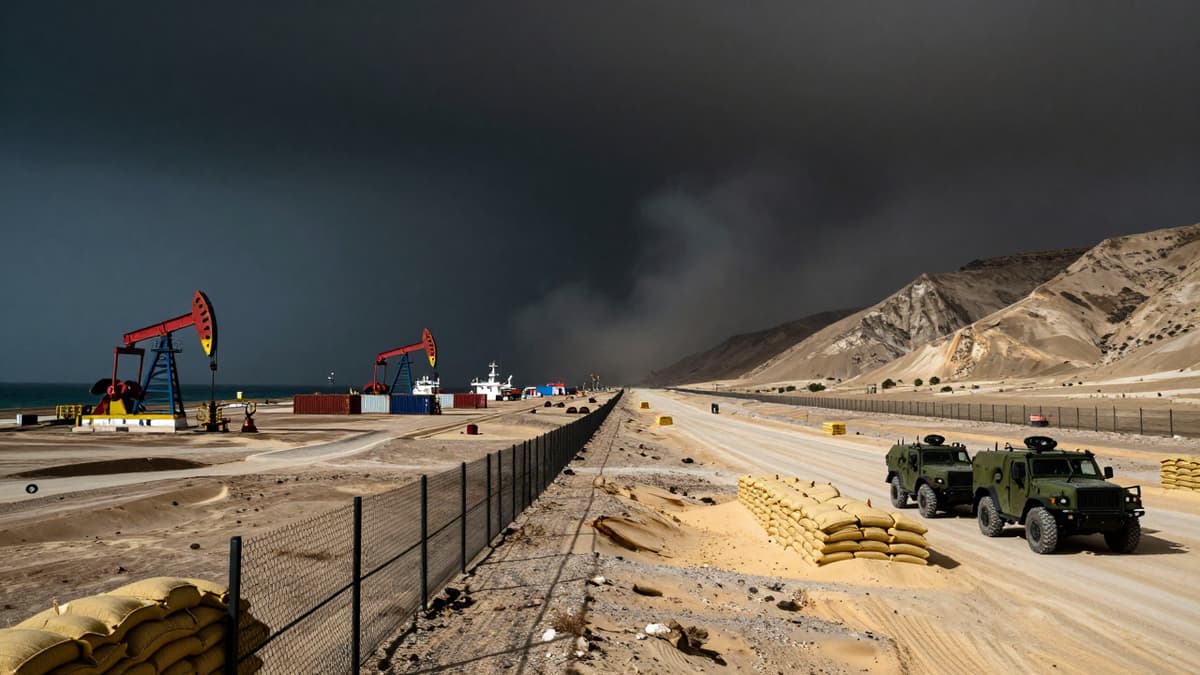
As President Trump announces a US withdrawal from Iran within weeks, global oil markets react to soaring prices driven by the ongoing Iran war.
President Donald Trump announced at the White House that the US will end its military actions in Iran within two to three weeks, asserting that primary strategic goals have been met. Simultaneously, the global energy market has reeled as Iran war oil prices surged, with Brent crude hitting its highest monthly gain since the 1990 Gulf War. While the US seeks an exit, Israel has declared plans to maintain security control over a significant portion of southern Lebanon, sparking international condemnation.
The announcement of a potential US withdrawal triggered an immediate rally in Asian stock markets, with Japan's Nikkei 225 gaining 4% and South Korea's Kospi rising over 6%. However, the underlying conflict continues to drive economic instability. Wholesale oil and gas prices have soared over the past month due to severe supply disruptions from the Middle East, threatening to cause a significant jump in consumer costs. In the UK, Chancellor Rachel Reeves warned that any government support for UK energy bills would be strictly based on household income, moving away from the blanket support provided during the Ukraine conflict.
The situation in the Middle East remains volatile. Israel's Minister of Defence, Israel Katz, stated that a buffer zone will be established inside southern Lebanon, extending up to the Litani River, approximately 30km from the Israeli border. This plan, which includes the demolition of houses in Lebanese villages near the border, has drawn sharp criticism from the UN, European nations, and Canada as a violation of territorial sovereignty. Katz further noted that over 600,000 displaced Lebanese residents would be prohibited from returning to the area until safety is guaranteed for northern Israeli residents.
On the diplomatic front, China and Pakistan have presented a five-point peace plan aimed at ending the war and reopening the Strait of Hormuz. This initiative marks a shift for Beijing, which had previously remained relatively muted but is now stepping up as a neutral broker to protect its long-term economic interests. Meanwhile, US President Trump has claimed that the US now dominates Iranian skies and has achieved regime change, describing current Iranian leaders as "much less radicalised" and "more rational" than their predecessors.
Iranian President Masoud Pezeshkian has countered that his country possesses the "necessary will" to end the conflict, provided that specific conditions regarding non-aggression guarantees are met. Despite this, the Islamic Revolutionary Guard Corps continues to threaten widening the retaliation, including against US tech companies. The uncertainty surrounding the duration of the conflict and the potential for further escalation continues to drive Israel Lebanon buffer zone discussions, as the international community watches for a resolution that does not further destabilize the region.
Following Trump's Oval Office remarks, traders interpreted the timeline for US disengagement as a signal for reduced geopolitical risk. The price of Brent crude for June delivery was trading $105.36, up 1.2% on the day. Analysts from Singapore Management University suggest that prices will continue to rise if shipping flows remain disrupted, though the immediate market sentiment improved on the promise of an end to US military actions.
Trump also criticized US allies, urging them to secure their own oil from the Strait of Hormuz if needed, a statement that highlights the shifting dynamics of the alliance during this crisis. The White House has previewed a televised address for the following evening, promising an important update on the situation in Iran.
As the US prepares to withdraw, the region faces a complex future defined by Israeli territorial security measures and continued Iranian resistance. The plan for the US to leave Iran once nuclear threats are neutralized, regardless of a formal deal, sets a precedent for unilateral military action followed by rapid disengagement. With Iran threatening to widen the scope of retaliation and Israel intent on holding the Litani River buffer zone, the immediate post-withdrawal period looks fraught with tension. Experts note that while the US aims to "finish the job" of curtailing nuclear capabilities, the lack of a comprehensive peace deal could leave a power vacuum. The impact on global energy security remains precarious, with the potential for further disruption to the Strait of Hormuz threatening to spike Iran war oil prices again if the ceasefire efforts by China and Pakistan fail to gain traction. The long-term stability of the global economy, particularly for nations like China dependent on exports, hinges on whether these conflicting territorial and security interests can be resolved without reigniting broader hostilities.
Jun 8, 2026 00:51 UTC
Trump Claims Iran Nuclear Deal Imminent Despite Diplomatic Fractures
Jun 8, 2026 00:47 UTC
Iran Fires Missiles at Israel After Beirut Strike
Jun 7, 2026 22:00 UTC
US, Iran Peace Hops Fade 100 Days Into War
Jun 7, 2026 20:57 UTC
Iran Strikes Israel: IRGC Promises Week of Continuous Offensive
Jun 8, 2026 02:28 UTC
Trump Walks Out of Meet the Press After Rejecting Evidence Demands


