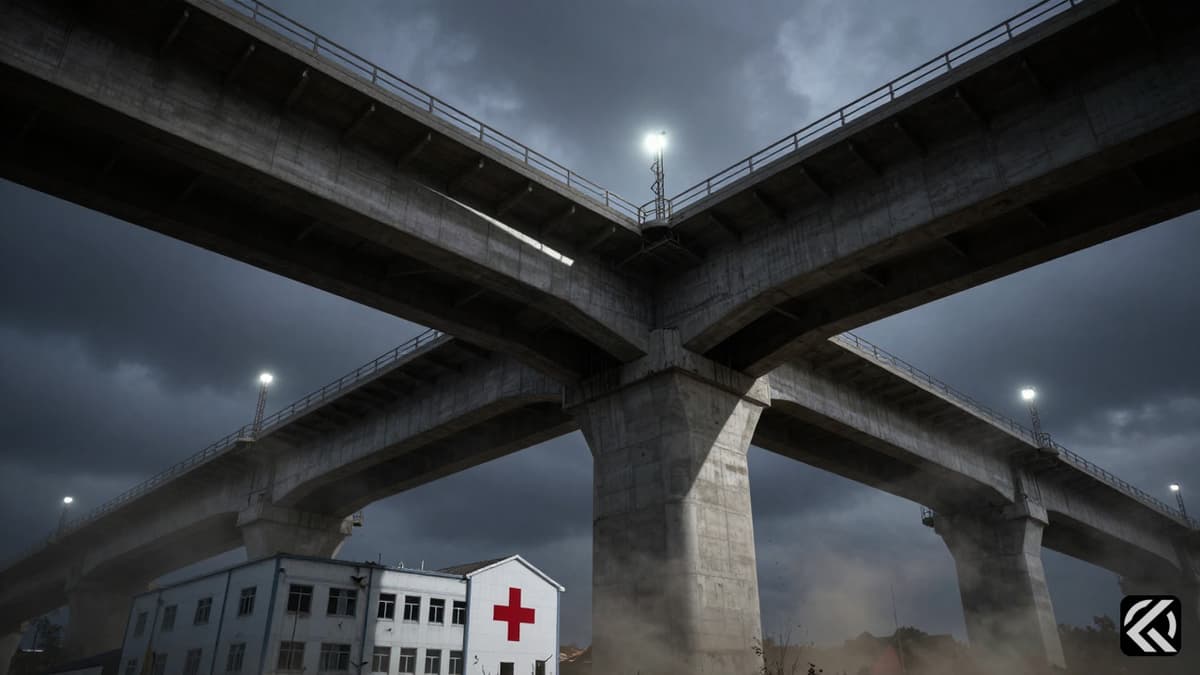
U.S. President Trump vows to strike Iran's remaining infrastructure while the WHO reports devastating damage to medical facilities and oil markets surge on war fears.
U.S. President Donald Trump declared on April 2, 2026, that American forces have not yet begun the task of destroying the remaining infrastructure in Iran. The White House leader warned that the military is prepared to target bridges and electric power plants immediately, signaling a significant escalation in the ongoing military operations against the Islamic republic.
This announcement follows a day where the World Health Organization detailed severe damage to critical medical facilities across the country. Dr. Tedros Adhanom Ghebreyesus, the WHO chief, reported that the historic Pasteur Institute in Tehran sustained significant damage from a strike, rendering it unable to deliver essential health services. The facility, established in 1920, has operated for over a century in medical research and plays a vital role in protecting population health during emergencies.
The scope of the damage extends beyond research institutes. Dr. Ghebreyesus confirmed that the Delaram Sina Psychiatric Hospital and the Tofigh Daru pharmaceutical facility also suffered damage. The Tofigh Daru facility was specifically noted for producing medicines to treat cancer and multiple sclerosis, making its impairment a critical blow to patient care during the crisis.
In a post on the social media platform X, the WHO chief highlighted that since March 1, the organization has verified over 20 attacks on health care in Iran. These strikes have resulted in at least nine deaths, including an infectious diseases health worker and a member of the Iranian Red Crescent Society. The conflict has also impacted facilities outside the capital; on March 21, an explosion near Imam Ali Hospital in Andimeshk, Khuzestan province, forced the facility's evacuation and cessation of services.
The impact of this violence extends to the global economy, where oil prices continued to surge on fears of a prolonged Iran war. Benchmark U.S. crude rose 11.4% to $111.54 a barrel, while Brent crude jumped 7.8% to $109.03 per barrel. While the U.S. relies on the Persian Gulf for only a fraction of its imports, the global nature of the oil commodity market means these disruptions affect prices worldwide. A report from BMI, a unit of Fitch Solutions, warns that an extended conflict raises threats to physical infrastructure and extends disruptions through the vital Strait of Hormuz.
Iranian officials have responded firmly to the American threats. Following reports that the tallest bridge in Iran had been destroyed, Iranian Foreign Minister Araghchi stated that striking civilian structures, including unfinished bridges, would not compel Iranians to surrender. President Trump had previously warned about targeting these specific infrastructure points, writing on social media that the U.S. military "hasn't even started destroying what's left in Iran." He emphasized that bridges are next, followed by electric power plants, asserting that Iran's leadership knows what must be done and has to act fast.
In response to the escalating violence, Iran has threatened "crushing" attacks on the U.S. and Israel, firing missiles at Tel Aviv after President Trump vowed to bomb the Islamic republic "back to the Stone Ages." Israel's military confirmed that its air defense systems were actively operating to down missiles fired from Iran, with no immediate reports of casualties or damage from these intercepts. The retaliatory fire continues from Tehran after the U.S.-Israeli bombing campaign began at the end of February.
Amidst the fighting, Defense Secretary Pete Hegseth asked the Army's top uniformed officer to step down on Thursday, the Pentagon confirmed, without providing a reason for the departure as the war continues. Simultaneously, Iran is working on a peacetime protocol to supervise maritime traffic through the Strait of Hormuz in collaboration with Oman. Deputy Foreign Minister Kazem Gharibabadi told Russia's Sputnik state media that the protocol is being finalized to apply after the war, aiming to manage ship movements once the conflict ends.
The international community is moving to address the blockage of the vital oil corridor. The UN Security Council has scheduled a vote for Friday, April 3, at 11 a.m. EDT on a Bahrain-sponsored resolution. This resolution would authorize the use of defensive means, though not offensive force, to secure international navigation in the Strait of Hormuz, which has been mostly blocked by Iran.
The economic and humanitarian stakes are high as the Iran-U.S. conflict shows no immediate signs of de-escalation. BMI notes that a longer war will entail a longer post-war recovery period, with price impacts spilling over later into the year. The health infrastructure attacks have left medical facilities non-functional, with the WHO stating that peace is the best medicine for the current crisis impacting the safety of health workers, patients, and civilians.
The convergence of infrastructure targeting and maritime blockades suggests a prolonged period of volatility in the region. As Iran finalizes its protocol for post-war traffic management with Oman, the global economy awaits the resolution of the Strait of Hormuz crisis, while the destruction of critical health centers like the Pasteur Institute underscores the deep humanitarian cost of the Iran-U.S. conflict. If the U.S. proceeds with strikes on power plants as threatened, the disruption to global oil markets and regional stability will likely intensify, extending the economic fallout well beyond the immediate cessation of hostilities.
Jun 8, 2026 00:51 UTC
Trump Claims Iran Nuclear Deal Imminent Despite Diplomatic Fractures
Jun 8, 2026 00:47 UTC
Iran Fires Missiles at Israel After Beirut Strike
Jun 7, 2026 22:00 UTC
US, Iran Peace Hops Fade 100 Days Into War
Jun 7, 2026 20:57 UTC
Iran Strikes Israel: IRGC Promises Week of Continuous Offensive
Jun 8, 2026 02:28 UTC
Trump Walks Out of Meet the Press After Rejecting Evidence Demands


