Escalating tensions see attacks on shipping and military bases while leaders clash over energy prices.
Global security tensions have surged following a series of coordinated attacks across the Middle East, creating significant volatility in energy markets. While US President Donald Trump insists oil prices will fall substantially, market data suggests otherwise as conflict intensifies. From missile strikes on Italian bases in Erbil to drone incidents in Dubai, the region faces unprecedented challenges. Correspondents like Hugo Bachega and Wyre Davies report from the ground, detailing the human cost alongside the geopolitical fallout.
Security forces are grappling with multiple simultaneous threats. An Italian base in northern Iraq suffered a missile strike overnight, though no casualties were reported among the 300 soldiers stationed there training Kurdish forces. Meanwhile, in Lebanon, Israeli airstrikes targeted Beirut’s seafront, killing at least eight people near makeshift shelters used by displaced residents. Hezbollah responded with over 100 rockets fired at northern Israel, marking a coordinated operation with Iranian allies. In Dubai, a high-rise building sustained damage from a falling drone, resulting in flames that were eventually controlled without injuries. Israeli spokesperson Avichay Adraee warned of attacks on military infrastructure belonging to Hezbollah in the near future.
The economic implications are immediate and severe. Brent crude prices briefly topped $100 per barrel before settling near $97.48. Despite a coordinated release of 400 million barrels from emergency reserves by 32 nations, traders view the intervention as a temporary buffer rather than a solution. Martin Ma from the Singapore Institute of Technology notes that markets expect the conflict to be prolonged. Iran’s Revolutionary Guard Corps has warned that prices could reach $200 per barrel, challenging President Trump's assertion that oil will drop more than understood. Trump stated during a visit to Kentucky that prices are coming down very substantially as a matter of war.
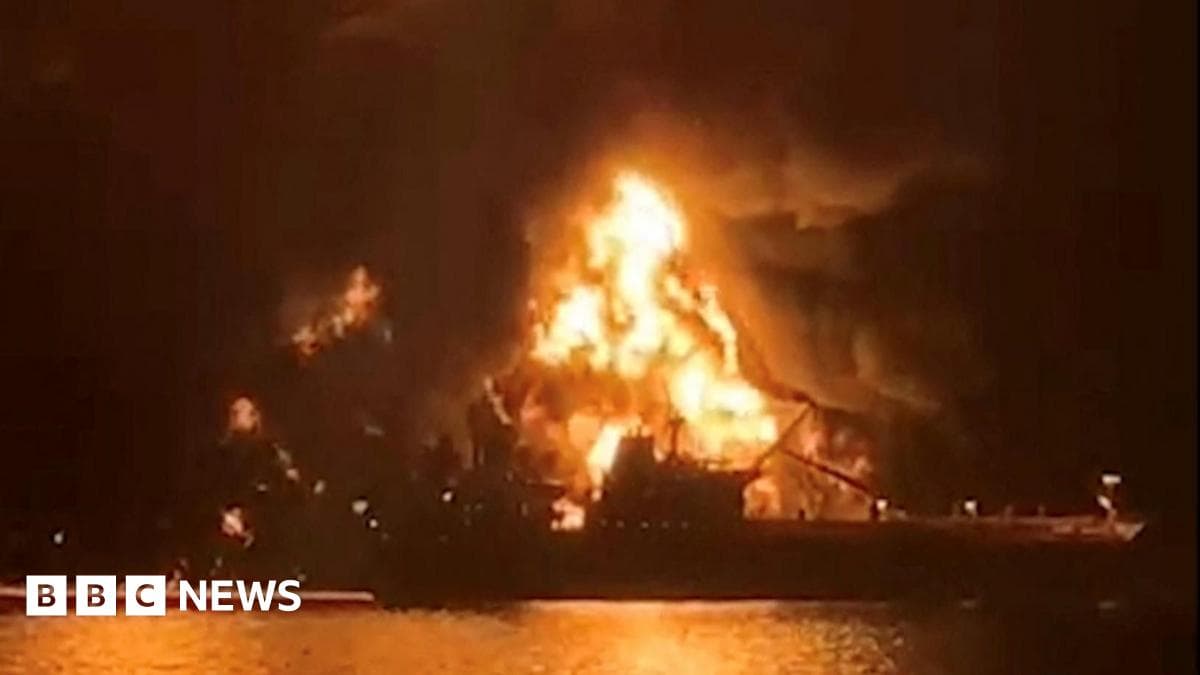
Commercial activity is under threat as major banks withdraw from the Gulf region. HSBC, Citi, and Standard Chartered have closed offices or ordered staff to stay home following warnings about attacks on financial institutions. Maritime trade operations are equally precarious; three cargo ships were attacked overnight. Two tankers off Iraq’s coast caught fire, leaving one crew member dead, while a container ship near the UAE sustained minor damage. With Iranian-backed militias targeting fuel tanks in Bahrain and Oman, global supply chains face potential disruption from the Strait of Hormuz becoming a danger zone.

The convergence of military aggression and economic instability defines this period of heightened tension. While political leaders attempt to reassure markets regarding energy costs, the physical reality of attacks on shipping and infrastructure suggests a prolonged crisis. As international bodies coordinate responses, the immediate impact remains focused on safety and supply chain continuity across the Gulf region.
May 1, 2026 03:50 UTC
Trump Administration Declares Iran Conflict Terminated
Join 50,000+ readers getting the global briefing every morning.
No spam. Unsubscribe anytime.
May 1, 2026 03:50 UTC
Trump Administration Declares Iran Conflict Terminated
Apr 25, 2026 01:38 UTC
Iranian FM Araghchi Heads to Islamabad for Critical US-Iran Talks
Apr 25, 2026 01:13 UTC
Calm Suspect in Delhi Rape-Murder Case Faces Mental Evaluation
Apr 24, 2026 23:24 UTC
Raghav Chadha joins BJP, Shaking AAP’s Rajya Sabha Strength