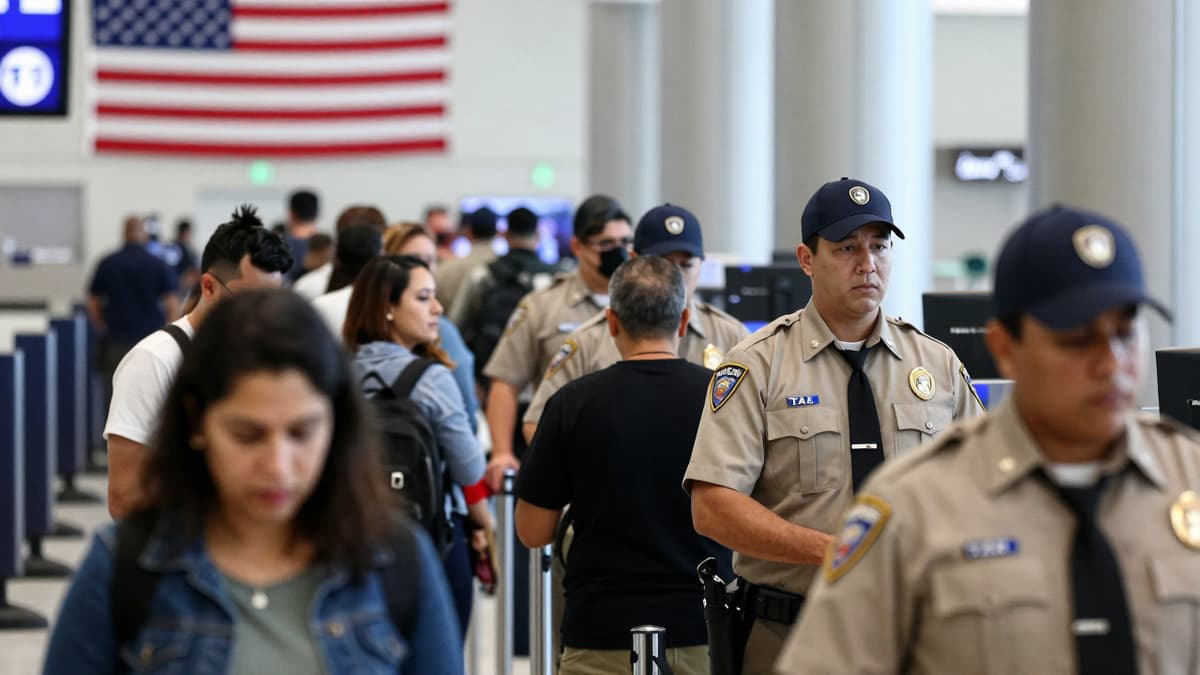
President Trump orders immediate TSA payment to end airport chaos, but Congress remains deadlocked on a full government shutdown deal.
President Trump announced Thursday that he will sign an executive order instructing the Department of Homeland Security to immediately pay Transportation Security Administration workers, aiming to resolve the massive airport disruptions plaguing the nation. This decisive move comes as negotiations in Congress on a deal to end the ongoing partial government shutdown appear to have stalled, leaving no clear path to a resolution in sight.
The announcement was delivered via Truth Social, where Trump stated he would instruct Secretary of Homeland Security Markwayne Mullin to address the "Emergency Situation" and stop the "Democrat Chaos at the Airports." Despite the urgency of the situation, the president provided no details on the legal authority he would utilize to authorize these payments. It remains unclear whether his administration will cover all of the missed payroll owed to the TSA's roughly 60,000 employees or determine exactly when the funds will be distributed.
The root of this nationwide crisis traces back to Minneapolis over two months ago, following an incident where federal immigration officers shot and killed two protesters. In the aftermath, Democrats in Congress insisted they would block any funding bill for the Department of Homeland Security unless it included major reforms to operations by agencies like Immigration and Customs Enforcement. Republicans have subsequently rejected nearly all of these demands, leading to a stalemate where DHS funding lapsed on February 14.
Since the funding lapse, the department has been unable to pay its workforce, though most employees, including TSA agents, have been required to continue working because their roles are deemed essential for national security. While there was close to zero progress toward a deal during the first month, the situation deteriorated significantly last week when thousands of TSA agents began calling out of work daily. Without sufficient staff to handle traveler rushes, security checkpoints quickly transformed into bottlenecks, resulting in the airport wait times that have been the longest in history.
In response to mounting pressure, Congress took its first meaningful steps toward a solution on Monday with a proposal to fund the TSA and other DHS parts, except for ICE enforcement and removal operations. Early optimism on Capitol Hill suggested that removing this contentious element might unify the parties. However, that hope eroded on Wednesday when Democratic leaders rejected the plan, citing it failed to satisfy their demands for serious reforms. They subsequently sent a counteroffer to the GOP, which Senate Minority Leader Chuck Schumer described as necessary policy changes to "rein in ICE, with commonsense guardrails."
Senate Majority Leader John Thune, the top Republican in the Senate, dismissed the Democratic offer, accusing them of "going in circles" with demands that had "already been turned down." On Thursday, Thune stated he had sent Democrats his party's "last and final" proposal. Discussions continued into the evening without a breakthrough. Trump's proposed move to utilize TSA pay through other means may relieve some of the immediate time pressure lawmakers face, but only Congress can officially end the shutdown.
Discussions regarding the government shutdown remain critical as Congress is scheduled to leave for a two-week recess on Friday. If no deal is reached by then and the recess proceeds as planned, lawmakers will not return to Washington, D.C., to consider new ways to end the stalemate until mid-April. Funding for the TSA and the rest of the DHS will only be secure in the long term once Democrats and Republicans approve legislation to end the shutdown and fund the department through the normal appropriations process.
The uncertainty regarding the scope of the executive order leaves many questions unanswered, including whether the funds will cover the full backlog of missed payroll or only current operations. The situation highlights the complex interplay between executive action and legislative authority during a funding crisis. While the president has taken steps to address the immediate operational crisis, the underlying political dispute regarding immigration enforcement and departmental reform remains unresolved.
The current legislative impasse suggests that without a breakthrough agreement before the upcoming recess, the partial government shutdown will continue well into April. With the House and Senate scheduled to adjourn for two weeks without a signed deal, the window for a negotiated settlement between the GOP and Democrats narrows significantly. If the stalemate persists, the backlog of unpaid wages for the roughly 60,000 TSA workers could grow, potentially exacerbating the already historic airport wait times and straining national security operations further. The situation underscores that while an executive order can provide temporary relief, only a bipartisan legislative agreement can secure the long-term funding necessary to prevent future disruptions.
Jun 8, 2026 02:17 UTC
Magnitude 7.8 Quake Shakes Philippines, Urging Immediate Evacuations
Join 50,000+ readers getting the global briefing every morning.
No spam. Unsubscribe anytime.
Jun 8, 2026 02:17 UTC
Magnitude 7.8 Quake Shakes Philippines, Urging Immediate Evacuations
Jun 8, 2026 00:51 UTC
Trump Claims Iran Nuclear Deal Imminent Despite Diplomatic Fractures
Jun 8, 2026 00:47 UTC
Iran Fires Missiles at Israel After Beirut Strike
Jun 7, 2026 22:38 UTC
Congress Party Claims Unity for INDIA Bloc Delhi Meeting


