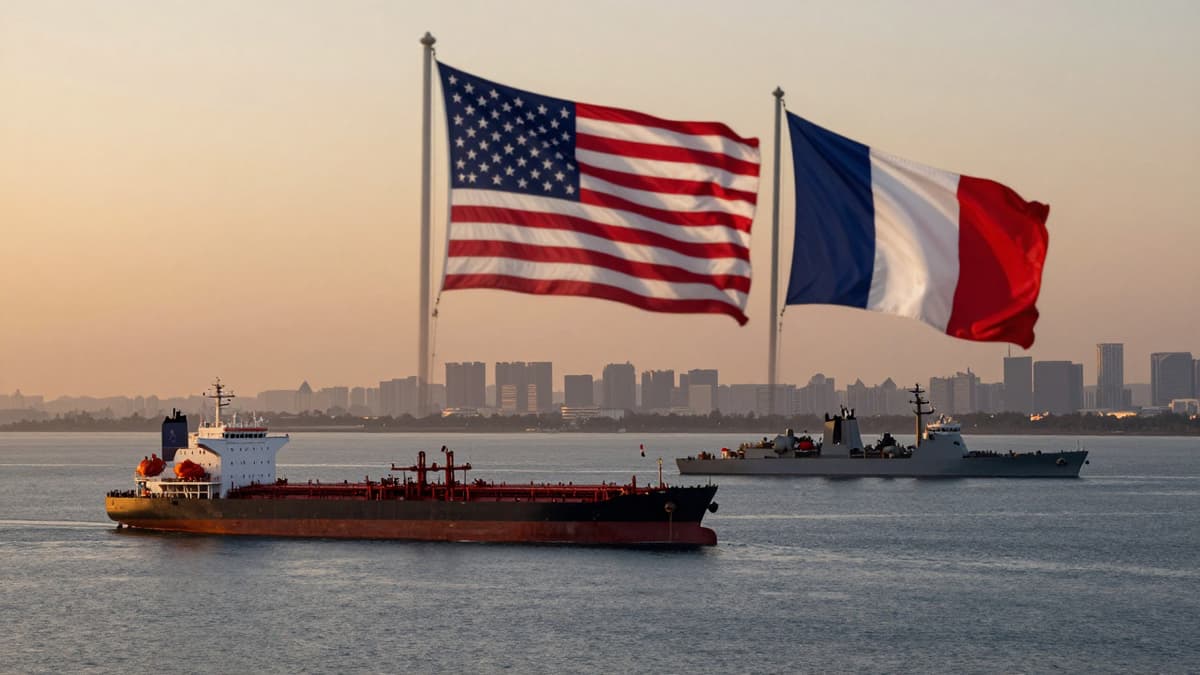
President Trump confirms a potential US withdrawal from the Middle East conflict within weeks, challenging allies to secure the Strait of Hormuz instead.
President Donald Trump addressed reporters from the Oval Office on Tuesday, declaring that the United States could conclude its military engagement with Iran within a matter of weeks. The President indicated that a withdrawal might occur as soon as two weeks, or perhaps three, marking a potential early exit from a conflict that has already disrupted global energy markets.
In his most explicit comments regarding the situation, Trump suggested that Washington is preparing to wind down the month-long war, noting that a diplomatic deal with Tehran is not a prerequisite for ending hostilities. "Iran doesn't have to make a deal, no," Trump stated firmly, adding, "No, they don't have to make a deal with me." The primary objective, he explained, is simply to ensure Iran lacks the capacity to rapidly develop a nuclear weapon; once that goal is met, the US will depart.
Regarding the strategic implications for global trade, Trump explicitly refused to take responsibility for securing the Strait of Hormuz, a critical artery for global oil transport. "That's not for us. That'll be for France. That'll be for whoever's using the strait," the President said, asserting there is "no reason for us to do this." This stance has drawn sharp criticism toward US allies for failing to do enough to support the American effort during the ongoing campaign.
Meanwhile, Israeli Prime Minister Benjamin Netanyahu offered a different perspective on the unfolding events, characterizing the joint US-Israel offensive as a force that is systematically reshaping regional alignments and weakening the Iranian regime. Speaking to the nation, Netanyahu described the campaign as "systematically crushing" the current Iranian leadership, noting that Israel is actively building "new alliances with important countries in the region."
Netanyahu highlighted the economic impact of the conflict on Tehran, stating that Iran has spent vast sums on military ambitions with little tangible result. "Now it can be said: That trillion has gone down the drain," Netanyahu remarked, emphasizing that Iran is currently weaker than before the war began. Despite this assessment of Iranian decline, the Prime Minister stressed that the conflict is not yet over.
The developments on the ground align with growing expectations that the United States could halt the war without requiring a formal agreement, a scenario that some analysts suggest Israeli messaging is beginning to anticipate. This shift in strategy marks a significant turning point in the Trump-Iran war, moving away from a prolonged occupation toward a targeted objective-based approach.
The refusal to assume responsibility for the Strait of Hormuz signals a potential redistribution of naval burdens in the region, specifically placing the onus on France and other nations utilizing the route. This decision underscores a broader trend of redefining alliance responsibilities, where the US focuses on strategic deterrence rather than long-term security guarantees for specific transit chokepoints. As the US prepares to exit, the stability of the Middle East may increasingly depend on the ability of European and regional partners to fill the security vacuum left by Washington's withdrawal.
US President Donald Trump solidifies a rapid exit strategy that bypasses diplomatic formalities in favor of direct military objectives. As the US prepares to disengage, the focus shifts to regional powers like France to manage the Strait of Hormuz. This pivot suggests a future where the US maintains a distant watch, relying on allied naval capacity to secure critical energy corridors while the Israeli offensive continues to degrade Iranian capabilities. The long-term impact will likely see a fragmented security architecture in the Middle East, where former allies must rapidly adapt to a US that prioritizes immediate threat neutralization over sustained presence, leaving regional powers to manage the complex aftermath of a destabilized Iranian regime without American military footprints on the ground.
Jun 8, 2026 00:51 UTC
Trump Claims Iran Nuclear Deal Imminent Despite Diplomatic Fractures
Jun 8, 2026 00:47 UTC
Iran Fires Missiles at Israel After Beirut Strike
Jun 7, 2026 22:00 UTC
US, Iran Peace Hops Fade 100 Days Into War
Jun 7, 2026 20:57 UTC
Iran Strikes Israel: IRGC Promises Week of Continuous Offensive
Jun 8, 2026 02:28 UTC
Trump Walks Out of Meet the Press After Rejecting Evidence Demands


